What Is Shu Pu-erh? A Complete Beginner's Guide | Stepmans Tea
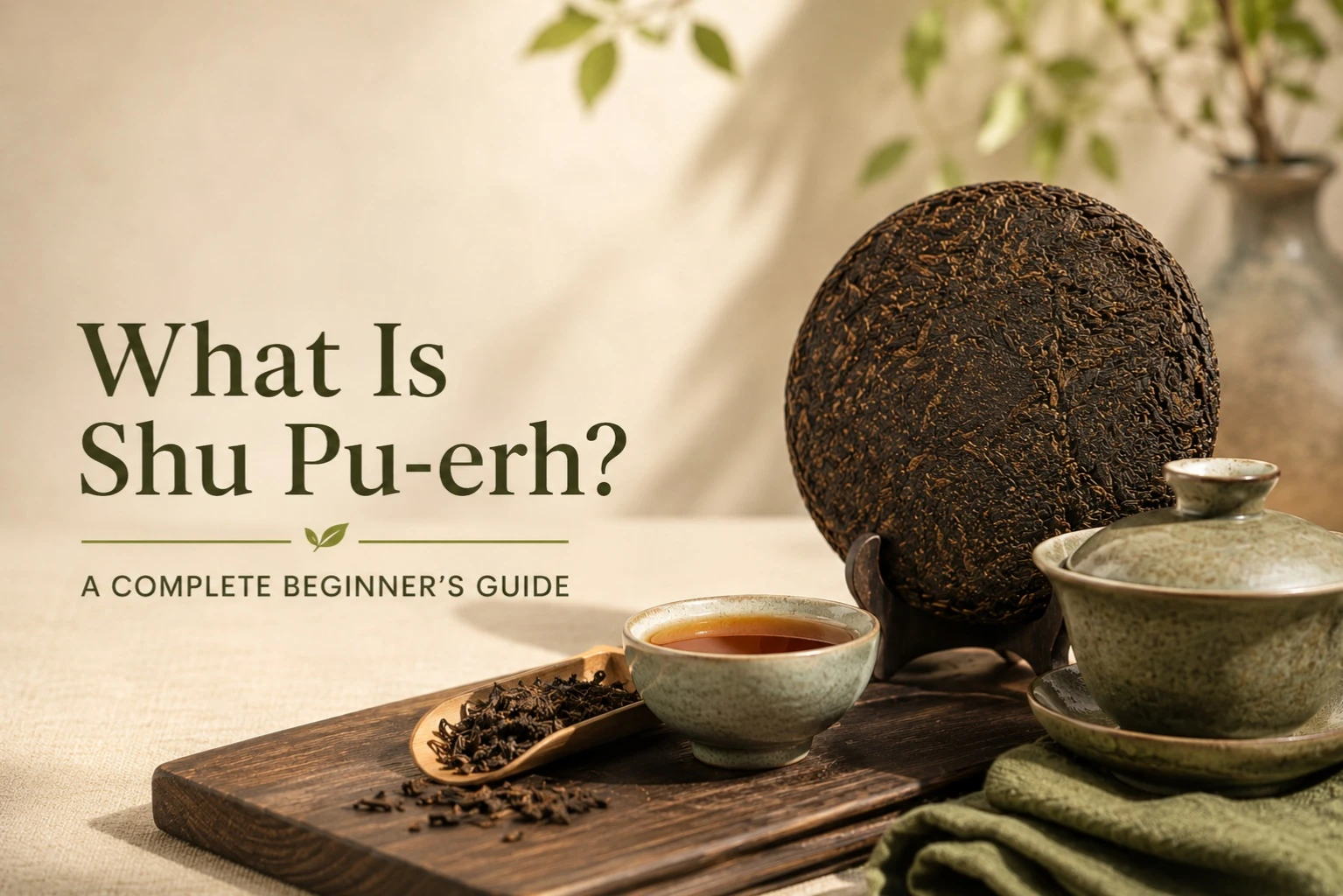
If you are new to Chinese tea, you may have come across the term Shu Pu-erh and wondered what it actually means. Often described as a dark, earthy tea, Shu Pu-erh has a production method and history unlike most other teas.
But what is Shu Pu-erh, exactly? How is it made? Does it need to age? And how should a beginner brew and choose it?
This guide explains Shu Pu-erh from the ground up. You will learn what it is, why it is important in Chinese tea culture, how the production process works, and how to apply that knowledge when buying, brewing, and storing authentic Shu Pu-erh.
What Is Shu Pu-erh?
Shu Pu-erh is a fermented Chinese tea made from the leaves of the Camellia sinensis plant. The tea is produced primarily in Yunnan Province, China, and is known for its dark color, mellow body, and earthy, woody, or smooth flavor profile.
The word “Shu” is commonly translated as “ripe” or “cooked.” In Chinese tea terminology, it refers to the wo dui fermentation process, a controlled microbial fermentation method used to accelerate the tea's transformation.
Shu Pu-erh is different from Sheng Pu-erh, also known as raw Pu-erh. Both teas are traditionally made from Yunnan tea leaves, but their processing methods are not the same.
In simple terms:
- Shu Pu-erh: undergoes controlled fermentation during production.
- Sheng Pu-erh: is naturally aged over time without the same accelerated fermentation process.
This distinction is essential because it affects the tea's appearance, aroma, taste, and aging characteristics.
Why Is Shu Pu-erh Important?
Shu Pu-erh is important because it represents a distinctive development in Chinese tea production. It was created to make Pu-erh-style tea more accessible in a shorter period of time.
Historically, Pu-erh was associated with teas that changed gradually as they aged. Natural aging can take many years, and the results depend heavily on tea quality, storage conditions, and time. Shu Pu-erh was developed as a way to encourage a faster transformation through controlled fermentation.
The result is a tea with a character that is noticeably different from fresh green tea, oolong, or black tea.
For tea drinkers, Shu Pu-erh is significant for several reasons:
1. It has a unique production method
The fermentation process gives Shu Pu-erh its characteristic dark appearance and deep, rounded flavor. This makes it one of the most distinctive categories of traditional Chinese tea.
2. It offers a different tea experience
Many teas are appreciated for bright floral aromas, fresh vegetal notes, or pronounced bitterness. Shu Pu-erh is often valued for its smooth, full-bodied, and earthy character.
3. It is part of Yunnan's tea tradition
Pu-erh is closely connected to Yunnan's tea-growing regions and Chinese tea culture. Understanding Shu Pu-erh also introduces beginners to the importance of tea processing, regional origin, and traditional preparation.
How Is Shu Pu-erh Made?
To understand what Shu Pu-erh is, it helps to understand how it is made.
The production process begins with mao cha, or partially processed tea leaves. These leaves are typically harvested from tea trees, with the quality and characteristics influenced by factors such as cultivar, growing region, harvest material, and processing.
The basic production process involves several stages.
1. Tea leaves are harvested
Fresh tea leaves are picked from tea plants. The leaves used for Pu-erh may vary in grade and maturity depending on the intended tea.
2. The leaves are processed into mao cha
The leaves undergo traditional processing that generally includes withering, pan-firing, rolling, and drying.
The pan-firing stage is particularly important because it reduces enzymatic activity while leaving some natural microbial potential in the tea.
At this stage, the tea is considered mao cha rather than finished Shu Pu-erh.
3. The tea is piled for wo dui fermentation
This is the defining stage of Shu Pu-erh production.
The mao cha is arranged into large piles and carefully managed with moisture and temperature. The tea may be turned periodically during the process to help maintain more consistent conditions throughout the pile.
Naturally occurring microorganisms play an important role in this transformation.
The process is controlled rather than simply leaving tea to decay. Experienced producers monitor the conditions and timing carefully. The goal is to develop the desired color, aroma, and texture while avoiding unwanted results.
4. The tea is dried and sorted
After the fermentation stage is complete, the tea is dried and sorted. Depending on the tea, it may then be sold loose or pressed into a traditional form.
5. The tea may be pressed into cakes or other shapes
Shu Pu-erh is often found in tea cakes, but it may also be pressed into bricks, tuocha, or other forms.
The shape is not the same thing as the tea type. A tea cake can be Shu Pu-erh or Sheng Pu-erh. The key difference is the processing method.
What Does Shu Pu-erh Taste Like?
Shu Pu-erh is often described as earthy, smooth, woody, dark, or mellow. However, the flavor can vary considerably.
A well-made Shu Pu-erh may offer notes such as:
- Dark wood
- Earth
- Cocoa
- Dried fruit
- Nuts
- Dark caramel
- Forest floor
- Warm spices
Flavor is influenced by many factors, including the tea's raw material, production, fermentation, age, storage, and brewing method.
It is also important to understand that “earthy” does not necessarily mean unpleasant or dirty. In tea descriptions, earthy often refers to a deep, grounded flavor profile.
For beginners, Shu Pu-erh can sometimes be easier to appreciate after a few brewing sessions. Its flavor is generally less about bright, immediate aromas and more about texture, depth, and the way the tea develops in the cup.
Does Shu Pu-erh Need to Age?
One of the most common questions beginners ask is whether Shu Pu-erh needs to be aged.
The short answer is no. Shu Pu-erh is designed to be drinkable relatively soon after its production process.
However, Shu Pu-erh can continue to change with time.
Aging may allow certain flavors and aromas to become more integrated. Some teas may become smoother or develop greater depth. The extent of this change depends on the tea itself and the conditions in which it is stored.
This is different from Sheng Pu-erh, where natural aging is a central part of the tea's traditional character.
A useful way to think about it is this:
Shu Pu-erh is generally ready to drink, but time may still influence its character.
Age alone does not automatically make a tea better. A high-quality tea with appropriate storage is more important than simply choosing the oldest tea available.
Shu Pu-erh vs. Sheng Pu-erh: What Is the Difference?
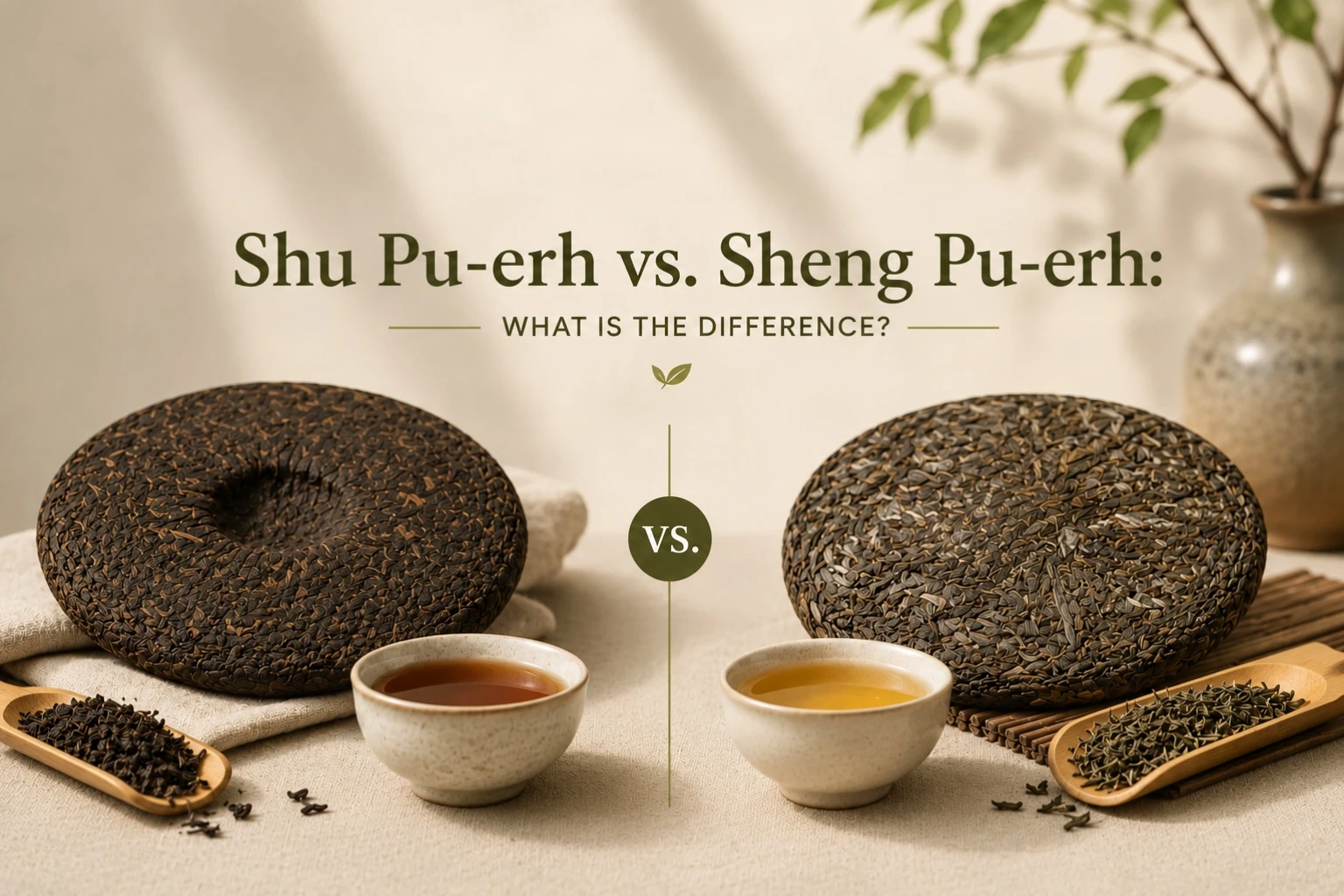
Understanding the difference between Shu and Sheng Pu-erh can help you choose tea more confidently.
| Characteristic | Shu Pu-erh | Sheng Pu-erh |
|---|---|---|
| Processing | Controlled fermentation | No wo dui fermentation |
| Common flavor | Earthy, smooth, mellow | Fresh, floral, bitter, or astringent depending on age |
| Ready to drink | Generally yes | Often changes significantly with aging |
| Aging | May continue to develop | Traditionally central to its evolution |
| Appearance | Usually darker | Often lighter when young |
These are general characteristics, not absolute rules. Tea can vary widely depending on its origin, production, and storage.
For a beginner who prefers a deep, mellow, and less sharp tea, Shu Pu-erh may be a natural starting point.
How Do You Brew Shu Pu-erh?
Shu Pu-erh is quite versatile, but traditional Chinese brewing methods allow you to observe how the tea changes across multiple infusions.
Gongfu-style brewing
For a more traditional approach, use a small gaiwan or teapot.
A general starting method is:
- Add the tea to your brewing vessel.
- Rinse the tea briefly with hot water.
- Discard the rinse.
- Add hot water and steep for a short period.
- Pour the tea completely.
- Repeat for additional infusions, gradually adjusting the steeping time.
A water temperature close to boiling is commonly used for Shu Pu-erh.
The exact amount of tea and steeping time depends on the tea and your preference. The important point is to start with shorter infusions and adjust gradually.
Western-style brewing
If you prefer a larger mug or teapot, Shu Pu-erh can also be brewed in a more familiar Western style.
Use a moderate amount of tea, steep in hot water, and taste after a few minutes. If the tea tastes too strong, shorten the steeping time or use less leaf.
Should you rinse Shu Pu-erh?
A brief rinse is common in traditional brewing. It can help prepare the compressed leaves for infusion and remove loose particles from the surface of the tea.
It is not necessary to make the process complicated. A quick rinse is sufficient.
How Should You Choose Quality Shu Pu-erh?
For beginners, buying Shu Pu-erh can seem confusing. Tea cakes may have unfamiliar names, dates, regions, and production information.
Here are a few practical guidelines.
1. Buy from a knowledgeable tea source
A reputable tea seller should be able to provide useful information about the tea, including its type and origin where applicable.
Education is especially important when purchasing traditional Chinese tea. Clear product information can help you understand what you are actually buying.
2. Do not choose tea based on age alone
Older does not automatically mean better. Quality depends on the tea material, production, storage, and overall condition.
3. Consider the flavor profile you prefer
If you enjoy rich, mellow, and earthy teas, Shu Pu-erh may be a good category to explore.
4. Start with smaller quantities when possible
Trying a smaller amount allows you to understand your preferences before committing to a larger tea cake or collection.
5. Pay attention to storage
A tea that has been poorly stored may not reflect the potential of the original tea. This is one reason sourcing matters.
How Should Shu Pu-erh Be Stored?
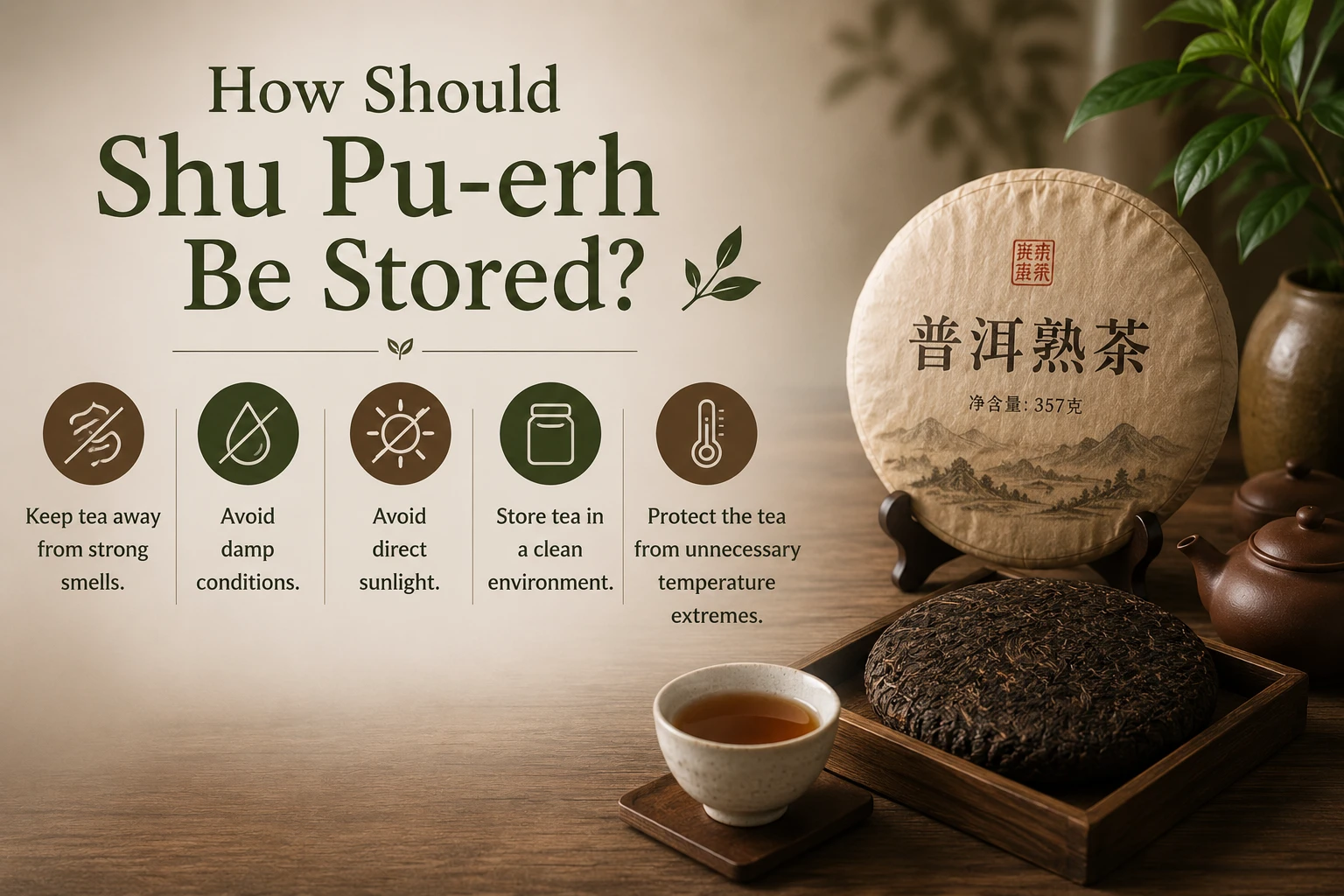
Proper storage helps protect the tea's character.
In general, Shu Pu-erh should be stored in a clean, dry, and well-ventilated environment. Keep it away from strong odors, as tea can absorb surrounding aromas.
Avoid storing it in places with excessive humidity or extreme temperature changes. At the same time, completely sealed storage may not always be appropriate for traditional Pu-erh aging.
For everyday home storage, the main principles are simple:
- Keep tea away from strong smells.
- Avoid damp conditions.
- Avoid direct sunlight.
- Store tea in a clean environment.
- Protect the tea from unnecessary temperature extremes.
The goal is consistency rather than creating a complicated storage system.
Common Beginner Mistakes With Shu Pu-erh
A few common mistakes can make the first Shu Pu-erh experience less enjoyable.
1. Using too much tea
Shu Pu-erh can be full-bodied. Beginners sometimes use too much leaf and then assume they dislike the tea.
2. Steeping for too long
Long steeping can produce a stronger and heavier cup. Start shorter and adjust.
3. Expecting every Shu Pu-erh to taste the same
Production style and tea material vary. One Shu Pu-erh may taste woody and smooth, while another may have more cocoa, dried fruit, or earthy notes.
4. Judging the tea after one cup
Tea is a sensory experience. Try the tea more than once and experiment with brewing variables before making a final judgment.
5. Assuming age is the most important factor
Age is only one part of the story. Processing, material, and storage matter greatly.
Final Thoughts: What Is Shu Pu-erh?
So, what is Shu Pu-erh? It is a traditional Chinese tea made from tea leaves that undergo controlled microbial fermentation, giving the finished tea its dark appearance and characteristic smooth, earthy, and mellow profile.
Its importance lies in both its distinctive production process and its place within Yunnan's rich tea tradition. Unlike Sheng Pu-erh, Shu Pu-erh is intentionally fermented during production and is generally ready to drink without requiring years of aging.
For beginners, the best way to understand Shu Pu-erh is to approach it patiently. Learn the difference between Shu and Sheng, brew with care, pay attention to flavor, and choose tea from a source that values clear information and authentic Chinese tea traditions.
If you'd like to experience authentic Shu Pu-erh prepared in the traditional Chinese style, explore the carefully selected Chinese tea collection at Stepman's Tea and continue your journey through the world of tea one cup at a time.
FAQs
1. What is Shu Pu-erh?
Shu Pu-erh is a traditional Chinese tea made from Camellia sinensis leaves that undergo controlled microbial fermentation. It is known for its dark color and smooth, earthy, mellow flavor profile.
2. How is Shu Pu-erh made?
Shu Pu-erh is made through a controlled fermentation process known as wo dui. Mao cha tea leaves are piled, moistened, and carefully managed to encourage microbial transformation before the tea is dried, sorted, and often pressed.
3. What does Shu Pu-erh taste like?
Shu Pu-erh commonly has a smooth, earthy, woody, and mellow flavor. Depending on the tea, it may also have notes of cocoa, dried fruit, nuts, or dark caramel.
4. What is the difference between Shu Pu-erh and Sheng Pu-erh?
Shu Pu-erh undergoes controlled fermentation during production, while Sheng Pu-erh does not. Shu Pu-erh is generally ready to drink sooner, while Sheng Pu-erh traditionally changes significantly through natural aging.
5. Does Shu Pu-erh need to age?
No. Shu Pu-erh is generally ready to drink after production. However, it can continue to change over time depending on the tea and its storage conditions.
6. How do you brew Shu Pu-erh?
Shu Pu-erh can be brewed using a gaiwan, teapot, or Western-style brewing method. Hot water and shorter initial steeping times are a good starting point, with the brewing time adjusted according to taste.
7. Should you rinse Shu Pu-erh before brewing?
A brief rinse is common in traditional Chinese tea preparation. It can help prepare compressed tea leaves for brewing and remove loose particles from the surface.
8. How should Shu Pu-erh be stored?
Store Shu Pu-erh in a clean, dry, well-ventilated environment away from direct sunlight, excessive humidity, and strong odors. Consistent storage conditions are important.
9. Is Shu Pu-erh good for beginners?
Shu Pu-erh can be an approachable choice for beginners who enjoy smooth, full-bodied, and earthy teas. Starting with a small amount and experimenting with brewing can help new tea drinkers discover their preferences.