What Does Shu Pu-erh Taste Like? Complete Guide to Shu Pu-erh Flavor
If you have never tried Shu Pu-erh, you may wonder what to expect from the first sip. What does Shu Pu-erh taste like? The answer is not as simple as describing it as “strong” or “earthy.” Depending on its quality, age, production, storage, and brewing method, Shu Pu-erh can offer a surprisingly layered flavor experience.
Many people associate Shu Pu-erh with earthy or woody notes. Those descriptions can be accurate, but they do not tell the whole story. Well-made Shu Pu-erh may also taste smooth, mellow, sweet, rich, and deeply comforting. The tea's flavor develops through a unique production process that transforms the character of the tea leaves.
In this guide, we will explain the shu pu-erh taste in clear, practical terms. You will learn what Shu Pu-erh is, why its flavor is distinctive, how the tea develops its taste, what to expect when brewing it, and how to choose a better-quality tea.
What Is Shu Pu-erh?
Shu Pu-erh, also called ripe Pu-erh or shou Pu-erh, is a fermented tea traditionally produced in Yunnan Province, China.
It begins with tea leaves made into sun-dried raw tea, known as mao cha. These leaves are then carefully piled, moistened, and monitored during a controlled fermentation process called wo dui. The process encourages microbial activity and accelerates the transformation of the tea.
The result is a tea with a darker appearance and a flavor profile that is generally softer and more mellow than young Sheng Pu-erh, also known as raw Pu-erh.
The word “fermented” is often used to describe Shu Pu-erh, although the production process is more accurately understood as controlled microbial fermentation or post-fermentation. This process is one of the main reasons Shu Pu-erh has such a distinctive taste.
What Does Shu Pu-erh Taste Like?
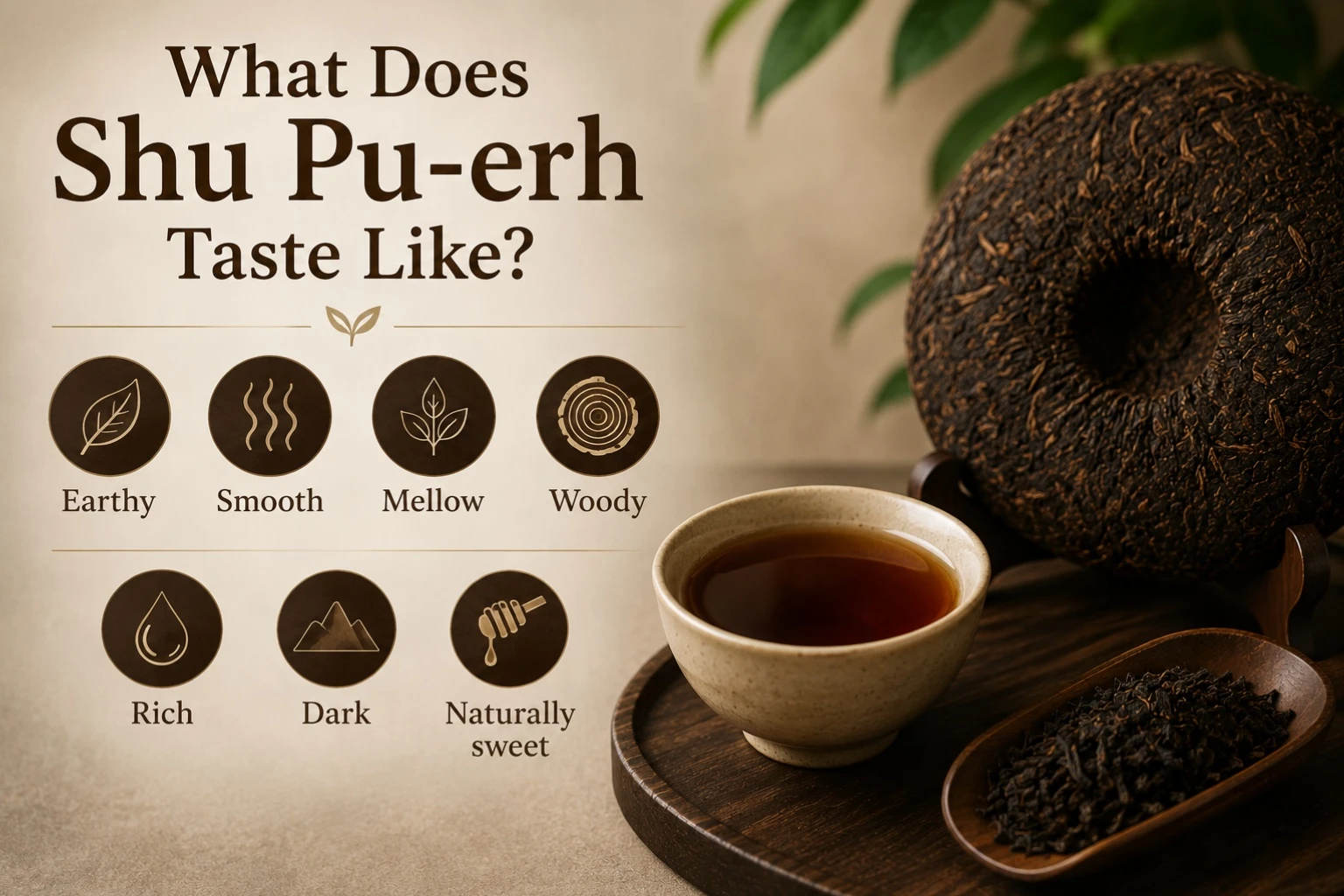
The most common way to describe Shu Pu-erh taste is:
- Earthy
- Smooth
- Mellow
- Woody
- Rich
- Dark
- Naturally sweet
However, these are only broad categories. The actual flavor can vary considerably.
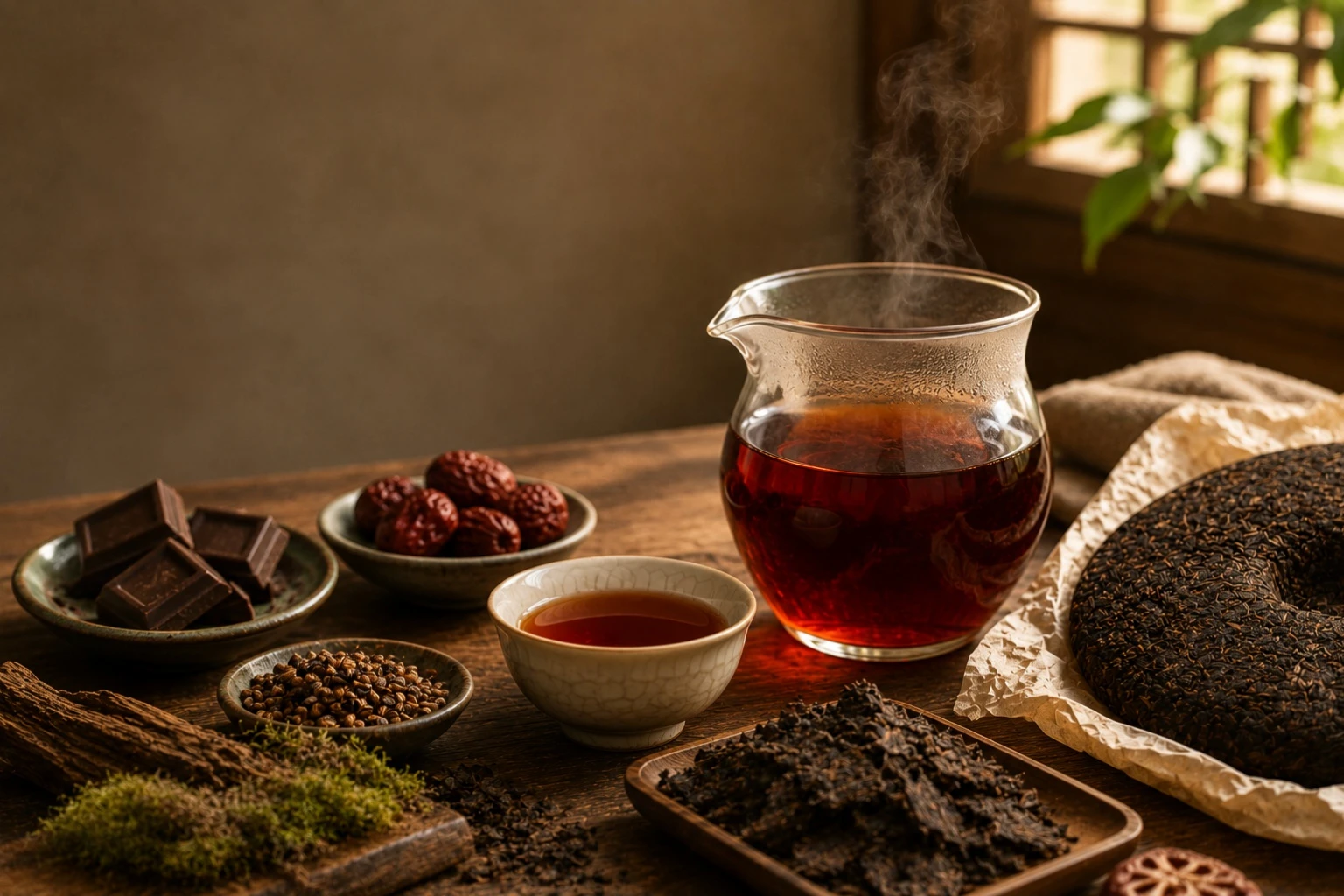
A well-made Shu Pu-erh may remind you of damp forest soil after rain, aged wood, dark cocoa, roasted grains, or a clean, sweet mineral finish. Some teas have a creamy or soft texture, while others are more robust and full-bodied.
The Most Common Flavor Notes
Earthy
Earthiness is perhaps the flavor most closely associated with Shu Pu-erh.
This does not necessarily mean the tea tastes like dirt. In a good Shu Pu-erh, “earthy” can refer to flavors that are deep, grounded, and reminiscent of a forest floor, wet wood, or rich soil.
The earthy character comes largely from the tea's fermentation and subsequent aging. It is one of the qualities that gives Shu Pu-erh its distinctive identity.
Woody
Woody notes are also common. You may notice flavors similar to aged wood, bark, or a dry forest.
The woody character may be more noticeable in older or more heavily fermented teas. Depending on the tea, it can be subtle and elegant or more pronounced.
Smooth and Mellow
Many drinkers appreciate Shu Pu-erh because of its smooth character.
Compared with some young teas that can taste sharp, bitter, or highly astringent, Shu Pu-erh often has a rounder and softer profile. The tea can feel gentle across the palate, especially when brewed properly.
This smoothness is one reason Shu Pu-erh is often an approachable starting point for people who are new to Chinese tea.
Dark and Rich
Some Shu Pu-erh teas offer deep flavors that may remind you of dark chocolate, roasted grains, or dark caramel.
The tea liquor itself is often a deep reddish-brown to dark brown color. It is important to remember, however, that a dark liquor does not automatically mean the tea will taste strong or bitter.
Sweet
Although Shu Pu-erh is not typically sweet in the same way as a flavored tea, many teas develop a natural sweetness.
You may notice sweetness toward the middle or end of the sip. This can resemble brown sugar, dried fruit, or a gentle caramel-like quality.
The sweetness is often more noticeable after the tea has been rinsed and brewed through several infusions.
Creamy or Soft
Some high-quality Shu Pu-erh has a soft, almost creamy mouthfeel.
This is not always a literal milk or cream flavor. Instead, it describes the texture and sensation of the tea in the mouth. The liquor may feel thick, smooth, and rounded.
This quality is often described by tea drinkers as a tea having good body or a rich mouthfeel.
Why Does Shu Pu-erh Taste Earthy?
The earthy taste of Shu Pu-erh is mainly connected to its production process.
After the tea leaves are prepared, they undergo wo dui, the controlled fermentation process used in Shu Pu-erh production. During this stage, the tea is piled and carefully managed for moisture, temperature, and microbial activity.
The tea leaves gradually change in color, aroma, and flavor.
This process reduces some of the fresh, sharp qualities associated with the original tea leaves and creates deeper, more mature flavors. As a result, Shu Pu-erh can develop the earthy, woody, and mellow characteristics that make it so recognizable.
Is Earthiness a Sign of Bad Shu Pu-erh?
No. Earthiness alone does not mean a Shu Pu-erh is low quality.
The important distinction is between clean earthiness and unpleasant off-flavors.
A well-made tea may have a pleasant, natural earthy character. A poorly processed or improperly stored tea may have aromas or flavors that seem musty, sour, overly fishy, or stale.
This is why describing Shu Pu-erh simply as “earthy” can be misleading. The quality and cleanliness of the flavor matter just as much as the basic flavor category.
What Does Good Shu Pu-erh Taste Like?
Good Shu Pu-erh is generally clean, balanced, and smooth.
The exact flavor depends on the tea, but a quality Shu Pu-erh may offer:
- A clean aroma
- A smooth texture
- A balanced earthy character
- Pleasant sweetness
- Depth across multiple infusions
- A lingering finish
The flavor should feel coherent rather than dominated by one unpleasant note.
For example, a tea may begin with an earthy aroma, develop a rich woody flavor, and finish with a mild sweetness. That progression can be a sign of a more layered tea.
What Does Poor Shu Pu-erh Taste Like?
Lower-quality or poorly handled Shu Pu-erh may have flavors that are:
- Overly fishy
- Sour
- Musty
- Harsh
- Flat
- Artificially damp or stale
It is important to be careful when judging a tea from the first infusion alone. A proper rinse and brewing technique can make a significant difference.
However, persistent unpleasant flavors after careful preparation may indicate issues with production, storage, or the tea itself.
How Does Shu Pu-erh Flavor Develop?
The taste of Shu Pu-erh is influenced by several factors.
1. The Tea Leaves
The origin, cultivar, leaf material, and picking standards all affect the final flavor.
Tea made from different leaf grades can have different textures and levels of complexity. Some teas may emphasize body and richness, while others offer more aromatic depth.
2. The Fermentation Process
The wo dui process is central to Shu Pu-erh production.
The length and conditions of fermentation influence how the tea tastes. A more heavily fermented tea may have a darker, softer profile, while other teas may retain more of the character of the original leaf.
Production requires careful attention. Temperature, moisture, pile management, and timing all affect the finished tea.
3. Aging
Shu Pu-erh can continue to change after fermentation.
With appropriate storage, the tea may gradually become smoother and more integrated. Some sharper or more noticeable fermentation aromas may soften over time.
This does not mean that every older Shu Pu-erh is automatically better. Age is only one factor. The quality of the original tea and the conditions under which it was stored are equally important.
4. Storage
Storage has a major effect on Pu-erh flavor.
Tea needs a suitable environment that is clean, stable, and appropriate for continued aging. Exposure to unwanted odors, excessive moisture, or poor conditions can negatively affect the tea.
Because tea leaves can absorb surrounding aromas, storing Pu-erh near strong-smelling items is generally best avoided.
5. Brewing
The way you brew Shu Pu-erh can dramatically change its taste.
A long steep with too many leaves may produce a strong, concentrated cup. A shorter infusion may reveal more subtle flavors.
Water temperature, leaf quantity, infusion time, and the type of teaware all play a role.
How to Brew Shu Pu-erh to Understand Its Taste
If you want to understand the true shu pu-erh taste, brewing the tea in a controlled way is important.
Step 1: Use Good Water
Water quality matters.
If your tap water has a strong chlorine or mineral taste, it may interfere with the tea. Filtered water can often provide a cleaner way to experience the flavor.
Step 2: Rinse the Tea
A brief rinse is commonly used when preparing compressed or aged Pu-erh.
Place the tea in your teapot or gaiwan, add hot water, and quickly pour it off. This helps open the leaves and prepares them for brewing.
The rinse is also useful for removing some of the initial storage or fermentation aroma.
Step 3: Start With Short Infusions
Rather than steeping Shu Pu-erh for a long time immediately, begin with shorter infusions.
This allows you to observe how the flavor changes. Pay attention to the first aroma, the texture in your mouth, and the finish after swallowing.
Step 4: Taste the Tea More Than Once
Shu Pu-erh is often well suited to multiple infusions.
The first infusion may be more restrained. Later infusions can reveal more sweetness, body, or depth.
A tea that seems simple at first may become more interesting as the leaves open.
Does Shu Pu-erh Taste Like Black Tea?
Shu Pu-erh and black tea can both have rich, dark flavors, but they do not taste the same.
Black tea often has flavors such as malt, fruit, honey, spice, or tannin. Shu Pu-erh is more commonly associated with earthy, woody, fermented, and mellow flavors.
Some drinkers who enjoy strong black tea also appreciate Shu Pu-erh. However, it is best to approach the two teas as distinct styles rather than expecting one to taste like the other.
Does Shu Pu-erh Taste Like Fish?
Some people notice a fishy or marine-like aroma when trying certain Shu Pu-erh teas.
A temporary fermentation aroma can sometimes be present, particularly in younger Shu Pu-erh or teas that have not had sufficient time to settle after production. A brief rinse and proper storage may help reduce these aromas.
However, a strongly fishy taste that remains through multiple infusions is not what most drinkers seek in a clean, well-made Shu Pu-erh.
This is one reason it is useful to purchase tea from a knowledgeable source that can provide information about the tea's origin and production.
How to Choose Shu Pu-erh Based on Flavor
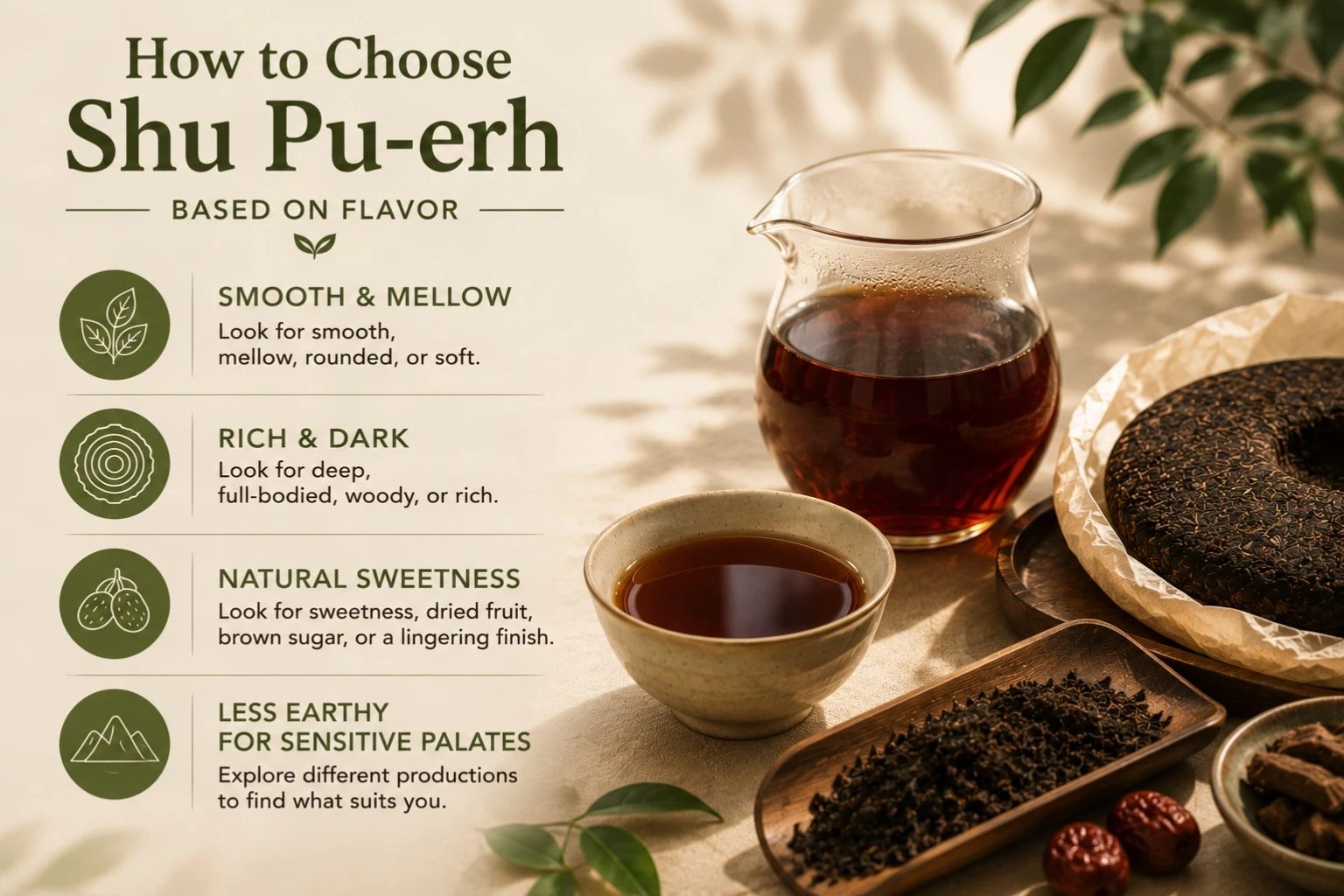
If you are new to Shu Pu-erh, think about the flavors you already enjoy.
- If You Like Smooth and Mellow Tea
Look for Shu Pu-erh described as smooth, mellow, rounded, or soft.
These teas may be easier for beginners to appreciate.
- If You Like Rich, Dark Flavors
Consider teas with descriptions such as deep, full-bodied, woody, or rich.
These may offer a more substantial cup.
- If You Prefer Natural Sweetness
Look for teas that are described as having sweetness, dried fruit, brown sugar, or a lingering finish.
The sweetness may become more noticeable after several infusions.
- If You Are Sensitive to Strong Earthy Flavors
Do not assume that all Shu Pu-erh tastes the same.
Different teas can have dramatically different flavor profiles. Exploring teas from different productions and storage histories can help you find a style that suits your palate.
Common Mistakes When Tasting Shu Pu-erh
1. Judging the Tea After One Sip
The first taste may not reveal the full character of the tea.
Give the leaves time to open and observe how the flavor changes.
2. Brewing With Too Much Tea
Using too much leaf can make the tea taste unnecessarily intense.
Start with a moderate amount and adjust based on your preferences.
3. Using Water That Is Too Cool
Water temperature affects extraction. If the water is too cool, the tea may taste thin or muted.
4. Assuming Darker Means Better
The color of the tea liquor is not a complete measure of quality.
Flavor, aroma, texture, and cleanliness are all important.
5. Expecting Every Shu Pu-erh to Taste Earthy
Earthy flavor is common, but Shu Pu-erh can also show sweetness, wood, cocoa, grain, and other characteristics.
The best way to understand the category is to taste more than one tea.
How to Apply What You Know About Shu Pu-erh Taste
When choosing a Shu Pu-erh, begin by looking beyond general descriptions such as “strong” or “dark.”
Ask practical questions:
- Does the tea have a clean aroma?
- Is the flavor smooth or harsh?
- Is the earthy character pleasant?
- Does the tea change across multiple infusions?
- Is the tea's origin and production information available?
If possible, taste different styles side by side. Comparing two Shu Pu-erh teas can make subtle differences easier to recognize.
Most importantly, do not feel that you need to identify every flavor immediately. Tea tasting is a gradual process. Learning to recognize the difference between earthy, woody, sweet, rich, and musty flavors comes with experience.
Final Thoughts: What Does Shu Pu-erh Taste Like?
So, what does Shu Pu-erh taste like?
Shu Pu-erh is typically smooth, mellow, earthy, and rich, with possible notes of wood, dark cocoa, roasted grain, and natural sweetness. Its flavor is shaped by the tea leaves, the controlled fermentation process, aging, storage, and brewing method.
The most important point is that there is no single Shu Pu-erh taste. A clean, well-made tea can be deeply earthy and comforting, while another may be sweeter, softer, or more robust.
Understanding these flavor characteristics makes it easier to choose and brew Shu Pu-erh with confidence. If you'd like to experience authentic Shu Pu-erh prepared in the traditional Chinese tea style, explore our collection of carefully selected Chinese teas at Stepman's Tea and discover which flavor profile best suits your palate.
FAQs
1. What does Shu Pu-erh taste like?
Shu Pu-erh typically has a smooth, mellow flavor with earthy, woody, and naturally sweet notes. Depending on its quality and age, it may also develop flavors reminiscent of dark chocolate, roasted grains, dried fruit, or wet forest floor.
2. Why does Shu Pu-erh taste earthy?
Its earthy character comes from the controlled microbial fermentation process known as wo dui. This post-fermentation transforms the tea leaves, creating the rich, deep flavors that distinguish Shu Pu-erh from other teas.
3. Is Shu Pu-erh supposed to taste like fish?
A high-quality Shu Pu-erh should not have a strong fishy taste. Very young teas may briefly exhibit fermentation aromas, but persistent fishy or unpleasant odors often indicate lower-quality processing or improper storage.
4. Does Shu Pu-erh become sweeter with age?
Properly stored Shu Pu-erh often develops a smoother, more integrated flavor over time. While aging can enhance natural sweetness and reduce harsh fermentation notes, the final taste also depends on the original leaf quality and storage conditions.
5. Is Shu Pu-erh bitter?
When brewed correctly, Shu Pu-erh is generally low in bitterness and astringency. Instead, it is known for its smooth body and mellow finish. Over-steeping or using too much leaf can make it taste stronger than intended.
6. How should beginners brew Shu Pu-erh?
Start with freshly boiled water, briefly rinse the leaves, and use short infusions. This brewing method allows the tea to gradually reveal its evolving flavors while avoiding excessive strength.
7. What foods pair well with Shu Pu-erh?
Its rich, earthy flavor pairs well with dark chocolate, roasted nuts, mushrooms, aged cheeses, whole grains, and lightly sweet pastries. Many tea drinkers also enjoy it after meals because of its clean, smooth finish.
8. How can I tell if Shu Pu-erh is good quality?
Look for tea with a clean aroma, smooth mouthfeel, balanced earthy flavors, natural sweetness, and a lingering finish. Reputable vendors should also provide information about the tea's origin, production, and storage.