What Does White Tea Taste Like? A Guide to Its Flavor and Aroma
White tea is often described as delicate, floral, and subtly sweet, but its flavor is more varied than these familiar descriptions suggest. Depending on the tea variety, growing region, harvest season, and processing method, white tea can taste fresh and grassy, softly fruity, mildly nutty, or rich with notes of honey and dried flowers. Some examples are light and airy, while others have a fuller body and a lingering sweetness that develops across several infusions.
Understanding what white tea tastes like begins with recognizing how it is made and how its leaves are prepared for brewing. Unlike green tea, which is typically heated to stop oxidation early in processing, white tea generally undergoes minimal processing, often involving withering and drying. This approach preserves many of the leaves' natural characteristics, although the final flavor still depends heavily on the cultivar, environment, and craftsmanship.
This guide explores the defining flavors of white tea, explains how different Chinese white teas compare, and provides practical advice for brewing a cup that reveals their natural character without unnecessary bitterness or astringency.
What Is White Tea?
White tea is a category of tea made from the leaves and buds of the Camellia sinensis plant. It is traditionally associated with China, particularly Fujian Province, where several well-known styles originated. Despite its name, white tea does not usually produce a white-colored infusion. Depending on the leaves and brewing method, the liquor may range from pale straw or light gold to a deeper honey-like amber.
The name is commonly associated with the fine, silvery-white hairs that cover young tea buds, especially those used to produce Silver Needle white tea. These hairs are visible on the dried leaves and contribute to the tea's distinctive appearance.
White tea is generally processed with fewer manufacturing steps than many other tea categories. Freshly harvested leaves are spread out to wither, allowing moisture to evaporate and natural chemical changes to occur. They are then dried to bring the moisture content down to a level suitable for storage.
Some white teas are made almost entirely from unopened buds, while others use a combination of buds and young leaves. These differences influence the finished tea's aroma, texture, sweetness, and overall intensity.
White tea is not necessarily the mildest or least flavorful tea. Its character can be subtle, but high-quality examples may offer considerable depth, particularly when brewed carefully or prepared across multiple infusions.
The Main Flavors Found in White Tea
White tea does not have one fixed flavor profile. However, several characteristics appear frequently across different varieties.
1. Natural Sweetness
One of the most recognizable features of white tea is its gentle, natural sweetness. Rather than tasting like sugar or syrup, this sweetness often resembles fresh melon, ripe pear, wildflower honey, or sweet hay.
The sensation can be especially noticeable in the finish, after the tea has been swallowed. The mouth may retain a soft sweetness even when the initial flavor seems quite light.
Silver Needle, known in Chinese as Bai Hao Yin Zhen, is often associated with a clean, delicate sweetness. Depending on its origin and preparation, it may also have notes of cucumber, melon, or fresh flowers.
Other white teas can express a warmer, more rounded sweetness. Shou Mei, for example, may develop flavors reminiscent of dried fruit, honey, and autumn leaves.
Natural sweetness varies with the plant material, growing conditions, and processing. It does not mean that sugar has been added to the tea.
2. Floral Aromas
Floral notes are common in white tea, particularly in teas made from young buds and leaves harvested during the spring.
These aromas may resemble honeysuckle, jasmine, lilac, fresh wildflowers, or the soft fragrance of a spring garden. They are usually understated rather than perfumed, although certain teas can have a distinctly expressive floral character.
The aroma may be easier to detect in the warmed, dry leaves or the first moments after hot water is added than in the finished cup.
Floral character is influenced by the tea cultivar, the environment in which it grows, and the way the leaves are withered and dried. A white tea grown at a particular elevation or under different weather conditions may express a different balance of floral, vegetal, and fruity notes from another tea produced in the same region.
3. Fresh, Grassy, and Vegetal Notes
Some white teas taste fresh and green, with notes of cucumber, young peas, leafy vegetables, or freshly cut grass. These flavors can be particularly noticeable in teas made from younger leaves or in teas whose processing preserves a fresh vegetal character.
Such notes do not necessarily indicate that the tea is green tea or that it has been processed incorrectly. White tea naturally retains characteristics of the fresh leaf, and different teas express these qualities to varying degrees.
A fresh, vegetal white tea can feel crisp and refreshing, especially when brewed at a moderate temperature. If the water is too hot or the steeping time is too long, however, vegetal flavors may become more pronounced alongside bitterness or a drying sensation.
4. Fruity Notes
Fruit-like flavors add another dimension to white tea. Common descriptions include pear, apple, melon, peach, apricot, and, in some teas, dried dates or raisins.
These are sensory comparisons rather than ingredients. Unless explicitly flavored, white tea does not need fruit additives to produce fruit-like aromas.
Fresh fruit notes are often associated with lighter, more delicate expressions of white tea. Dried-fruit characteristics may be more prominent in teas made from mature leaves or in certain aged white teas.
The fruit profile can also change during brewing. An early infusion may emphasize fresh, crisp notes, while a later infusion may reveal more rounded sweetness or a softer, dried-fruit character.
5. Honey, Hay, and Grain-Like Notes
White tea can also have warm, comforting flavors resembling honey, dried grass, oats, or sweet grain.
These characteristics are particularly useful when describing white teas that seem less floral and more rounded. They often contribute to a smooth, mellow impression without making the tea heavy.
Hay-like notes are not necessarily signs of staleness. In a well-made white tea, they may be a natural part of the aroma, reflecting the leaves' composition and the changes that take place during withering and drying.
However, a tea that smells musty, damp, moldy, or unpleasantly stale should not be assumed to be a desirable example of these flavors. Clean, pleasant aroma is an important part of assessing tea quality.
6. A Soft, Lingering Finish
White tea is frequently appreciated for its finish, sometimes described using the Chinese tea-tasting concept of hui gan, or returning sweetness. This refers to a sweet sensation that becomes noticeable after drinking rather than being limited to the initial taste.
The finish may be floral, lightly fruity, sweet, or gently mineral. Some teas leave a clean, refreshing sensation, while others have a more substantial mouthfeel and a longer aftertaste.
A tea with a delicate initial flavor can therefore offer more complexity than the first sip suggests. Allowing a few moments between sips can help reveal these subtler qualities.
How Different Types of White Tea Taste
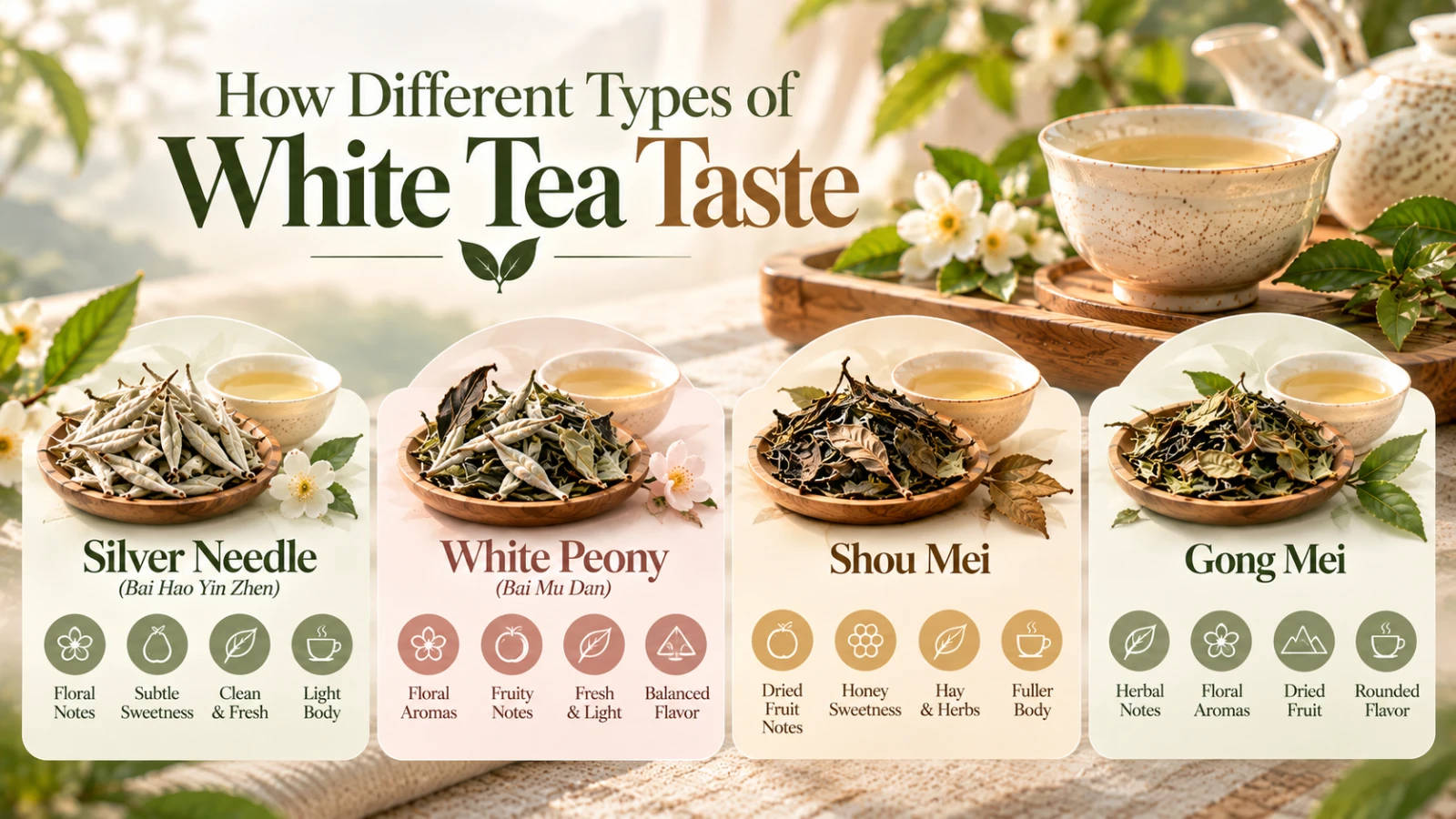
Chinese white tea includes several traditional styles. The type of leaves used, their maturity, and the processing choices all contribute to differences in taste.
Silver Needle (Bai Hao Yin Zhen)
Silver Needle is made primarily from unopened tea buds covered in fine, silvery hairs. It is among the best-known Chinese white teas and is often valued for its delicate aroma and refined flavor.
Its profile may include:
Soft floral notes and a fresh, clean aroma
Subtle sweetness reminiscent of melon or pear
Gentle hay-like or vegetal characteristics
A light, smooth body with a lingering finish
Silver Needle is not always the most intensely aromatic white tea. Its appeal often lies in balance, subtlety, and the way its flavor unfolds gradually.
Because it is made from buds, Silver Needle is frequently associated with premium tea production. However, the quality of the finished tea depends on more than the proportion of buds alone. Harvest standards, processing, storage, and brewing all matter.
White Peony (Bai Mu Dan)
White Peony is generally made from a bud and one or more young leaves. The inclusion of leaves often gives it a more developed flavor than the particularly delicate profile associated with Silver Needle.
Common characteristics include:
Floral and fruity aromas
Notes of fresh hay, melon, or stone fruit
A fuller mouthfeel than many bud-only teas
A balanced combination of sweetness and gentle vegetal flavor
White Peony can be a useful starting point for exploring white tea because it often combines approachability with a noticeable range of flavors. It can be delicate without seeming insubstantial.
The exact profile varies by harvest, grade, and producer. Some examples emphasize fresh flowers and fruit, while others lean toward herbs, grain, or honey.
Shou Mei
Shou Mei is typically made with more mature leaves than Silver Needle or many White Peony teas. Its appearance is often darker and less uniform, reflecting the different leaf material used.
Its flavor may include:
Dried apricot, dates, or other dried-fruit notes
Honey-like sweetness
Hay, herbs, or autumn leaves
A rounder, more substantial body
Shou Mei often tastes less delicate and more rustic than bud-focused white teas. That does not make it inherently inferior. It offers a different expression of the tea plant and can be appealing to people who prefer a fuller cup.
Depending on its production and storage history, Shou Mei may also develop deeper, warmer flavors over time.
Gong Mei
Gong Mei is another traditional Chinese white tea style, commonly associated with leaf-based material and regional production traditions. Its precise characteristics vary among producers, and commercial naming practices are not always consistent.
Gong Mei may offer a balance of herbal, floral, honeyed, and dried-fruit notes. Compared with a particularly delicate Silver Needle, it can feel more grounded and substantial.
When purchasing Gong Mei, it is helpful to consider the stated origin, harvest, processing, and producer rather than relying on the name alone.
Does White Tea Taste Different When It Is Aged?
Yes. White tea can change in aroma, flavor, and texture as it ages, although the outcome depends on the tea's original quality and how it has been stored.
Fresh white tea may emphasize floral, grassy, and fruity characteristics. With time, some teas develop warmer aromas resembling dried fruit, honey, herbs, wood, or medicinal plants. Their initial freshness may become less prominent, while the flavor may seem rounder and more integrated.
These changes are not guaranteed. Aging does not automatically improve white tea, and poorly stored tea can lose its desirable aroma or develop unpleasant mustiness.
Moisture, heat, light, oxygen exposure, and surrounding odors can all influence the tea during storage. Aged white tea should be evaluated on its actual flavor and condition rather than on age alone.
For beginners, tasting a fresh white tea alongside a properly stored aged example can be a useful way to understand how flavor develops over time.
What Influences the Taste of White Tea?
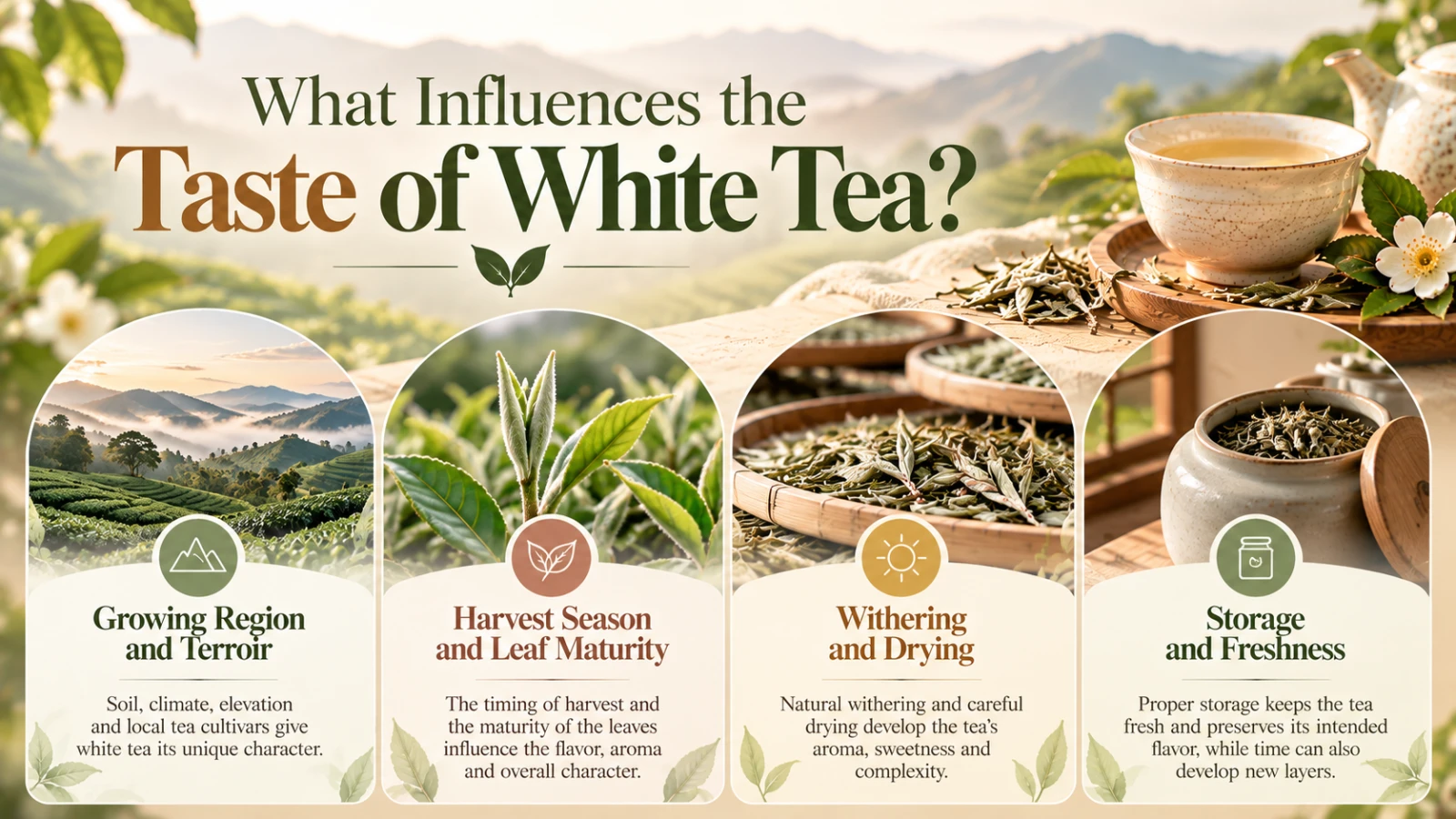
Several factors explain why two white teas can taste very different even when both are made using traditional methods.
Growing Region and Terroir
Terroir refers to the combination of environmental and agricultural conditions that shape a tea's character. These include soil, elevation, climate, rainfall, sunlight, and the local tea cultivar.
Fujian Province is particularly important in the history of Chinese white tea, with Fuding and Zhenghe among its recognized production areas. White teas from different locations may express different balances of floral aroma, sweetness, vegetal freshness, and body.
Region can provide useful context, but it does not determine quality by itself. Craftsmanship and the condition of the finished tea remain essential.
Harvest Season and Leaf Maturity
Spring is an important harvest season for many traditional white teas. Weather, plant development, and the maturity of the leaves influence the composition of the harvested material.
Unopened buds and young leaves often produce a different flavor from larger, more mature leaves. However, it is misleading to assume that younger leaves are always better. Each style has its own characteristics, and leaf maturity should be considered in relation to the intended tea.
Withering and Drying
White tea processing commonly involves withering followed by drying. During withering, fresh leaves lose moisture and undergo natural biochemical changes that influence aroma and taste.
The conditions under which the leaves are withered—including temperature, humidity, airflow, and duration—can affect the balance of floral, fruity, vegetal, and honey-like notes.
Drying reduces moisture to a level appropriate for storage and helps stabilize the finished tea. The producer's decisions at these stages can have a substantial influence on the final flavor.
Although white tea is often described as minimally processed, its production still requires care and technical judgment.
Storage and Freshness
Tea absorbs odors easily and can lose aromatic freshness when exposed to unsuitable storage conditions. Heat, humidity, direct sunlight, and strongly scented materials can alter its flavor.
White tea should generally be stored in a clean, dry, odor-free environment, protected from light and excessive temperature changes. Packaging should limit unwanted moisture exposure and help preserve the tea's intended character.
A tea that was once floral and fresh may become flat if it has been stored poorly. Conversely, certain teas may develop desirable additional complexity when kept under appropriate conditions for an extended period.
How to Brew White Tea for the Best Flavor
Brewing has a direct effect on what can be tasted in white tea. Water temperature, leaf quantity, steeping time, and water quality all influence the result.
White tea is sometimes described as difficult to brew because of its delicate flavor. In practice, a measured approach and a few adjustments are usually enough to produce a balanced cup.
Start With a Moderate Water Temperature
A useful starting range for many white teas is approximately 175–195°F (80–90°C). More delicate teas may benefit from the lower end of this range, while fuller-bodied leaf teas may respond well to hotter water.
These temperatures are starting points rather than strict rules. White tea is not uniformly delicate, and some high-quality teas can be brewed successfully with water close to boiling.
If the tea tastes bitter, harsh, or excessively drying, try lowering the temperature before changing anything else.
Adjust the Amount of Tea
For a Western-style cup, begin with approximately 2–3 grams of loose-leaf tea per 8 ounces (240 milliliters) of water.
Use a little less tea if the result feels too intense, or increase the quantity if the cup seems weak and watery. Measuring by weight gives more consistent results than relying on teaspoons because whole buds and larger leaves occupy different amounts of space.
Choose an Appropriate Steeping Time
For an initial infusion, try approximately 2–4 minutes. Taste the tea before extending the steeping time, and adjust according to the particular variety.
A shorter infusion may emphasize freshness and floral notes. A longer infusion may bring out greater sweetness and body, but it can also increase astringency.
If the tea tastes thin, slightly increase the steeping time or leaf quantity. If it tastes rough or unbalanced, reduce the steeping time or temperature.
Explore Multiple Infusions
Many loose-leaf white teas can be infused more than once. The first infusion may emphasize aroma and freshness, while subsequent infusions can reveal additional sweetness, fruit, or a fuller impression of the leaves.
For a traditional Chinese-style approach, use a relatively high proportion of leaf to water and short, repeated infusions. Depending on the tea, vessel, and personal preference, these may last from several seconds to longer intervals as the leaves open and the flavor changes.
There is no single correct sequence. The aim is to observe how the tea develops and adjust the brewing time to maintain a balanced flavor.
Use Good-Tasting Water
Water makes up nearly the entire finished beverage, so its quality matters. Water with a clean taste and moderate mineral content is a sensible choice.
Water that is strongly chlorinated or unusually mineral-rich may obscure the tea's more delicate characteristics. If the same tea tastes noticeably different when brewed with another water source, water composition may be part of the explanation.
Common Mistakes That Affect White Tea's Taste
Several common brewing mistakes can make white tea seem less enjoyable than it should.
Using too much leaf for too long. Excessive extraction can produce bitterness and a drying sensation. Adjust one variable at a time to identify the cause.
Assuming all white tea requires cool water. Some white teas are delicate, but others have mature leaves and a substantial body. Experiment within a reasonable temperature range instead of following one rule for every tea.
Expecting strong flavor from every variety. A subtle cup is not necessarily a weak or poor-quality cup. Some white teas are valued for their light aroma, restrained sweetness, and clean finish.
Adding sweeteners before tasting. Sugar or honey can mask the tea's natural differences. Taste the tea plain first, then decide whether additions suit the desired drinking experience.
Ignoring storage conditions. Tea kept near spices, coffee, cleaning products, or other strong odors may absorb unwanted aromas. Store it separately in a clean, dry place.
Judging quality by appearance alone. Silvery buds and attractive leaves can be useful clues, but appearance cannot establish the quality of the finished tea. Aroma, flavor, processing, origin, and storage all deserve consideration.
How to Choose a White Tea Based on Taste
The best white tea depends on the flavor profile a person prefers. Understanding the differences between the main styles makes it easier to choose a tea that suits individual tastes.
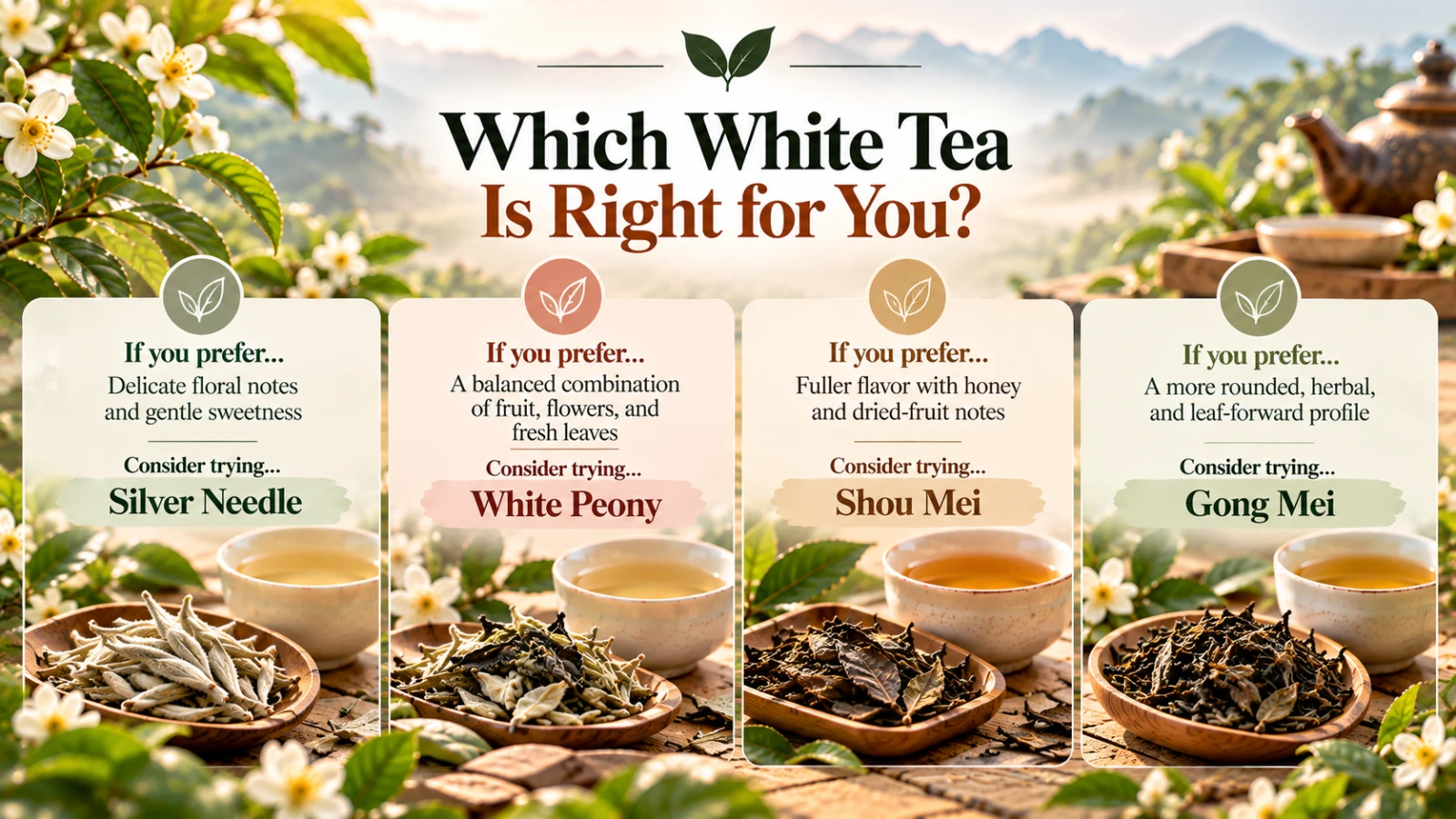
These comparisons are general guidelines, not guarantees. Individual teas vary according to their origin, harvest, processing, and storage.
When purchasing white tea, look for clear information about its Chinese origin, tea type, harvest, and producer whenever available. Loose-leaf tea from a knowledgeable specialist can make it easier to assess the actual character of the leaves.
Price alone is not a reliable measure of flavor. A more expensive bud-based tea may offer exceptional delicacy, while a more affordable leaf-based tea may provide greater body and a flavor profile better suited to everyday drinking.
For those exploring Chinese tea, comparing two or three white teas side by side can be more informative than trying to identify every flavor in a single cup. Notice which tea seems sweeter, which has a stronger floral aroma, and which leaves the longest finish. Over time, these comparisons help develop a more precise understanding of personal preferences.
Conclusion: White Tea Offers More Than a Delicate Flavor
White tea is known for its gentle sweetness, floral aromas, and clean finish, but its flavor can extend well beyond these familiar characteristics. Depending on the variety, it may taste fresh and vegetal, softly fruity, honeyed, herbal, or rich with dried-fruit notes.
Silver Needle often appeals to those who enjoy delicate aromas and subtle sweetness, while White Peony provides a balanced combination of floral, fruity, and leafy flavors. Shou Mei and Gong Mei can offer fuller, more grounded profiles. Differences in origin, harvest, processing, storage, and brewing explain much of this diversity.
The most useful way to understand white tea is to taste it attentively. Begin with a moderate brewing temperature, adjust the steeping time to suit the leaves, and observe how the flavor changes across multiple infusions. Comparing different styles can reveal preferences that broad descriptions alone cannot capture.
For readers interested in exploring these differences, Stepman's Tea offers an opportunity to discover authentic Chinese teas and learn more about the traditions behind them. Exploring different white tea styles is a practical way to develop a deeper appreciation for Chinese tea, one carefully prepared cup at a time.
FAQs
1. Does white tea taste like green tea?
White tea and green tea can share fresh, grassy, vegetal, and sweet characteristics, but their flavor profiles often differ. Green tea is generally heated early in processing to limit oxidation, while white tea is commonly withered and dried. As a result, white tea may have softer floral, fruity, honey-like, or hay-like notes, although some examples taste distinctly fresh and green.
Neither category has one universal flavor, and individual teas can overlap considerably.
2. Is white tea naturally sweet?
White tea can have a naturally sweet taste, often compared with melon, pear, honey, or dried fruit. This perceived sweetness comes from the tea's composition and the way aroma and taste interact. It does not mean that sugar has been added.
Brewing conditions influence how noticeable the sweetness becomes. Excessively long steeping can introduce bitterness or astringency that makes the cup seem less balanced.
3. Is white tea bitter?
Properly brewed white tea is not necessarily bitter. Many examples have a gentle, rounded flavor, but bitterness can occur when the tea is brewed too strongly or when its natural characteristics are particularly assertive.
Try reducing the steeping time, lowering the water temperature, or using slightly less leaf. If the tea remains unpleasantly bitter, consider whether the particular tea is suited to a different brewing approach.
4. Does white tea taste better hot or cold?
White tea can be enjoyed both hot and cold. Hot brewing often makes subtle aromas easier to perceive, while cold brewing can produce a softer, refreshing infusion with less pronounced bitterness.
For cold brewing, place loose-leaf tea in clean water and refrigerate it for several hours, tasting periodically until the flavor is balanced. Use clean equipment and refrigerate the finished tea promptly.
5. Does white tea contain caffeine?
Yes. White tea naturally contains caffeine because it is made from Camellia sinensis. The amount varies with the cultivar, leaf material, growing conditions, quantity used, and brewing method.
It is not accurate to assume that white tea always contains less caffeine than green or black tea. Anyone seeking to limit caffeine intake should account for white tea as a caffeinated beverage.
6. Can white tea develop a stronger flavor as it ages?
Some white teas develop deeper, warmer flavors during storage, including notes of dried fruit, honey, herbs, or wood. However, aging does not automatically improve a tea. The outcome depends on the original tea and the conditions under which it is stored.
Fresh and aged white teas can both be enjoyable, but they offer different experiences.