What Is White Tea? A Complete Guide
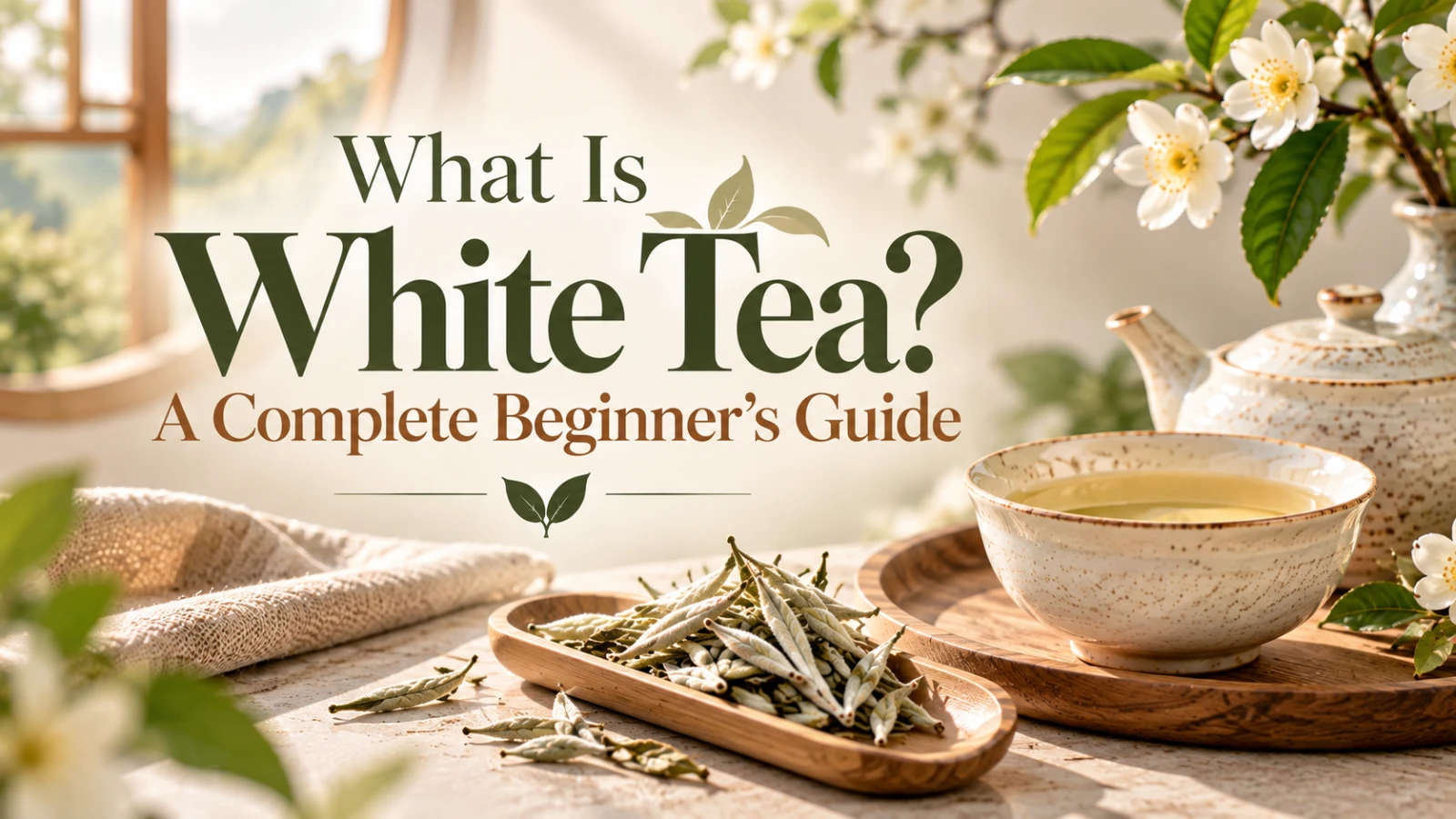
White tea is one of the least processed categories of traditional Chinese tea, known for its delicate flavor, subtle aroma, and naturally varied character. Made from the leaves and buds of the Camellia sinensis plant, white tea is particularly associated with Fujian Province in southeastern China, where several of its most recognized styles originated.
Despite its reputation for delicacy, white tea is not simply a lighter version of green tea or a tea made exclusively from unopened buds. Its character depends on the tea plant variety, the age of the leaves, the growing environment, and the methods used to wither and dry the harvested material. These factors create a range of flavors, from fresh and floral to sweet, fruity, and gently earthy.
Understanding white tea begins with how it is produced. Processing influences its appearance, aroma, and taste, while brewing technique determines how those qualities develop in the cup. Knowing the differences between white tea styles also makes it easier to select a tea suited to individual preferences.
This guide explains what white tea is, how it is made, where it comes from, how it compares with other tea categories, and how to choose, brew, and store it properly.
What Is White Tea?
White tea is a category of tea made from the leaves and buds of Camellia sinensis that undergo a relatively minimal sequence of processing, generally centered on withering and drying.
Unlike green tea, which is typically heated early in production to limit enzymatic oxidation, white tea is usually allowed to wither before it is dried. This gives naturally occurring enzymes more opportunity to influence the leaf's chemical composition during processing. The degree of oxidation that develops varies with the raw material, environmental conditions, and production method.
The name white tea is commonly associated with the fine, pale hairs found on young buds of certain tea cultivars. These hairs can give unopened buds a silvery or whitish appearance. They are particularly noticeable in bud-rich teas such as Silver Needle.
However, white tea is not always white in appearance. Dry leaves may be silver, green, gray, or brown, depending on their maturity and processing. The brewed liquor can range from very pale yellow to golden or amber.
White tea is also not necessarily made only from buds. Some styles consist primarily of unopened buds, while others contain a combination of buds and young leaves or larger, more mature leaves.
Where Does White Tea Originate?
China is the historical center of white tea production, with Fujian Province particularly important to its development. Fuding and Zhenghe are well-known white tea-producing areas, each associated with established local traditions and production styles.
Fuding, located in northeastern Fujian, is especially associated with Silver Needle and several forms of Bai Mu Dan. Zhenghe is another recognized production area, with its own approaches to raw material selection and processing.
White tea is now produced in other parts of China and in countries beyond China. Nevertheless, traditional Chinese white teas remain important reference points for understanding the category's established styles, regional differences, and processing practices.
As with other Chinese teas, the region alone does not determine quality. Cultivar, altitude, harvest season, plucking standard, craftsmanship, and storage history all influence the finished tea.
How Is White Tea Made?
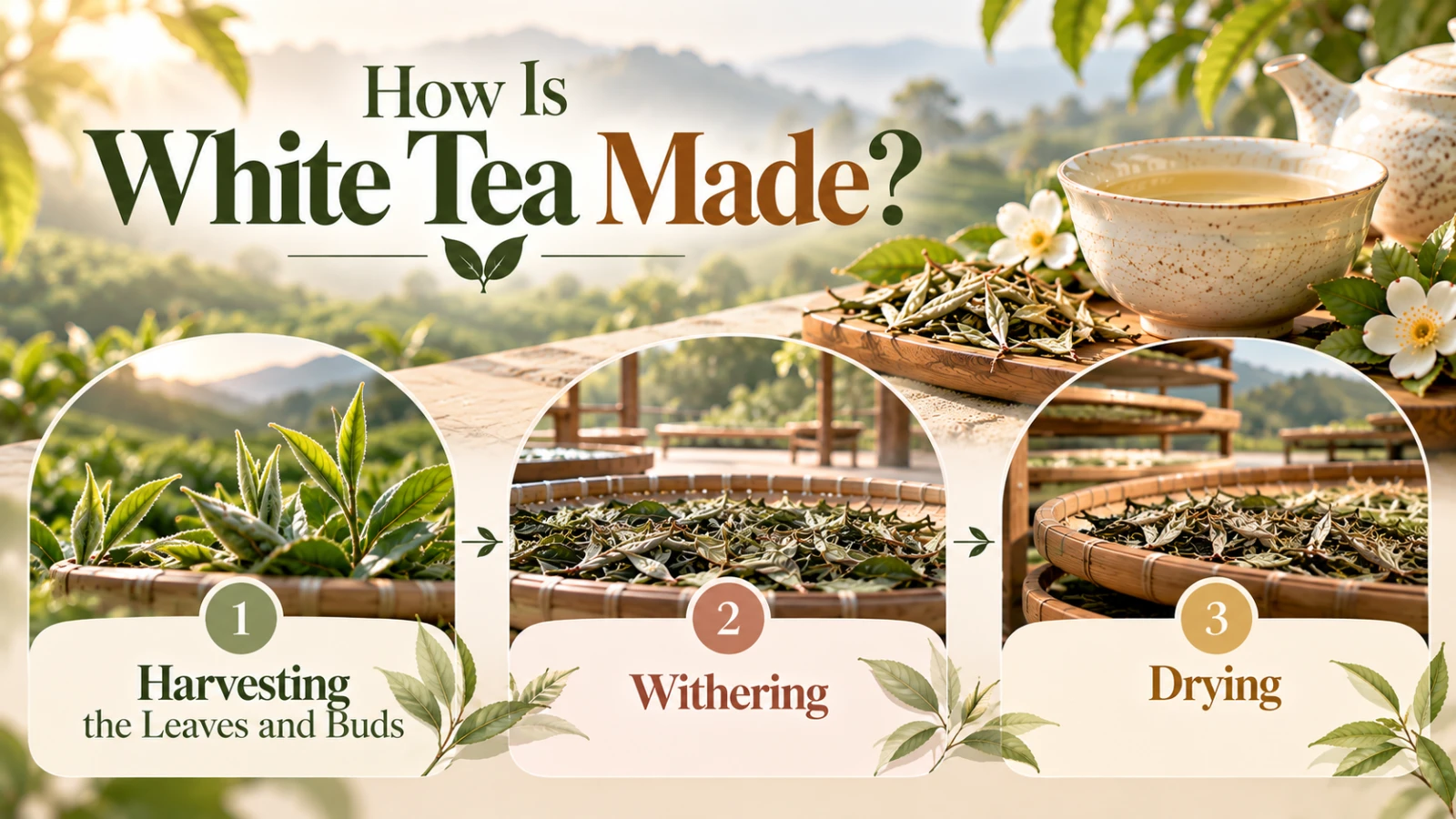
White tea's relatively simple processing sequence is one of its defining characteristics. However, minimal processing does not mean that production is effortless or that every batch will taste the same. Withering and drying require careful control to achieve a stable, balanced result.
1. Harvesting the Leaves and Buds
White tea production begins with the careful selection of fresh tea shoots. The plucking standard depends on the style being produced.
For Silver Needle, producers generally select unopened buds. Bai Mu Dan typically includes a bud and accompanying young leaves. Shou Mei and related styles may use larger leaves and less bud-rich material.
Harvest timing influences the composition and character of the raw material. Young buds and leaves differ from mature leaves in their chemical constituents, moisture content, texture, and appearance. These differences contribute to the distinct profiles of finished white teas.
The use of buds alone does not automatically guarantee superior quality. A well-made tea should be evaluated according to its style, raw material, processing, aroma, flavor, and overall condition.
2. Withering
Withering is a central stage in white tea production. Freshly harvested leaves are spread out to lose moisture, often on trays or suitable surfaces under carefully managed conditions.
As the leaves wither, they soften and become more pliable. Changes in moisture content, cellular structure, and leaf chemistry help prepare them for drying while contributing to the development of aroma and flavor.
Traditional production may involve indoor or outdoor withering, depending on the producer, climate, and desired style. Temperature, humidity, airflow, light exposure, and the duration of withering can all influence the outcome.
This stage requires judgment. Excessively rapid or uneven moisture loss can affect the finished tea, while unsuitable conditions may encourage unwanted odors or deterioration. Skilled producers adjust the process to the condition of the leaves and the surrounding environment.
3. Drying
Once the leaves have reached an appropriate stage of withering, they are dried to reduce their remaining moisture and help stabilize the tea for storage.
Drying methods vary. Producers may use controlled heated drying, sun-assisted methods, or combinations of techniques. The precise approach influences the final aroma, color, texture, and storage stability.
Unlike green tea, white tea generally does not undergo the same early, deliberate fixation step designed to halt enzymatic activity. This difference is one reason white tea develops a distinct chemical and sensory profile.
Although the process is relatively simple, consistency matters. Inadequate drying can leave tea vulnerable to moisture-related deterioration, while excessive heat can alter its aroma and flavor.
Does White Tea Oxidize?
Yes. White tea can undergo enzymatic oxidation during withering and subsequent handling. However, it is not accurate to assume that all white tea is highly oxidized or that it follows a single fixed oxidation level.
Oxidation is influenced by the leaf's condition, handling, temperature, humidity, and time. It should also be distinguished from microbial fermentation, which is a different process associated with certain other tea categories.
White tea's flavor develops through a combination of processes rather than oxidation alone. Moisture loss, enzymatic reactions, and other chemical changes contribute to the finished tea's character.
The important distinction is that white tea is generally processed with fewer interventions than green tea, oolong tea, or black tea, not that it is chemically unchanged after harvest.
The Main Types of White Tea
White tea includes several established styles that differ in their raw materials, appearance, and flavor. Understanding these distinctions provides a useful starting point when choosing a tea.
Silver Needle (Bai Hao Yin Zhen)
<escape>Silver Needle, known in Chinese as Bai Hao Yin Zhen (白毫银针), is a bud-only white tea made primarily from unopened tea buds covered with fine silvery hairs.</escape>
Its dry appearance is often slender and pale, and its brewed liquor is generally light in color. Depending on its origin, cultivar, harvest, and production, the aroma may suggest fresh flowers, hay, melon, or other delicate plant notes. The taste is often soft, clean, and subtly sweet.
Silver Needle is a useful choice for people interested in exploring the more delicate side of white tea. Because its flavor can be subtle, brewing with excessively hot water or a very long infusion may obscure some of its finer characteristics.
Bai Mu Dan (White Peony)
Bai Mu Dan (白牡丹), commonly translated as White Peony, typically contains a young bud with two or more accompanying leaves, although the precise plucking standard varies.
The inclusion of leaves creates a different balance of flavors and aromatic compounds from bud-only tea. Bai Mu Dan can offer a fuller body and more pronounced floral, fruity, or fresh hay-like notes while retaining the characteristic softness associated with many white teas.
It is often a practical introduction to the category because it can combine delicacy with a more substantial flavor profile.
Shou Mei
Shou Mei (寿眉) is generally made from larger leaves and may contain some buds, depending on the production standard. Its appearance can be more varied, with shades of green, brown, and gray.
Compared with many Silver Needle teas, Shou Mei often produces a deeper, more robust infusion. Depending on the tea and its age, the flavor may include dried fruit, herbs, honey-like sweetness, or woody notes.
Shou Mei demonstrates that white tea is not defined exclusively by pale buds or an exceptionally light taste. Mature leaves can produce satisfying complexity and body when processed and stored well.
Gong Mei
Gong Mei (贡眉) is another traditional white tea designation, although its precise meaning and use can vary among producers and markets. Its relationship to Shou Mei is not always presented consistently, particularly in modern commercial labeling.
For that reason, it is sensible to look beyond the name alone. The stated origin, raw material, harvest standard, and production information can help clarify what a particular tea offers.
These styles provide a useful framework, but white tea is not limited to four categories. Cultivar-specific teas, regional variations, and differences in harvesting and processing contribute to the wider diversity of the category.
Is White Tea Sweet?
White tea can have a naturally sweet impression without any added sugar or sweetener. This perception may come from its aromatic compounds, relatively low bitterness under suitable brewing conditions, and the balance between sweetness, astringency, and other taste sensations.
The perceived sweetness varies by tea. Some examples evoke fresh fruit or flowers, while others suggest honey, dried apricot, or hay.
Natural sweetness should not be confused with added flavoring. Authentic white tea can be enjoyed without sugar, milk, or other ingredients, allowing its original characteristics to remain prominent.
White Tea vs. Green Tea, Black Tea, and Oolong Tea
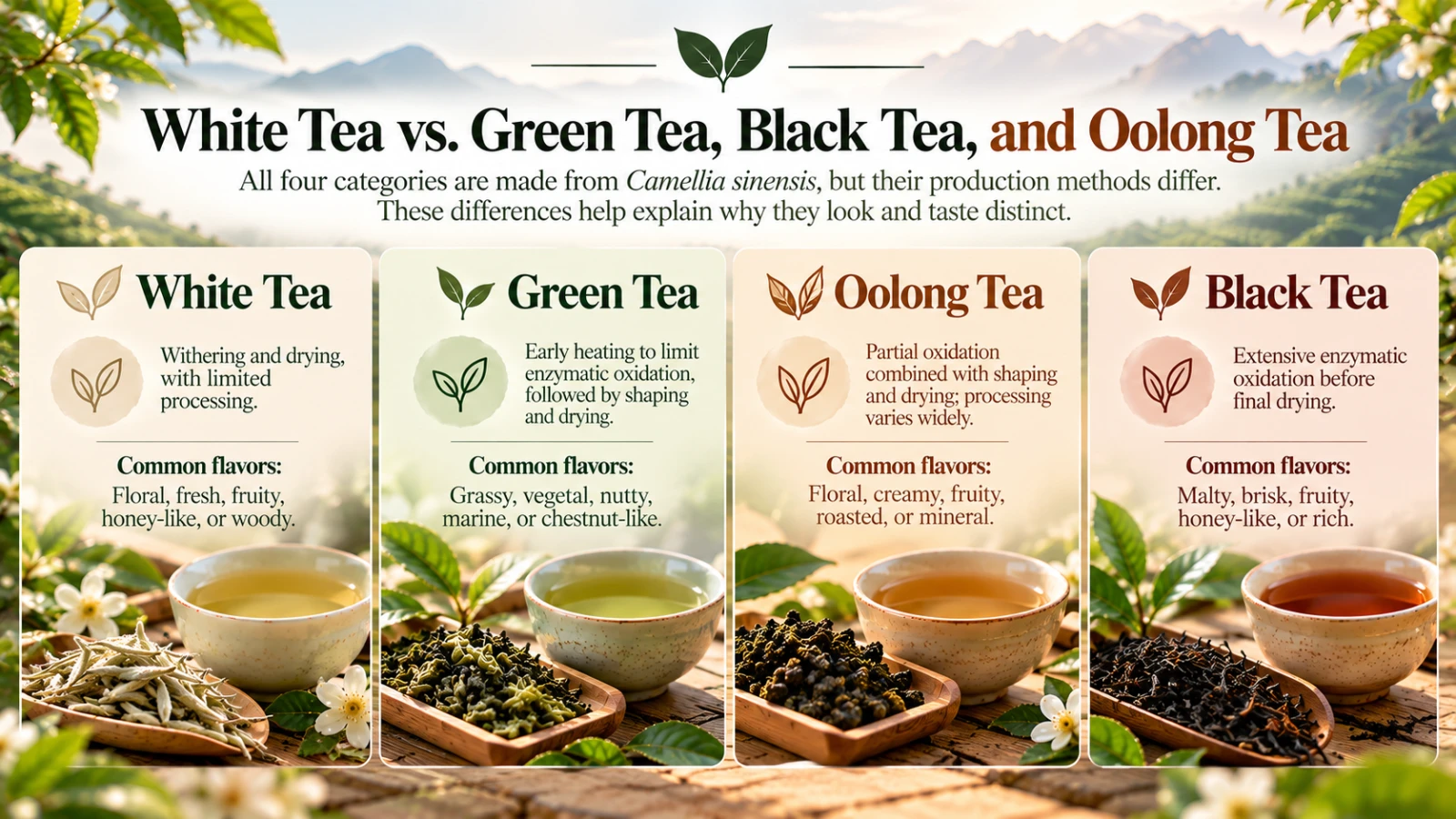
These descriptions are general rather than absolute. Individual teas can depart considerably from the typical flavor profile of their category.
The key difference is the production process. Green tea is heated early to suppress much of the enzymatic oxidation that would otherwise occur. Oolong production involves carefully managed oxidation and shaping, while black tea is generally allowed to oxidize extensively before drying. White tea relies more heavily on withering and drying, allowing a different pattern of chemical changes to develop.
White tea is sometimes called the least processed tea. This is a useful shorthand, but it should not be interpreted to mean that white tea is always healthier, more natural, or better in quality than other categories. Each type reflects its own production tradition, and quality depends on the raw material, craftsmanship, and finished condition.
Does White Tea Contain Caffeine?
Yes. White tea naturally contains caffeine because it comes from the tea plant, Camellia sinensis.
Its caffeine content varies according to the cultivar, leaf maturity, growing conditions, harvest, leaf-to-water ratio, water temperature, and steeping time. A cup of white tea cannot reliably be assumed to contain less caffeine than a cup of green or black tea simply because its flavor is delicate or its liquor is pale.
Buds can contain substantial amounts of caffeine, so a bud-rich tea such as Silver Needle is not necessarily low in caffeine. The finished cup's caffeine content also depends on how much tea is used and how it is brewed.
For those monitoring caffeine intake, the most useful approach is to consider serving size, brewing strength, and the number of cups consumed rather than relying on tea color or category alone. People who need to avoid caffeine should not assume that ordinary white tea is caffeine-free.
Is White Tea Healthy?
White tea contains naturally occurring polyphenols and other plant compounds, including catechins. These substances have been studied for their antioxidant activity and potential roles in human health.
However, laboratory findings do not automatically translate into demonstrated health benefits from drinking a particular tea. Research on white tea specifically is more limited than broad research on tea and its components, and the results depend on the type of study, preparation, and quantity consumed.
White tea can be part of a balanced dietary pattern, particularly when consumed without large amounts of added sugar. It should not be regarded as a treatment for disease, a guaranteed means of preventing illness, or a substitute for medical care.
Its most immediate benefits for many drinkers may be practical and sensory: enjoying a warm beverage, establishing a daily tea ritual, and exploring the aroma and flavor of a traditional agricultural product.
How to Brew White Tea Properly
White tea does not require complicated equipment, but thoughtful brewing can help reveal its character. There is no single ideal brewing method for every white tea. A bud-rich Silver Needle and a leaf-rich Shou Mei may respond differently to the same water temperature and steeping time.
A Simple Western-Style Brewing Method
For a straightforward starting point, use the following guidelines.
What is needed:
2–3 grams of white tea
240 milliliters (about 8 ounces) of water
A teapot or heat-resistant brewing vessel
A strainer, if needed
Instructions:
Heat fresh water to approximately 80–90°C (176–194°F).
Place the tea leaves in the brewing vessel.
Pour the water over the leaves and steep for approximately 3–5 minutes.
Strain the leaves and taste the tea.
Adjust the next infusion according to the result, using a shorter steep for excessive bitterness or a longer one for a weak, underdeveloped flavor.
These measurements are starting points rather than strict rules. Some white teas perform well at higher temperatures, while others reveal more balanced flavors at lower temperatures. Experimentation is the most reliable way to identify the best approach for a particular tea.
Traditional Chinese Brewing
White tea can also be prepared using a Chinese gongfu-style method, which uses a relatively high ratio of leaf to water and multiple short infusions.
A small gaiwan or teapot is commonly used. As a starting point, try approximately 4–5 grams of tea in a vessel holding around 100–120 milliliters of water.
Use water around 85–95°C (185–203°F), then begin with a short infusion of approximately 10–20 seconds. Increase the steeping time gradually across subsequent infusions, adjusting according to the tea's response.
These parameters are flexible. Some teas benefit from hotter water or longer infusions, especially when the leaves are mature or tightly structured.
Gongfu brewing can make it easier to observe how the aroma, texture, sweetness, and finish evolve over successive infusions. It is particularly useful for comparing different white teas or exploring the complexity of a tea beyond its first cup.
Common White Tea Brewing Mistakes
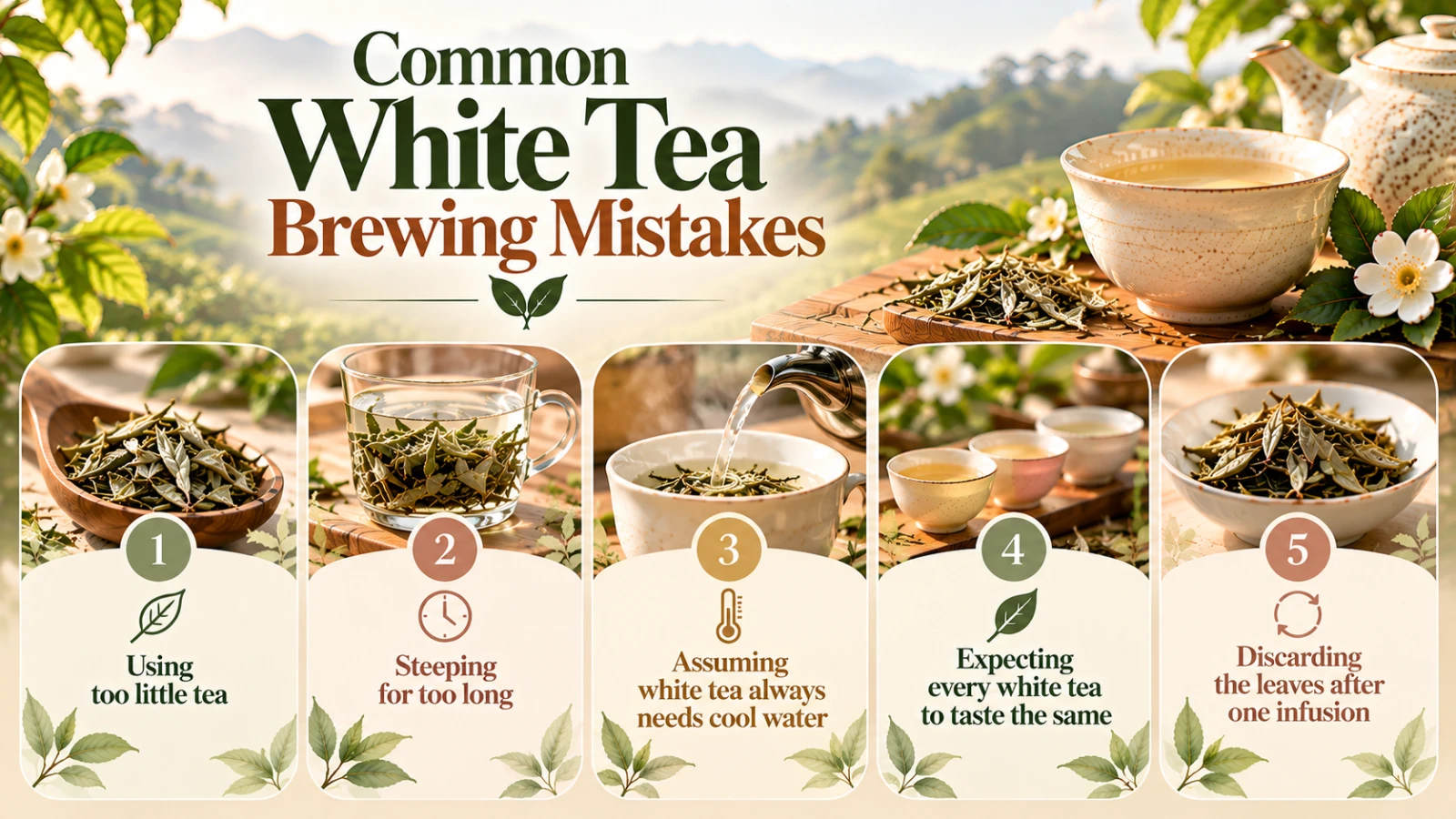
Using too little tea. A low leaf-to-water ratio can produce a weak infusion that makes the tea seem less flavorful than it is. Measure the leaves when first learning a new brewing method.
Steeping for too long. Extended steeping can increase bitterness and astringency, depending on the tea and water temperature. Adjust the brewing time before concluding that the tea itself is harsh.
Assuming white tea always needs cool water. White tea can be brewed at a range of temperatures. Excessively cool water may leave some teas tasting flat or under-extracted.
Expecting every white tea to taste the same. A floral, bud-rich tea and a mature-leaf tea can have very different flavor profiles. Brewing should account for the tea's structure and character.
Discarding the leaves after one infusion. Many white teas can be steeped more than once. Subsequent infusions may reveal different aspects of the tea, although the number of useful infusions depends on the leaf and brewing method.
How to Store White Tea
Proper storage protects white tea from moisture, odors, excessive heat, and other conditions that can degrade its quality.
For everyday drinking, keep white tea in a clean, dry, airtight container, away from direct sunlight and strong-smelling foods or household products. A cool, stable environment is generally preferable to a warm location that experiences frequent temperature changes.
Avoid storing tea near a stove, dishwasher, sink, or other source of heat and moisture. Tea readily absorbs surrounding odors, so containers should be clean and suitable for food storage.
Can White Tea Be Aged?
Some white teas are intentionally stored for years, and their character can change over time. Depending on the tea and its storage conditions, the flavor may become rounder, with notes of dried fruit, honey, or wood becoming more noticeable.
However, aging does not automatically improve every white tea. Results depend on the starting quality, processing, moisture control, packaging, and storage environment. An improperly stored tea can deteriorate rather than develop desirable complexity.
For ordinary home storage, preservation of the tea's original quality is the priority. If aging is intentional, use a carefully controlled environment and follow the producer's guidance. Do not expose tea to uncontrolled humidity in an attempt to accelerate its development.
Conclusion: Understanding White Tea Beyond Its Delicate Reputation
White tea is a diverse category of traditional tea defined by its relatively minimal processing, particularly withering and drying. Its character depends on the tea plant, harvest standard, growing environment, production methods, and storage conditions.
Silver Needle, Bai Mu Dan, Shou Mei, and Gong Mei illustrate the range of raw materials and flavor profiles found within the category. White tea can be floral and light, fruity and sweet, or deeper and more rounded. It also contains caffeine, and its composition should not be inferred from its pale appearance or gentle flavor.
To begin exploring white tea, choose a clearly described example, use a measured amount of leaf, and adjust the water temperature and steeping time to suit the tea. Store it away from moisture, heat, light, and strong odors to preserve its quality.
For those interested in exploring traditional Chinese white tea, Stepman's Tea offers an opportunity to discover teas associated with China's established tea-growing regions. Exploring different styles side by side can help develop a clearer understanding of how origin, leaf selection, processing, and brewing shape the experience in the cup.
FAQs
1. Is white tea made from a different plant than green tea?
No. Both white and green tea are made from Camellia sinensis. Their differences arise primarily from the raw material selected and the processing methods used after harvest.
2. Is white tea stronger than green tea?
It depends on what stronger means. White tea can have a delicate flavor or a substantial body, depending on the style and brewing method. Its caffeine content also varies, so flavor intensity alone cannot establish how much caffeine a cup contains.
3. Can white tea be consumed every day?
Many people enjoy white tea daily. The appropriate amount depends on individual caffeine sensitivity, overall caffeine intake, and personal health circumstances. Those who are pregnant, taking certain medications, or advised to limit caffeine should follow relevant medical guidance.
4. Should white tea be rinsed before brewing?
Rinsing is generally optional. For most Western-style brewing, the leaves can be steeped directly. In gongfu brewing, some people use a brief rinse, but it is not necessary for every white tea and may remove some delicate aromatic material. Follow the tea's characteristics and personal preference.
5. Is aged white tea better than fresh white tea?
Not necessarily. Fresh and aged white teas can offer different experiences. Fresh examples may emphasize floral, vegetal, or fruity notes, while well-stored aged teas may develop deeper, rounder characteristics. Quality, storage, and individual preference matter more than age alone.
6. Is white tea suitable for beginners?
Yes. White tea can be approachable for beginners because its brewing process is relatively simple and its flavor profiles range from delicate to robust. Bai Mu Dan is a useful starting point for those seeking both softness and a noticeable flavor, while Silver Needle offers an opportunity to explore a more delicate style.