Common Sheng Pu-erh Brewing Mistakes: A Practical Guide to Better Tea
Sheng Pu-erh, also called raw Pu-erh, is a traditional Chinese tea known for its evolving character, layered aroma, and ability to change with age and storage. Yet even a good Sheng Pu-erh can taste unpleasant if it is brewed with the wrong temperature, timing, tea-to-water ratio, or technique.
For beginners, the brewing process can sometimes seem more complicated than it needs to be. In reality, learning a few basic principles makes Sheng Pu-erh much easier to prepare and appreciate.
This guide explains the most common Sheng Pu-erh brewing mistakes, why they affect the cup, and what you can do instead. Whether you are preparing a young raw Pu-erh or a more mature tea, these practical guidelines can help you develop a more balanced and enjoyable brewing routine.
What Is Sheng Pu-erh?
Sheng Pu-erh is a type of Pu-erh tea traditionally produced in China's Yunnan Province. Unlike Shu Pu-erh, which undergoes an accelerated post-fermentation process called wet piling, Sheng Pu-erh is produced without this artificial acceleration.
Fresh Sheng Pu-erh generally undergoes withering, pan-firing, rolling, drying, and pressing or storage as loose-leaf tea. After production, it can continue to transform naturally over time through microbial and oxidative processes influenced by the tea's environment.
This means Sheng Pu-erh is not a completely static product. A young tea may have fresh, floral, herbal, bitter, or astringent characteristics, while an appropriately aged tea can develop deeper woody, fruity, earthy, honeyed, or mellow qualities.
Brewing therefore matters because it determines how much of the tea's character reaches the cup.
Why Brewing Sheng Pu-erh Correctly Matters
Sheng Pu-erh contains a complex combination of compounds that contribute to aroma, bitterness, astringency, sweetness, body, and aftertaste. Brewing conditions influence how quickly these compounds are extracted.
A short infusion may produce a light, aromatic cup. A longer infusion generally extracts more compounds and can create a stronger, more intense flavor.
This is particularly important with Sheng Pu-erh because different teas can respond very differently to the same brewing method.
A young, powerful Sheng may become intensely bitter when over-extracted. A delicate tea may lose some of its subtle character when brewed with excessive heat or too much leaf.
Correct brewing is therefore not about following one rigid formula. It is about understanding how tea, water, temperature, time, and technique interact.
10 Common Sheng Pu-erh Brewing Mistakes
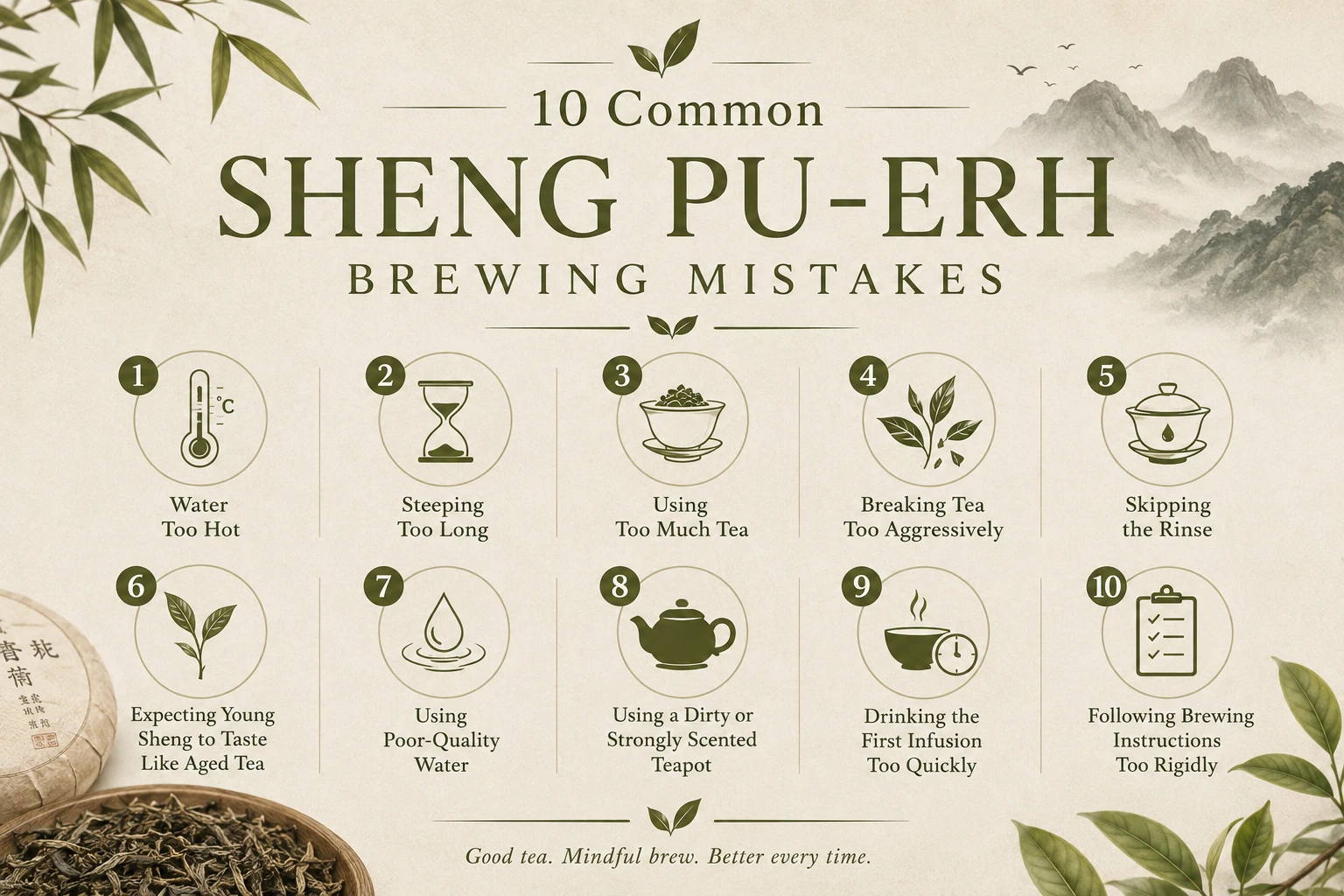
1. Using Water That Is Too Hot
One of the most common misconceptions is that all Pu-erh should automatically be brewed with boiling water for long periods.
Sheng Pu-erh can often tolerate relatively hot water, particularly when using traditional brewing methods. However, very high heat combined with long steeping can make some young or delicate Sheng teas taste excessively bitter or astringent.
The problem is not necessarily hot water by itself. It is the combination of temperature, leaf quantity, infusion time, and the particular tea.
What to do instead
For many Sheng Pu-erh teas, water around 90–100°C (194–212°F) can work well, with adjustments based on the tea.
If a young Sheng tastes harsh, try slightly lowering the temperature or shortening the infusion. If the tea tastes thin or lacks aroma, hotter water may be appropriate.
Use temperature as a tool rather than treating it as a fixed rule.
2. Steeping the Tea for Too Long
Long steeping is another frequent mistake.
When Sheng Pu-erh leaves remain in hot water for too long, extraction continues. This can produce an overly concentrated cup, especially when using a generous amount of tea.
The result may be strong bitterness, pronounced astringency, or a heavy mouthfeel that hides the tea's more subtle characteristics.
This is particularly noticeable when brewing Gongfu style, where relatively short infusions are repeated several times.
What to do instead
Start with a short infusion and taste the result. If it is too light, increase the next infusion gradually.
With traditional Gongfu brewing, infusions may begin at only a few seconds and increase progressively. The exact timing depends on the tea and the amount of leaf used.
The goal is not to make every infusion taste identical. One of the pleasures of Sheng Pu-erh is observing how the tea changes from infusion to infusion.
3. Using Too Much Tea
Adding a large amount of leaf does not automatically create a better or more flavorful cup.
Too much tea relative to the amount of water can make a Sheng Pu-erh extremely concentrated. This may overwhelm the drinker's palate and make it difficult to distinguish aroma, sweetness, texture, and aftertaste.
This is a common issue when transitioning from Western-style tea preparation to Gongfu brewing.
What to do instead
Traditional Gongfu brewing often uses a relatively high leaf-to-water ratio because the tea is infused for short periods and brewed multiple times.
Rather than focusing on a single universal measurement, begin with a moderate amount and adjust according to your brewing vessel and preferences.
As you gain experience, you can deliberately experiment with more or less leaf to see how the tea responds.
4. Breaking the Tea Too Aggressively
Compressed Sheng Pu-erh is commonly sold in cakes, bricks, or tuocha. Before brewing, the leaves need to be separated carefully.
A common mistake is using excessive force and crushing the leaves into small fragments.
Broken leaves have a greater exposed surface area, which can cause them to release flavor more rapidly. This may result in a stronger and less controlled infusion.
Aggressive handling can also make it harder to understand the original leaf material.
What to do instead
Use a proper Pu-erh tea knife or pick and gently work into the compressed tea from the side.
Try to separate leaves rather than pulverizing them. Some breakage is inevitable, particularly with tightly compressed tea, but careful handling can preserve more of the leaf structure.
Once separated, allow the tea to rest briefly before brewing if appropriate.
5. Skipping the Rinse
A quick rinse is commonly used when preparing compressed Pu-erh in the traditional Chinese style.
The purpose is not simply to "wash" the tea. A brief rinse can help hydrate compressed leaves, loosen them, and prepare them for subsequent infusions. It can also remove loose particles from handling and compression.
However, the rinse should not become a long infusion.
What to do instead
Place the appropriate amount of tea in your brewing vessel and add hot water. Allow it to contact the leaves briefly, then discard the rinse water.
For tightly compressed tea, the leaves may benefit from a short resting period before the first proper infusion.
Not every brewing situation requires a rinse, but it is a useful part of traditional preparation, particularly for compressed Sheng Pu-erh.
6. Expecting Young Sheng Pu-erh to Taste Like Aged Tea
This is more of an expectation mistake than a technical brewing error, but it can significantly affect how someone evaluates a tea.
Young Sheng Pu-erh may have characteristics such as:
- Fresh herbal notes
- Floral aromas
- Green or vegetal qualities
- Bitterness
- Astringency
- Citrus or fruity notes
- Stronger mouthfeel
- Lingering aftertaste
Aged Sheng Pu-erh may develop a different profile as it changes over time.
If someone expects a young Sheng to taste soft, dark, earthy, and mellow, they may incorrectly conclude that the tea was brewed badly.
What to do instead
Learn to identify the age and general style of the tea before brewing it.
Ask what the tea is intended to offer. Is it a young, aromatic Sheng? A powerful bitter tea? A more mature raw Pu-erh?
Brewing should reveal the tea's character rather than force it into the flavor profile you expected.
7. Using Poor-Quality Water
Tea is mostly water, so water quality can have a significant effect on the final cup.
Strongly chlorinated water, water with an unusual mineral balance, or heavily treated tap water can interfere with delicate aromas and alter the perceived texture of tea.
This is easy to overlook because the problem may appear to be the tea itself.
What to do instead
Use clean, fresh water with a neutral taste.
Filtered water can be useful when local tap water has strong chlorine or mineral characteristics. Avoid repeatedly boiled water when possible, particularly when you are trying to appreciate subtle aromatic differences.
You do not necessarily need expensive bottled water. The most important point is that the water tastes clean and works well with tea.
8. Using a Dirty or Strongly Scented Teapot
Tea absorbs and interacts with its brewing environment. A brewing vessel that contains strong aromas from previous teas can influence the next infusion.
This is especially relevant when using unglazed clay teapots, which can retain some of the character of teas brewed in them.
What to do instead
Keep your brewing equipment clean and avoid exposing it to strong food or household odors.
If using an unglazed clay teapot, consider dedicating it to one broad tea category rather than switching constantly between strongly different teas.
For beginners, a porcelain gaiwan is an excellent option because it is relatively neutral and allows the tea's appearance, aroma, and flavor to be observed without adding much character from the vessel.
9. Drinking the First Infusion Too Quickly
Sheng Pu-erh can change dramatically as the leaves open.
A tightly compressed cake may initially release less flavor because water has not fully penetrated the leaves. After several infusions, the leaves can open and reveal new aromas, textures, and flavors.
Judging the tea entirely from the first proper infusion can therefore be misleading.
What to do instead
Give the tea several infusions.
Pay attention to how the aroma develops, whether bitterness changes into sweetness, how the texture feels in the mouth, and how long the aftertaste remains.
This is one of the defining features of Gongfu-style brewing: the tea becomes an unfolding experience rather than a single cup.
10. Following Brewing Instructions Too Rigidly
Recipes are useful starting points, but they should not become restrictions.
A brewing guide may recommend a particular temperature, amount of leaf, or infusion time. Yet Sheng Pu-erh varies according to cultivar, leaf grade, harvest, processing, compression, age, and storage.
Two teas labeled Sheng Pu-erh may behave completely differently in the same brewing vessel.
What to do instead
Treat brewing instructions as a starting point.
If the tea is too bitter, shorten the infusion or reduce the temperature. If it is too weak, increase the infusion time or use slightly more leaf. If the aroma is muted, experiment with hotter water.
Good brewing is partly an exercise in observation.
A Simple Sheng Pu-erh Brewing Method for Beginners
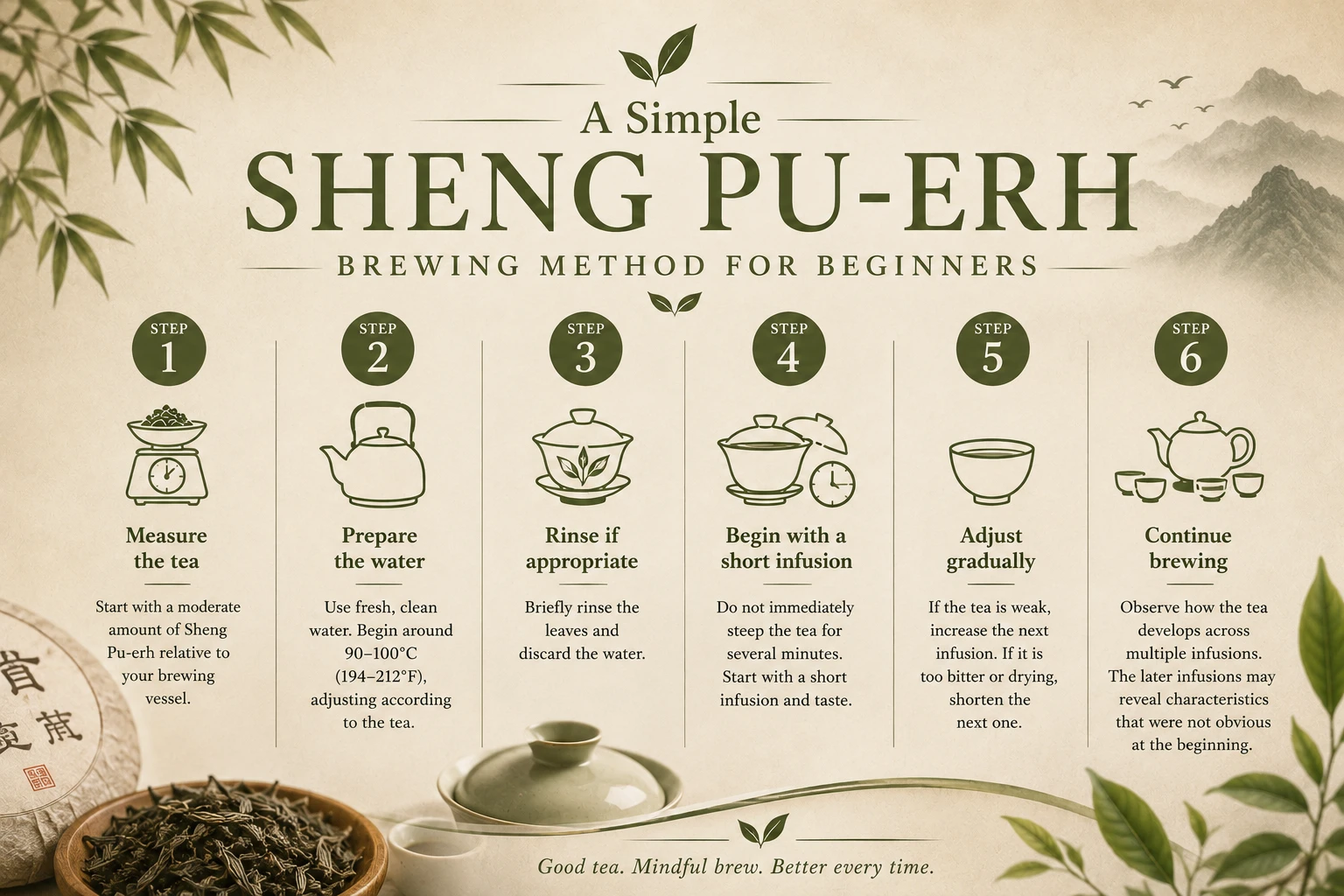
If you are new to Sheng Pu-erh, there is no need to begin with complicated equipment.
A gaiwan, small teapot, or another suitable brewing vessel can work well.
Step 1: Measure the tea
Start with a moderate amount of Sheng Pu-erh relative to your brewing vessel.
Step 2: Prepare the water
Use fresh, clean water. Begin around 90–100°C (194–212°F), adjusting according to the tea.
Step 3: Rinse if appropriate
Briefly rinse the leaves and discard the water.
Step 4: Begin with a short infusion
Do not immediately steep the tea for several minutes. Start with a short infusion and taste.
Step 5: Adjust gradually
If the tea is weak, increase the next infusion. If it is too bitter or drying, shorten the next one.
Step 6: Continue brewing
Observe how the tea develops across multiple infusions. The later infusions may reveal characteristics that were not obvious at the beginning.
How to Tell Whether You Are Over-Brewing Sheng Pu-erh
The clearest sign of over-brewing is an imbalance between intensity and enjoyment.
The tea may become:
- Excessively bitter
- Strongly astringent
- Drying on the tongue
- Heavy or harsh
- Less aromatic
- Difficult to drink comfortably
Bitterness itself is not necessarily a defect in Sheng Pu-erh. Some teas are intentionally valued for their bitterness and the sweetness or aftertaste that follows.
The important distinction is whether the bitterness is balanced by other qualities.
If a tea becomes unpleasantly harsh, make a controlled change rather than immediately deciding that the tea is poor quality.
Try a shorter infusion first. If necessary, reduce the temperature or amount of leaf.
How Storage Can Affect Your Brewing Experience
Brewing does not exist separately from storage.
Sheng Pu-erh can change substantially depending on how it is stored over time. Temperature, humidity, ventilation, odors, and environmental stability can all influence the tea's development.
A tea that has absorbed strong household odors, for example, may carry those aromas into the cup.
For this reason, purchasing quality tea is only part of the process. Proper storage helps preserve the characteristics you are trying to experience.
Keep Sheng Pu-erh in a clean, odor-free environment away from strong spices, perfumes, smoke, and excessive moisture. Avoid treating Pu-erh as an ordinary kitchen ingredient that can be stored anywhere.
Practical Tips for Better Sheng Pu-erh Brewing
For a simple reference, remember these principles:
Use good water. Clean-tasting water gives the tea a better foundation.
Start conservatively. Short infusions are easier to adjust than an over-steeped cup.
Respect the tea. Young and aged Sheng Pu-erh can behave very differently.
Handle compressed tea gently. Preserve leaf structure when separating a cake.
Taste repeatedly. One infusion rarely tells the whole story.
Adjust one variable at a time. Change temperature, time, or leaf quantity separately when possible so you can understand the effect.
Do not confuse bitterness with poor quality. Some Sheng teas naturally have significant bitterness or astringency.
Do not assume every Sheng uses the same recipe. Tea is agricultural and variable, so brewing should remain flexible.
Choosing Sheng Pu-erh for Your Brewing Journey
Learning to brew Sheng Pu-erh becomes easier when you understand what you are buying.
When choosing a tea, consider its production region, harvest information, age, storage history when available, compression, and overall character.
Authenticity and traceability are also important considerations when purchasing traditional Chinese tea. A clear description of the tea's origin and production can help you understand what you are likely to encounter in the cup.
Stepmans Tea approaches Sheng Pu-erh as a tea worth learning about rather than simply a product to consume. Exploring different authentic Chinese teas can give you the opportunity to compare young and mature styles, different processing approaches, and the ways tea changes through brewing.
For anyone developing their palate, keeping simple tasting notes can also be valuable. Record the tea, water temperature, leaf quantity, infusion time, aroma, bitterness, astringency, sweetness, body, and aftertaste. Over time, these observations can make your brewing decisions much more intuitive.
Conclusion
The most common Sheng Pu-erh brewing mistakes are usually easy to correct. Water that is too hot, excessively long infusions, too much tea, poor-quality water, aggressive handling of compressed leaves, and rigid brewing formulas can all prevent a tea from showing its full character.
The solution is not to find one perfect recipe. Sheng Pu-erh is naturally variable, and good brewing involves observation and adjustment.
Start with clean water, appropriate leaf quantity, a suitable temperature, and short infusions. Taste the tea carefully and make small changes as you continue. Give the leaves time to open and pay attention to how the flavor, aroma, texture, and aftertaste evolve.
Most importantly, let the tea guide the brewing process. Once you understand how Sheng Pu-erh responds to temperature, time, and leaf quantity, brewing becomes much less about avoiding mistakes and much more about discovering what each tea has to offer.
If you'd like to explore authentic Chinese tea and experience different Sheng Pu-erh styles for yourself, you can browse Stepman's Tea, and check out our carefully selected collection and use what you've learned here to approach each tea with greater confidence.
FAQs
1. What is the best temperature for brewing Sheng Pu-erh?
A useful starting range for Sheng Pu-erh is approximately 90–100°C (194–212°F). The ideal temperature depends on the tea. Young or delicate Sheng may benefit from slightly cooler water, while some mature or robust teas can respond well to hotter water.
2. Why does my Sheng Pu-erh taste too bitter?
Excessive bitterness can result from a combination of high temperature, too much tea, or an infusion that is too long. However, some Sheng Pu-erh naturally has noticeable bitterness. Try shortening the infusion first and then adjust the water temperature or leaf quantity if necessary.
3. How long should I steep Sheng Pu-erh?
There is no single correct steeping time. Gongfu-style brewing often starts with short infusions of only a few seconds, followed by gradually longer infusions. Western-style brewing generally uses longer steeping times with less tea. The best approach is to taste and adjust rather than rely on one fixed time.
4. Should you rinse Sheng Pu-erh tea before brewing?
A brief rinse is commonly used when preparing compressed Sheng Pu-erh in the traditional Chinese style. It can help hydrate and loosen the leaves before the main infusions. The rinse should generally be brief rather than treated as a full steep.
5. How much Sheng Pu-erh should I use?
The amount depends on your brewing vessel and method. Gongfu brewing generally uses more leaf relative to water than Western-style brewing because the tea is prepared through multiple short infusions. Start with a moderate amount and adjust according to the strength and character of the tea.
6. Why does my Sheng Pu-erh taste astringent?
Astringency can be a natural characteristic of Sheng Pu-erh, particularly in some younger teas. It can also become more pronounced when the tea is over-extracted. If the cup feels excessively drying, try shortening the infusion or reducing the water temperature.
7. Can you brew Sheng Pu-erh with boiling water?
Yes. Many Sheng Pu-erh teas can be brewed with water close to boiling, particularly when using Gongfu-style preparation. However, boiling water combined with long steeping can make some teas overly bitter or astringent. Brewing variables should be adjusted according to the specific tea.
8. Do you need a special teapot for Sheng Pu-erh?
No. A gaiwan, porcelain teapot, or other suitable brewing vessel can work well. A neutral porcelain gaiwan is particularly useful for beginners because it allows you to observe the tea without strongly influencing its flavor.
9. Why does Sheng Pu-erh taste different after several infusions?
As the leaves absorb water and gradually open, different compounds and aromatic characteristics are extracted. This can cause the tea's aroma, flavor, texture, bitterness, and aftertaste to change from one infusion to the next.
10. Is bitterness in Sheng Pu-erh a sign of poor quality?
Not necessarily. Bitterness can be a natural part of Sheng Pu-erh's character, especially in certain young teas. What matters is the balance between bitterness, sweetness, aroma, texture, and aftertaste, as well as whether the tea develops positively during subsequent infusions.