Does Shu Pu-erh Improve With Age?
Among the many questions surrounding Chinese tea, one of the most common is whether Shu Pu-erh improves with age. The answer is both simple and nuanced: yes, high-quality Shu Pu-erh can improve over time, but not in the same way or to the same extent as Sheng (raw) Pu-erh. The degree of improvement depends on the quality of the tea, the fermentation process, storage conditions, and the drinker's personal preferences.
Because aged teas often command higher prices and are surrounded by myths, it is easy for beginners to assume that any older Shu Pu-erh is automatically better. In reality, age alone does not determine quality. A well-crafted tea stored under appropriate conditions may become smoother and more refined over several years, while a poorly made or improperly stored tea may never reach its full potential.
This guide explains what aging means for Shu Pu-erh, why it matters, how the aging process works, and how to determine whether an aged tea is worth seeking. Whether you are purchasing your first cake or building a small collection, understanding how Shu Pu-erh develops over time will help you make informed decisions and appreciate this distinctive style of Chinese tea.
What Is Shu Pu-erh?
Shu Pu-erh, also known as ripe or cooked Pu-erh, is a fermented tea produced in China's Yunnan Province using the large-leaf variety Camellia sinensis var. assamica. Unlike green, white, or black tea, Shu Pu-erh undergoes a carefully controlled post-fermentation process known as wo dui, or wet piling.
Developed during the 1970s, this technique was designed to accelerate many of the characteristics traditionally associated with naturally aged Sheng Pu-erh. Through carefully managed heat, moisture, and microbial activity, tea producers transform freshly processed leaves into a tea with a rich body, dark liquor, earthy aroma, and smooth mouthfeel.
Unlike Sheng Pu-erh, which may require decades to fully mature, Shu Pu-erh is intentionally crafted to be enjoyable shortly after production. However, this does not mean it remains unchanged. Even after fermentation is complete, subtle transformations continue as the tea rests under suitable storage conditions.
Why Does Aging Matter?
Although Shu Pu-erh is considered "ready to drink" when it leaves the factory, aging can gradually refine its character.
Freshly produced Shu Pu-erh often retains traces of its fermentation process. Depending on the producer, this may appear as earthy, woody, damp forest, or compost-like aromas. While these characteristics are normal, they tend to soften as the tea rests.
Over time, properly stored Shu Pu-erh may develop:
- A cleaner, sweeter aroma
- Greater smoothness
- Increased depth and complexity
- Better integration of flavors
- A thicker, silkier mouthfeel
- A longer, more pleasant finish
Rather than creating dramatic new flavors, aging usually polishes what already exists. The changes are gradual and often appreciated most by drinkers who regularly compare teas from different production years.
How Does Shu Pu-erh Age?
Unlike Sheng Pu-erh, whose ongoing transformation is driven largely by slow natural oxidation and microbial activity over many years, Shu Pu-erh has already undergone extensive microbial fermentation during production.
That means most of its major transformation has already occurred before it reaches the consumer.
After production, several slower processes continue:
The Fermentation Aroma Settles
Immediately after fermentation, many Shu Pu-erh teas display what enthusiasts sometimes call the "pile aroma"—a scent resulting from the wo dui process.
As the tea rests, these aromas gradually dissipate, allowing sweeter and more delicate notes to emerge.
This is why many experienced tea drinkers prefer Shu Pu-erh that has rested for one to three years after production rather than drinking it immediately.
Moisture and Chemical Balance Stabilize
Even in dry storage, tiny chemical changes continue inside the tea leaves.
These changes may contribute to:
- Better flavor integration
- Reduced sharpness
- Increased sweetness
- Greater clarity in aroma
Unlike dramatic fermentation, these processes are slow and subtle.
The Tea Becomes More Harmonious
One of the most noticeable improvements is balance.
Rather than emphasizing individual flavors, aged Shu Pu-erh often develops a more unified character where aroma, body, sweetness, and finish complement one another.
Does Every Shu Pu-erh Improve With Age?
No. Age is only beneficial when the tea begins with good raw material, skilled processing, and proper storage.
Poor-quality tea generally does not become exceptional simply because time passes.
Several factors determine aging potential.
1. Quality of the Original Leaves
Excellent Shu Pu-erh begins with high-quality maocha (sun-dried tea leaves).
Tea made from healthy, carefully harvested leaves generally has greater complexity and structure than tea produced from broken or lower-grade material.
Aging cannot compensate for poor ingredients.
2. Skill of the Fermentation Process
The wo dui process requires careful control of:
- Moisture
- Temperature
- Airflow
- Turning frequency
- Fermentation duration
Well-managed fermentation creates a stable tea that continues developing gracefully.
Poor fermentation may leave permanent defects such as harshness, excessive earthiness, or unpleasant odors.
3. Compression Style
Shu Pu-erh is available as loose leaf or compressed forms such as cakes, bricks, and tuocha.
Compressed tea often ages more slowly because less air circulates between the leaves.
Many collectors believe moderate compression encourages more gradual, even maturation.
Loose leaf Shu Pu-erh generally changes more quickly but may also lose aromatic freshness sooner.
How Long Should Shu Pu-erh Be Aged?
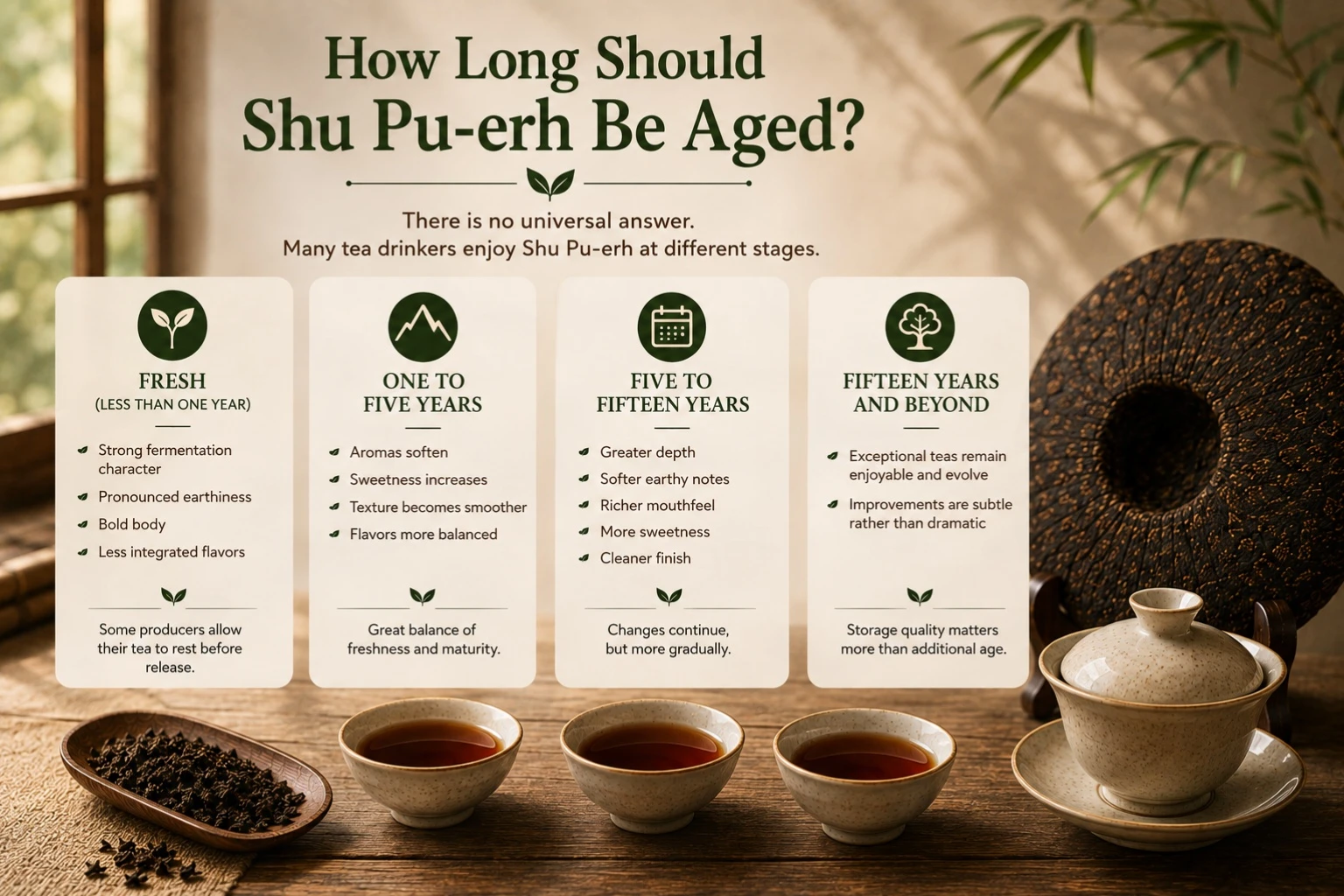
Many tea drinkers enjoy Shu Pu-erh at different stages of development.
Fresh (less than one year)
Fresh tea often displays:
- Strong fermentation character
- Pronounced earthiness
- Bold body
- Less integrated flavors
Some producers intentionally allow their tea to rest before release.
One to Five Years
This is often considered an excellent window for many quality Shu Pu-erh teas.
During this period:
- Fermentation aromas soften
- Sweetness increases
- Texture becomes smoother
- Flavors become more balanced
Many enthusiasts consider this an ideal combination of freshness and maturity.
Five to Fifteen Years
Well-stored tea may continue gaining refinement.
Common characteristics include:
- Greater depth
- Softer earthy notes
- Richer mouthfeel
- More pronounced sweetness
- Cleaner finish
The changes become increasingly gradual.
Fifteen Years and Beyond
Exceptional teas stored correctly for many years can remain enjoyable and continue evolving.
However, improvements are generally subtle rather than dramatic.
At this stage, storage quality often becomes more important than additional age.
Does Older Always Mean Better?
One of the biggest misconceptions surrounding Pu-erh is that older tea is automatically superior.
This is not true.
An older tea may be disappointing if it was:
- Made from poor-quality leaves
- Over-fermented
- Stored in excessive humidity
- Exposed to mold
- Stored near strong odors
- Dried out excessively
Conversely, a younger tea produced with excellent craftsmanship may provide a far better drinking experience than an older but poorly handled tea.
Age should therefore be viewed as one factor among many—not the only measure of quality.
How Storage Influences Aging
Proper Shu Pu-erh tea storage is one of the most important factors influencing its aging process.
Tea continues changing only when stored in a stable environment.
Good storage generally includes:
- Moderate humidity
- Stable temperatures
- Protection from sunlight
- Good airflow
- Clean surroundings
- No exposure to cooking smells, perfumes, smoke, or chemicals
Improper storage can permanently damage the tea.
Common warning signs include:
- Moldy odors
- Sour aromas
- Excessive mustiness
- Chemical smells
- Visible mold
- Loss of sweetness
Properly stored Shu Pu-erh should smell clean and inviting, even after many years.
How Can You Tell if Aged Shu Pu-erh Is Well Preserved?
When evaluating an older tea, use all of your senses.
Dry Aroma
Look for aromas such as:
- Aged wood
- Forest floor
- Dried fruit
- Cocoa
- Nuts
- Herbs
- Gentle sweetness
Avoid teas with obvious moldy, fishy, or sour smells.
Liquor
Well-aged Shu Pu-erh usually produces:
- Clear reddish-brown liquor
- Bright appearance
- Good clarity
Cloudiness may indicate poor brewing technique, but persistent dullness or sediment can sometimes suggest storage issues.
Taste
Quality aged Shu Pu-erh often offers:
- Smooth texture
- Pleasant sweetness
- Earthy depth
- Woody complexity
- Long-lasting finish
The tea should remain balanced rather than overwhelmingly earthy.
Mouthfeel
Texture is often where aging becomes most noticeable.
Well-aged tea may feel:
- Thick
- Rounded
- Velvety
- Silky
A harsh or drying sensation is generally less desirable.
Can Shu Pu-erh Become Too Old?
Unlike many foods, tea does not suddenly become "expired" simply because it is old.
However, very long storage does not guarantee continual improvement.
Eventually, tea may reach a point where changes become minimal.
If stored poorly, it may gradually lose:
- Aroma
- Brightness
- Sweetness
- Complexity
For this reason, many collectors focus on preserving tea carefully rather than simply keeping it for as many years as possible.
Practical Tips for Aging Shu Pu-erh at Home
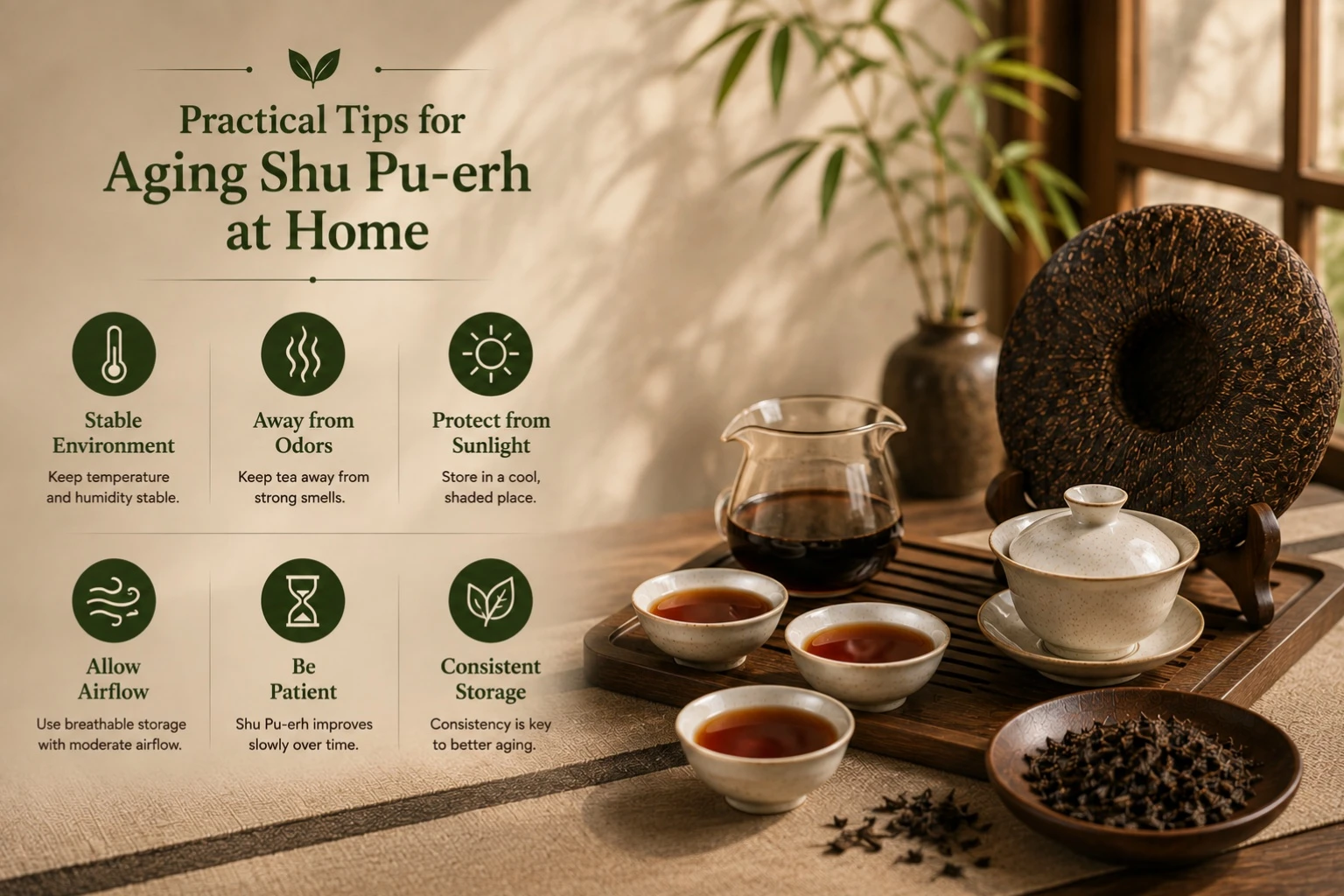
If you plan to age your own tea, simple storage practices can make a meaningful difference.
Store Tea in a Stable Environment
Avoid frequent fluctuations in temperature and humidity.
Consistency is generally more important than achieving a specific number.
Keep Tea Away from Strong Odors
Tea readily absorbs surrounding smells.
Avoid storing it near:
- Coffee
- Spices
- Cleaning products
- Perfumes
- Tobacco
Protect from Sunlight
Direct sunlight may negatively affect both aroma and flavor.
A cool, shaded cabinet is usually preferable.
Allow Some Airflow
Completely airtight storage is generally unnecessary for long-term aging.
Moderate airflow supports gradual development while protecting the tea from excessive moisture.
Be Patient
Shu Pu-erh evolves slowly.
Checking the tea every year or two often reveals more noticeable differences than brewing it every few weeks in hopes of detecting change.
Common Myths About Aging Shu Pu-erh
Myth 1: Older tea is always better.
Reality: Quality depends on craftsmanship, raw materials, and storage—not age alone.
Myth 2: All Shu Pu-erh should be aged for decades.
Reality: Many excellent Shu Pu-erh teas are enjoyed between one and ten years of age.
Myth 3: Darker tea means it is older.
Reality: Liquor color depends on production methods, leaf material, and brewing—not simply age.
Myth 4: Any environment is suitable for storage.
Reality: Heat, excessive humidity, sunlight, and odors can all diminish tea quality over time.
How Should Beginners Approach Aged Shu Pu-erh?
For those new to Shu Pu-erh, comparing teas of different production years is often more valuable than chasing very old or expensive cakes.
A practical approach is to:
- Taste teas aged one, three, five, and ten years.
- Compare the same tea over multiple infusions.
- Keep notes on aroma, texture, sweetness, and finish.
- Purchase from sellers who provide transparent information about origin, production year, and storage history.
Over time, these comparisons help develop an understanding of how aging influences different styles of Shu Pu-erh.
Conclusion
Shu Pu-erh can indeed improve with age, but its transformation is generally subtle rather than dramatic. Unlike Sheng Pu-erh, which undergoes decades of natural evolution, Shu Pu-erh has already experienced extensive fermentation before it reaches the tea drinker. Aging primarily refines the tea by softening fermentation notes, increasing smoothness, and allowing its flavors to become more balanced and harmonious.
The greatest influences on aging are not simply the number of years a tea has existed, but the quality of the original leaves, the skill of the producer, and careful long-term storage. A younger, well-crafted Shu Pu-erh stored correctly will often provide a more satisfying experience than an older tea that was poorly made or improperly stored.
Understanding these principles allows tea enthusiasts to appreciate Shu Pu-erh for what it truly is: a thoughtfully crafted tea whose character continues to mature gradually with time, rewarding patience without making age the sole measure of excellence.
If you would like to experience authentic Shu Pu-erh prepared in the traditional Chinese style, explore Stepman's Tea's carefully selected collection of Chinese teas. Each tea is chosen with an emphasis on craftsmanship, authenticity, and the timeless traditions that make Pu-erh one of China's most distinctive teas
FAQs:
Does Shu Pu-erh get better with age?
High-quality Shu Pu-erh can become smoother, sweeter, and more balanced over time when stored properly, although the changes are generally subtle.
How long should Shu Pu-erh be aged?
Many teas show noticeable refinement after one to five years, while well-made examples may continue evolving for ten years or longer.
Can you drink fresh Shu Pu-erh?
Yes. Shu Pu-erh is designed to be drinkable soon after production, although many tea drinkers prefer it after a short resting period.
Does Shu Pu-erh age like Sheng Pu-erh?
No. Shu Pu-erh has already undergone controlled fermentation, so its aging is slower and less dramatic than that of Sheng Pu-erh.
How should Shu Pu-erh be stored for aging?
Store it in a clean, odor-free environment with stable temperatures, moderate humidity, good airflow, and protection from direct sunlight.