How to Store Shu Pu-erh Properly?
One of the qualities that makes Shu Pu-erh unique among teas is its remarkable stability. Unlike delicate green or white teas that are best enjoyed while fresh, Shu Pu-erh is designed to remain enjoyable for many years when stored correctly. In fact, proper storage can help the tea settle after fermentation, allowing its flavors to become smoother, more balanced, and more harmonious over time.
However, while Shu Pu-erh is relatively forgiving compared to many other teas, it is not immune to poor storage conditions. Excessive humidity, strong odors, direct sunlight, or improper containers can gradually diminish the tea's character or, in severe cases, cause irreversible damage.
Understanding how to store Shu Pu-erh properly helps preserve the work of the tea farmers, producers, and artisans who crafted it. Whether you purchase loose-leaf Shu Pu-erh, compressed tea cakes, bricks, or tuocha, a few simple storage principles can help maintain quality for years to come.
This guide explains what Shu Pu-erh is, why proper storage matters, how storage influences the tea over time, and practical steps that every tea drinker can apply at home.
What Is Shu Pu-erh?
Shu Pu-erh, often called ripe or cooked Pu-erh, is a post-fermented tea produced primarily in China's Yunnan Province using the large-leaf variety Camellia sinensis var. assamica. Unlike most teas, which are appreciated primarily for their freshness, Shu Pu-erh develops its distinctive character through controlled microbial fermentation known as wo dui, followed by drying, compression (for many styles), and careful storage.
Developed during the 1970s, the wo dui process was created to accelerate many of the mellow characteristics associated with naturally aged raw (Sheng) Pu-erh. Rather than waiting decades for transformation, producers could create a tea that was immediately approachable while still capable of evolving gradually over time.
Although Shu Pu-erh is generally ready to drink shortly after production, its storage environment continues to influence how the tea develops.
Why Proper Storage Matters
Storage is often overlooked, yet it is one of the most important factors affecting long-term tea quality.
Unlike highly oxidized black tea, which generally changes very little after production, or green tea, which slowly loses freshness, Shu Pu-erh remains biologically active. Tiny populations of naturally occurring microorganisms and gradual chemical reactions continue to influence aroma and flavor during storage.
Proper storage helps:
- Preserve natural aromas
- Maintain smoothness
- Reduce remaining fermentation notes
- Prevent contamination from external odors
- Protect the leaves from excessive moisture
- Encourage gradual flavor refinement
Improper storage, however, may cause:
- Musty odors
- Mold growth
- Flat or stale flavor
- Loss of sweetness
- Dry, lifeless liquor
- Absorption of surrounding smells
Fortunately, preventing these problems is usually straightforward.
Does Shu Pu-erh Improve With Age?
Unlike Sheng Pu-erh, which often undergoes dramatic transformation over decades, Shu Pu-erh has already experienced extensive microbial fermentation during production. As a result, its changes during storage tend to be slower and more subtle.
Rather than developing entirely new flavor profiles, properly stored Shu Pu-erh may gradually become:
- Smoother
- Cleaner
- More integrated
- Less dominated by fresh fermentation aromas
- Richer in texture
Many producers recommend allowing freshly produced Shu Pu-erh to rest for several months before drinking, giving residual fermentation aromas time to dissipate naturally.
Long-term aging can further soften the tea, but the final result depends on several factors, including the original leaf quality, production methods, and storage conditions. Even the finest storage cannot improve poorly made tea beyond its inherent potential. Learn more about brewing and aging process of Shu Pu-erh in our blog.
How Storage Influences Shu Pu-erh
Understanding a few basic principles makes proper storage much easier.
Airflow
Tea should be allowed to breathe.
Completely sealing Shu Pu-erh in airtight containers for many years may slow the gradual maturation that many enthusiasts appreciate. At the same time, excessive airflow can dry the leaves too much and gradually diminish aromatic compounds.
The goal is gentle air exchange rather than complete isolation or constant exposure.
Humidity
Humidity is one of the most important variables.
Tea that becomes excessively damp creates an environment where undesirable mold and bacteria may develop.
Conversely, extremely dry environments may halt gradual aging and cause the tea to taste thinner over time.
For most home storage situations, moderate household humidity is sufficient. Artificially increasing humidity without careful control generally creates more risk than benefit.
Temperature
Stable temperatures are preferable to frequent fluctuations.
Excessive heat can accelerate undesirable chemical changes, while repeated warming and cooling may create condensation inside storage containers.
Room temperature is generally suitable for home storage.
Avoid storing tea near:
- Heating vents
- Radiators
- Kitchen ovens
- Hot attics
- Cars
Light
Ultraviolet light slowly degrades many natural compounds found in tea leaves.
Direct sunlight can:
- Fade aroma
- Reduce freshness
- Alter flavor
- Increase temperature inside containers
For this reason, Shu Pu-erh should always be stored in a shaded location.
Odors
Tea readily absorbs surrounding smells.
Even high-quality Shu Pu-erh can permanently take on unwanted aromas if stored near:
- Coffee
- Spices
- Cleaning products
- Perfumes
- Tobacco
- Strong cooking odors
- Scented candles
A clean storage environment is one of the simplest ways to preserve authentic flavor.
Ideal Conditions for Storing Shu Pu-erh
Fortunately, storing Shu Pu-erh does not require specialized equipment for most tea drinkers.
A suitable storage space should be:
- Clean
- Dry
- Well ventilated
- Free from strong odors
- Away from direct sunlight
- Maintained at relatively stable room temperature
- Protected from excessive humidity
Many tea enthusiasts successfully store Shu Pu-erh in a bookshelf cabinet, pantry, dedicated tea cupboard, or wooden shelving unit, provided the area remains clean and odor-free.
If you live in an exceptionally humid climate, additional monitoring may be worthwhile. Conversely, homes with very dry indoor air during winter may benefit from avoiding excessive airflow rather than introducing artificial moisture.
The objective is consistency rather than perfection. Shu Pu-erh generally responds better to a stable environment than one with constantly changing temperature or humidity.
Choosing the Right Storage Containers
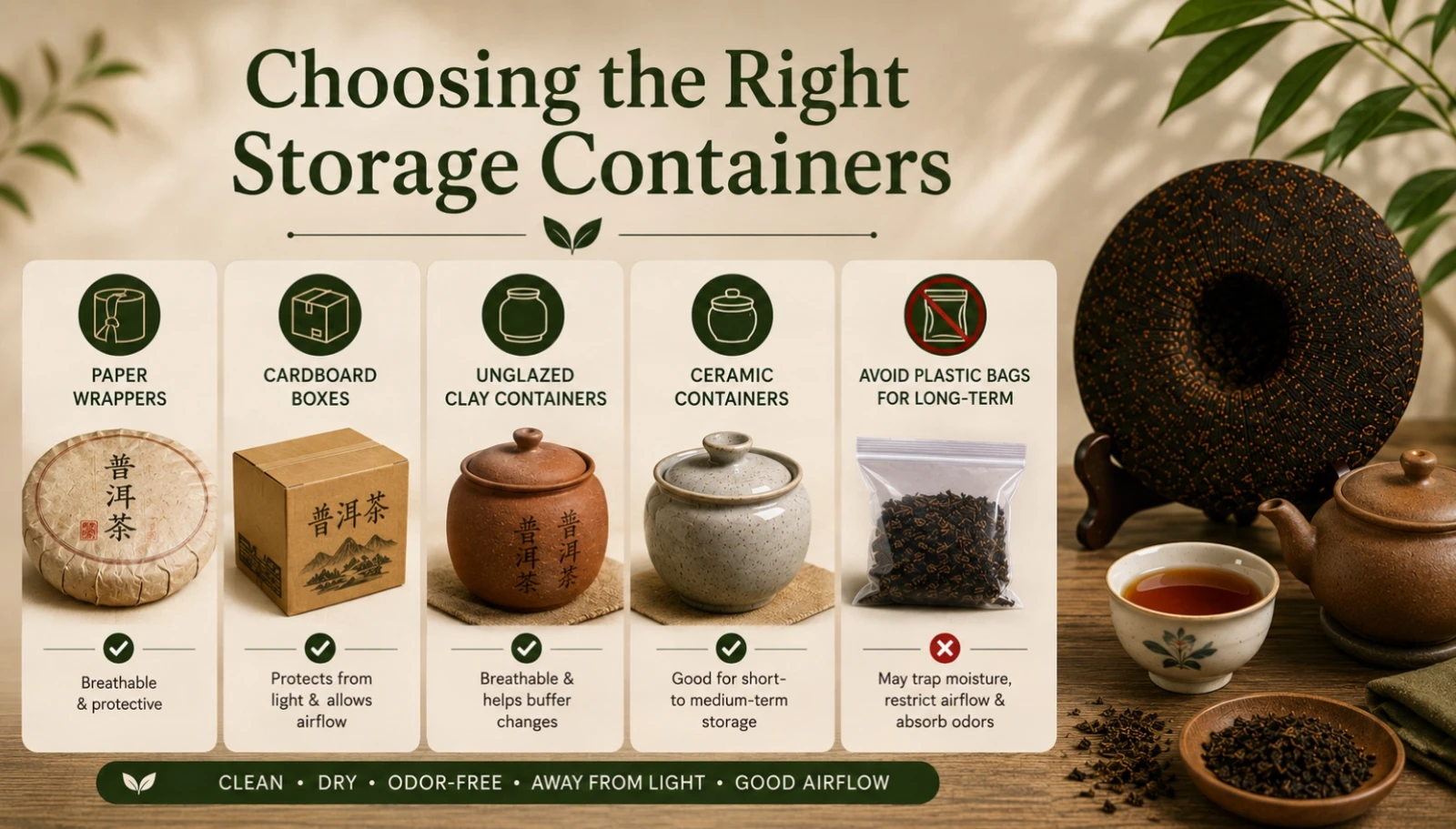
The container you choose plays an important role in protecting Shu Pu-erh while allowing it to mature naturally.
Paper Wrappers
Traditional Pu-erh cakes are commonly wrapped in breathable paper, and for many teas, this remains one of the best storage methods.
Paper allows gentle air exchange while protecting the tea from dust and light. If the wrapper remains clean and intact, there is often no need to replace it.
Cardboard Boxes
Simple cardboard boxes are frequently used for home storage because they provide protection from light while allowing moderate airflow.
Boxes should be clean, dry, and free of odors. Avoid boxes that have previously stored scented products or food.
Unglazed Clay Containers
Unglazed clay jars have long been used for storing tea because they offer gentle breathability while helping buffer environmental changes.
These containers should be dedicated exclusively to tea, as clay can retain odors from previous contents.
Ceramic Containers
Ceramic tea jars with well-fitting lids can also be suitable, particularly for teas that will be consumed within months rather than years.
Choose containers that are clean, odor-free, and not completely airtight if long-term aging is the goal.
Avoid Plastic Bags for Long-Term Storage
While food-safe plastic bags may be acceptable for short-term transport, they are generally less suitable for extended storage.
Plastic may trap moisture, restrict airflow, or allow the tea to absorb residual manufacturing odors over time.
For long-term preservation, breathable materials are usually preferred.
Storing Loose-Leaf Shu Pu-erh vs. Compressed Tea
Shu Pu-erh is available in several forms, including loose leaves, tea cakes (bingcha), bricks (zhuancha), and bowl-shaped nests (tuocha). While the same storage principles apply to each, there are a few practical differences worth understanding.
Loose-Leaf Shu Pu-erh
Loose-leaf Shu Pu-erh has more surface area exposed to the surrounding environment. As a result, it may absorb odors or lose aromatic compounds more quickly if stored improperly.
For loose tea:
- Keep it in a clean, breathable container.
- Minimize unnecessary exposure by opening the container only when preparing tea.
- Avoid transferring the tea between containers frequently, as repeated handling can expose it to excess air and moisture.
If you enjoy several teas at once, storing each variety separately helps preserve its individual aroma and flavor.
Compressed Tea Cakes and Bricks
Compressed Shu Pu-erh generally changes more gradually than loose-leaf tea because the tightly packed leaves have less exposure to oxygen.
Many tea drinkers choose to store cakes in their original paper wrappers, either individually or stacked inside a clean cardboard box or wooden cabinet. This traditional method provides protection while allowing gentle airflow.
When breaking pieces from a tea cake:
- Use a proper Pu-erh pick or tea knife to separate leaves carefully.
- Remove only what you need for brewing.
- Rewrap the remaining cake to reduce unnecessary exposure.
Keeping the cake intact as much as possible helps maintain its structure and supports gradual aging.
Short-Term vs. Long-Term Storage
Not every Shu Pu-erh needs to be stored for many years. Your storage approach may depend on when you plan to enjoy the tea.
Short-Term Storage
If you expect to finish a tea within several months, focus on protecting it from everyday hazards such as light, moisture, and strong odors.
A tea cabinet or dedicated shelf in a cool room is usually sufficient.
Long-Term Storage
If you hope to keep Shu Pu-erh for several years, consistency becomes increasingly important.
Long-term storage should prioritize:
- Stable room temperature
- Moderate humidity
- Gentle airflow
- Darkness
- A clean, odor-free environment
Frequent relocation of the tea between different rooms or climates should be avoided whenever possible. Stability generally benefits the tea more than constantly adjusting storage conditions.
Common Mistakes When Storing Shu Pu-erh
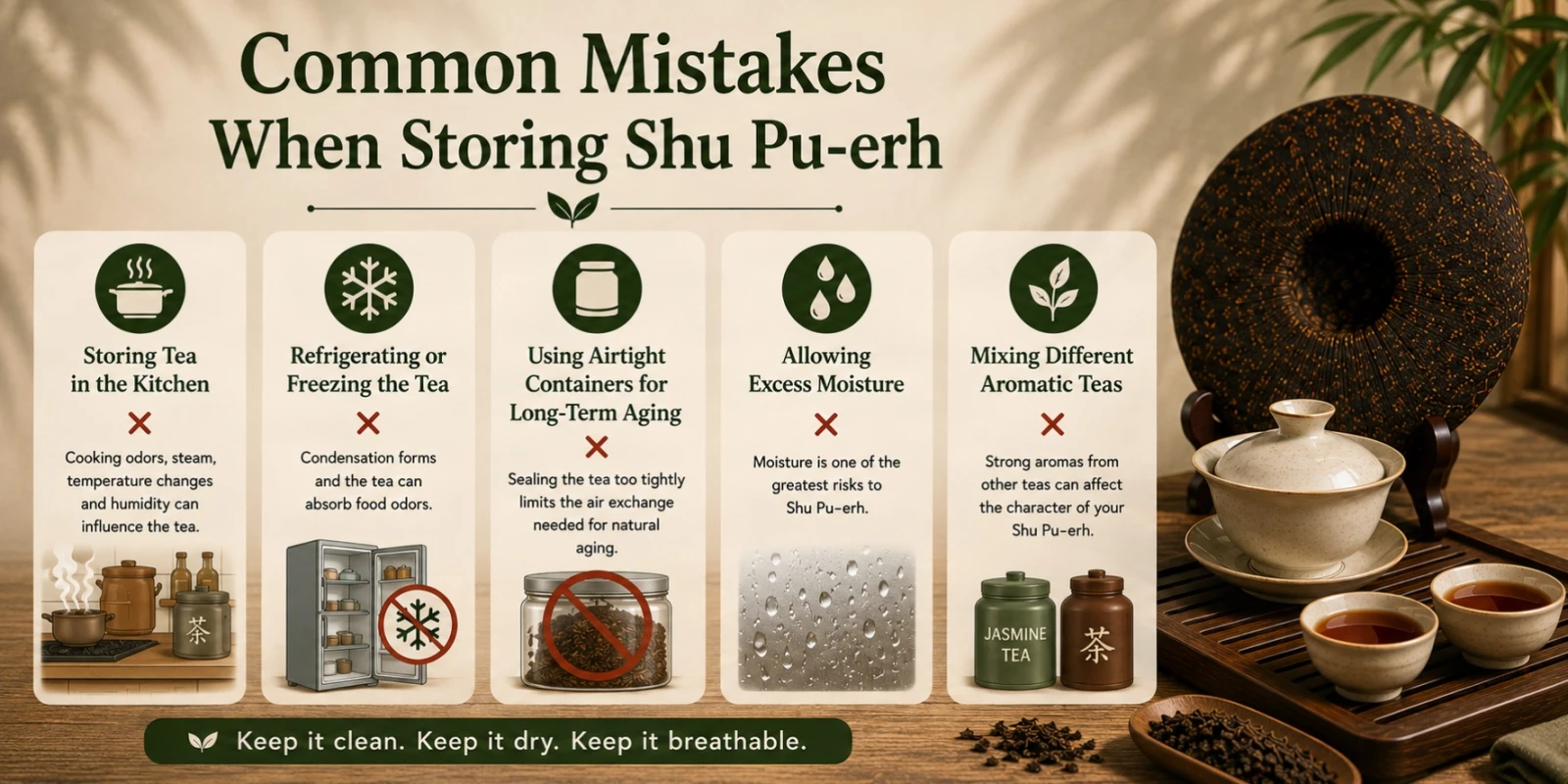
Even experienced tea drinkers occasionally make storage mistakes. Fortunately, most are easy to avoid.
Storing Tea in the Kitchen
The kitchen may seem convenient, but it is often one of the least suitable places for long-term tea storage.
Cooking odors, steam, temperature fluctuations, and increased humidity can all influence the tea.
Instead, choose a quiet cupboard or cabinet located away from food preparation.
Refrigerating or Freezing the Tea
Unlike some green teas, Shu Pu-erh is generally not suited to refrigerator or freezer storage.
Cold environments introduce two concerns:
- Condensation can develop when the tea is removed from refrigeration.
- The tea may absorb surrounding food odors.
For most households, room-temperature storage remains the better choice.
Using Airtight Containers for Long-Term Aging
Airtight containers are excellent for protecting many foods, but they may not be ideal for Pu-erh intended for gradual maturation.
Completely sealing the tea for extended periods can reduce the gentle air exchange that contributes to its slow development.
Breathable storage is usually preferred for teas intended to age naturally.
Allowing Excess Moisture
Moisture poses one of the greatest risks to Shu Pu-erh.
Avoid storing tea near:
- Humidifiers
- Bathrooms
- Damp basements
- Leaking windows
- Areas prone to condensation
If the leaves ever feel damp or show visible mold, they should not be consumed.
Mixing Different Aromatic Teas
Highly fragrant teas such as jasmine, flavored blends, or heavily roasted teas may influence nearby Shu Pu-erh during storage.
Keeping different tea styles in separate containers helps preserve their individual character.
How to Tell if Shu Pu-erh Has Been Stored Well
Properly stored Shu Pu-erh often develops a calm, clean character that reflects both careful production and thoughtful storage.
Signs of good storage may include:
- A clean earthy or woody aroma
- Smooth, clear liquor
- Balanced sweetness
- No musty or sour odors
- Leaves that expand naturally during brewing
- A pleasant, lingering finish
In contrast, poorly stored tea may display:
- Moldy or damp smells
- Fishy odors that persist long after production
- Cloudy liquor
- Excessively flat or stale flavor
- Visible mold or discoloration
It is worth remembering that freshly produced Shu Pu-erh can sometimes exhibit mild fermentation aromas. These typically soften after several months of proper storage and should not be confused with spoilage.
Practical Storage Checklist
Before storing your Shu Pu-erh, ask yourself the following questions:
Storage Environment
✓ Is the storage area clean?
✓ Is it free from strong odors?
✓ Is it protected from direct sunlight?
✓ Does the temperature remain relatively stable?
✓ Is excessive moisture avoided?
Storage Container
✓ Is the container clean?
✓ Does it allow some gentle airflow?
✓ Is the tea protected from dust and contaminants?
✓ Is the tea stored separately from strongly scented items?
Tea Condition
✓ Does the dry tea smell clean?
✓ Is there any visible mold or unusual discoloration?
✓ Is the original wrapper intact if storing a compressed cake?
If you can answer "yes" to these questions, your tea is likely being stored under suitable conditions.
Conclusion
Proper storage is one of the simplest yet most valuable ways to protect the quality of Shu Pu-erh. While this remarkable tea is more resilient than many other varieties, it still benefits from a stable environment that supports its natural character.
By keeping Shu Pu-erh away from excessive moisture, direct sunlight, strong odors, and frequent temperature fluctuations, tea drinkers can preserve its smooth texture, rich aroma, and balanced flavor for years to come. Whether you enjoy your tea immediately or choose to let it rest and mature, thoughtful storage helps ensure that each cup reflects the care invested throughout its journey—from the tea gardens of Yunnan to your teapot.
Rather than pursuing perfect conditions, aim for consistency. A clean, odor-free space with moderate airflow and stable room temperature is often all that is needed to protect the tea and allow it to develop naturally over time.
If you would like to experience authentic Shu Pu-erh prepared in the traditional Chinese tradition, explore Stepman's Tea's carefully selected collection of premium teas. Each tea is chosen to showcase the craftsmanship, heritage, and balanced character that make Shu Pu-erh one of China's most distinctive tea styles.
FAQs
1. Can Shu Pu-erh be stored for many years?
Yes. When stored properly, Shu Pu-erh can remain enjoyable for many years. Changes tend to be gradual, with the tea often becoming smoother and more integrated rather than dramatically different.
2. Should I keep Shu Pu-erh in its original wrapper?
In many cases, yes. Traditional paper wrappers are designed to provide protection while allowing gentle airflow, making them well suited for compressed tea cakes.
3. Can loose Shu Pu-erh age?
Yes. Loose-leaf Shu Pu-erh can continue to develop over time, although changes may occur somewhat more quickly than in compressed forms because of increased exposure to air.
4. Is mold ever normal on Shu Pu-erh?
No. Healthy Shu Pu-erh should never develop visible mold during proper storage. Any tea showing signs of mold should be discarded rather than consumed.
5. How often should I check stored tea?
A brief inspection every few months is usually sufficient. Check for unusual odors, excess moisture, or changes in the storage environment without handling the tea more than necessary.
6. How should Shu Pu-erh tea be stored?
Store Shu Pu-erh in a clean, odor-free environment with stable room temperature, moderate humidity, gentle airflow, and protection from direct sunlight.
7. Does Shu Pu-erh need an airtight container?
Not necessarily. For long-term storage, breathable containers or the original paper wrapper are generally preferred to allow gentle air exchange.
8. Can Shu Pu-erh go bad?
When stored correctly, Shu Pu-erh remains stable for many years. Poor storage, particularly excessive moisture, can lead to mold or unpleasant flavors.
9. Should Shu Pu-erh be refrigerated?
No. Refrigeration may introduce condensation and unwanted food odors. Room-temperature storage is generally recommended.
10. Can Shu Pu-erh continue to improve with age?
Yes. While the changes are usually subtle compared with raw Pu-erh, well-stored Shu Pu-erh often develops a smoother, cleaner, and more integrated flavor over time.