How to Choose Quality Shu Pu-erh: Complete Guide for Tea Beginners
Choosing a quality Shu Pu-erh can feel overwhelming, especially for those who are new to this unique style of Chinese tea. Unlike many teas that are judged primarily by freshness, Shu Pu-erh develops its character through a carefully controlled fermentation process, traditional craftsmanship, and proper aging and storage. Understanding these factors helps tea drinkers move beyond appearance and marketing labels to recognize what truly defines a well-made Shu Pu-erh.
This guide explains what Shu Pu-erh is, why quality matters, how Shu Pu-erh is produced, and the practical factors to consider when selecting a tea. Whether you are exploring Pu-erh for the first time or looking to refine your understanding, learning how to evaluate quality will help you choose teas that offer depth, balance, and an authentic traditional experience.
What Is Shu Pu-erh?
Shu Pu-erh, also known as ripe Pu-erh or cooked Pu-erh, is a type of fermented tea originating from China’s Yunnan Province. It is made from the leaves of the Camellia sinensis var. assamica tea plant, a large-leaf tea variety native to the region.
Unlike Sheng Pu-erh (raw Pu-erh), which naturally ages and transforms over many years, Shu Pu-erh undergoes an accelerated fermentation process known as wo dui. This process was developed in the 1970s to recreate some of the characteristics of aged raw Pu-erh while making a more immediately approachable tea.
The result is a tea known for its:
- Smooth texture
- Dark amber to deep reddish-brown liquor
- Earthy and woody aromas
- Naturally mellow character
- Rich body and lingering finish
A well-made Shu Pu-erh should not simply taste “strong” or “earthy.” Quality examples often reveal layers of flavor, including notes of wood, dried fruit, cocoa, nuts, herbs, minerals, and sweet undertones.
Why Is Choosing Quality Shu Pu-erh Important?
Quality Determines the Tea Experience
Shu Pu-erh is highly influenced by how it is produced, fermented, and stored. Two teas made from the same general type of leaves can taste completely different depending on craftsmanship and processing conditions.
A carefully made Shu Pu-erh can provide:
- A clean and pleasant aroma
- Balanced fermentation character
- Smooth mouthfeel
- Natural sweetness
- Greater complexity with aging
Lower-quality Shu Pu-erh may display undesirable characteristics such as:
- Strong fishy or musty aromas
- Harsh bitterness
- Flat flavor
- Excessive dryness
- Heavy fermentation notes that overpower the tea
Understanding quality helps tea drinkers avoid choosing teas based only on appearance, age claims, or low price.
How Is Shu Pu-erh Made?
To understand quality, it helps to understand the production process.
1. Tea Leaf Selection
The foundation of Shu Pu-erh begins with the quality of the raw tea material, known as maocha.
Maocha is the partially processed tea leaf used to create Pu-erh. It is typically made through:
- Withering
- Pan-firing to stop oxidation
- Rolling
- Sun drying
The quality of the final Shu Pu-erh depends heavily on the original leaves.
Higher-quality teas often use:
- Larger, healthier leaves
- Leaves from older tea trees
- Carefully harvested material
- Tea from respected growing regions
Cheaper teas may rely heavily on broken leaves, older harvest material, or blended lower-grade leaves.
2. The Fermentation Process (Wo Dui)
The defining feature of Shu Pu-erh is controlled microbial fermentation.
During wo dui, tea leaves are:
- Piled into large heaps
- Moisturized carefully
- Covered to maintain warmth and humidity
- Regularly turned to control fermentation
Naturally occurring microorganisms transform the chemical structure of the tea leaves, changing their aroma, color, and flavor.
This process can take several weeks to months depending on the desired style and production method.
A skilled producer carefully balances:
- Moisture levels
- Temperature
- Fermentation speed
- Turning frequency
Poorly controlled fermentation can result in unpleasant flavors, while careful fermentation creates the smooth, deep character associated with excellent Shu Pu-erh.
Key Factors for Choosing Quality Shu Pu-erh
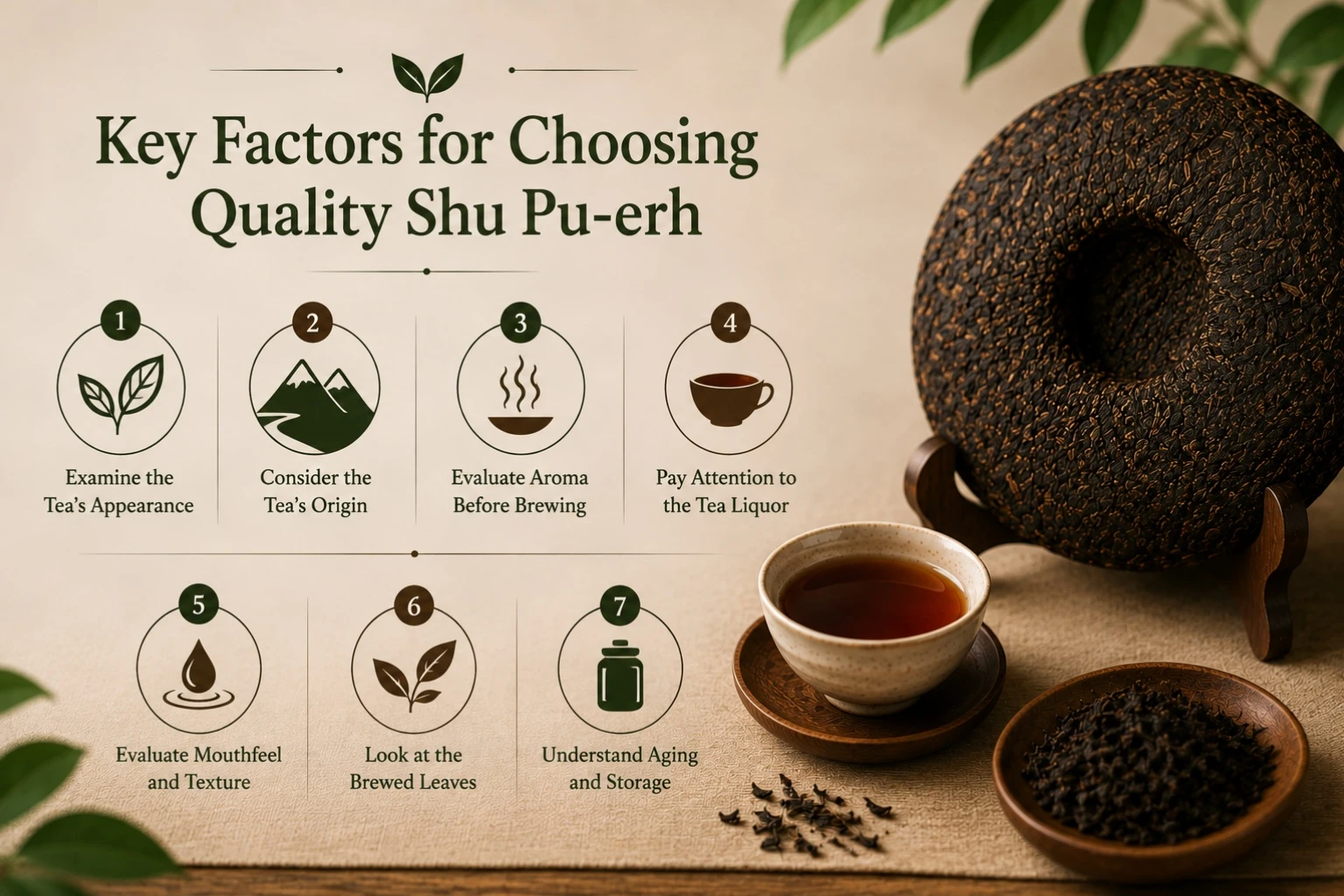
1. Examine the Tea’s Appearance
Whether purchasing loose leaf Shu Pu-erh or compressed cakes, appearance can provide useful clues.
Quality Shu Pu-erh generally has:
- Clean, intact leaves
- Reasonable consistency in leaf size
- Natural dark brown or reddish-brown tones
- A pleasant dry aroma
A tea cake should feel firm but not unnaturally compressed. Excessive dust, powder, or uneven material may indicate lower-quality processing.
However, appearance alone cannot determine quality. Some excellent Shu Pu-erh teas may not look visually impressive before brewing.
2. Consider the Tea’s Origin
Yunnan Province is the traditional home of Pu-erh tea, and different regions contribute different characteristics.
Important growing areas include:
- Menghai
- Yiwu
- Jingmai
- Lincang
- Bulang
Regional differences can influence:
- Aroma
- Sweetness
- Body
- Texture
- Aging potential
For beginners, understanding origin is useful, but it should not become the only deciding factor. A famous region does not automatically guarantee excellent tea. Production skill and storage conditions remain equally important.
3. Evaluate Aroma Before Brewing
The dry aroma of Shu Pu-erh can reveal important information.
A quality tea may offer aromas such as:
- Clean earth
- Wood
- Dried fruit
- Cocoa
- Nuts
- Herbs
- Sweet forest-like notes
Freshly produced Shu Pu-erh may sometimes have fermentation aromas because of its recent processing. However, these should gradually fade with proper resting and storage.
Be cautious with aromas that resemble:
- Fish
- Mold
- Damp basement
- Strong sourness
- Chemical smells
These may indicate poor fermentation or improper storage.
4. Pay Attention to the Tea Liquor
The brewed tea provides some of the most important information about quality.
A well-made Shu Pu-erh typically produces:
- Clear reddish-brown liquor
- Smooth texture
- Balanced flavor
- Pleasant aftertaste
The tea should feel comfortable and rounded rather than aggressive.
A high-quality Shu Pu-erh often develops through multiple infusions, revealing new flavors as the leaves open.
5. Evaluate Mouthfeel and Texture
One of the defining qualities of premium Shu Pu-erh is its texture.
Tea enthusiasts often describe this as:
- Thickness
- Smoothness
- Creaminess
- Full body
A quality Shu Pu-erh should feel integrated, with flavors and texture working together.
Lower-quality teas may feel:
- Thin
- Rough
- Drying
- Overly bitter
The sensation after swallowing is also important. A pleasant lingering sweetness or warmth is often a sign of well-balanced tea.
6. Look at the Brewed Leaves
After brewing, examine the leaves.
Good-quality leaves often:
- Expand naturally
- Maintain some structure
- Show flexibility
- Reveal variation in leaf size
Leaves that remain extremely dark, broken, or mushy may suggest heavy processing or lower-quality material.
The brewed leaves provide a glimpse into the original tea material and craftsmanship.
7. Understand Aging and Storage
Although Shu Pu-erh is ready to drink soon after production, many teas continue developing with time.
Proper aging can help:
- Reduce fermentation aromas
- Increase smoothness
- Develop deeper flavors
Storage conditions are essential.
Good storage requires:
- Moderate humidity
- Good airflow
- Protection from strong odors
- Avoidance of excessive moisture
A poorly stored tea can lose quality regardless of its original production.
Common Mistakes When Buying Shu Pu-erh
Choosing Based Only on Age
Older does not always mean better.
A poorly made or improperly stored 20-year-old tea may be inferior to a well-crafted younger Shu Pu-erh.
Quality depends on:
- Original material
- Processing
- Storage
- Brewing experience
Assuming Darker Means Better
Many beginners associate very dark tea with quality. However, color alone does not indicate depth or craftsmanship.
A balanced Shu Pu-erh can have complexity without being extremely dark.
Buying Only by Price
Expensive tea is not automatically superior, and inexpensive tea is not always poor.
A better approach is learning to evaluate:
- Origin
- Processing
- Aroma
- Flavor
- Storage
Ignoring Storage History
Storage is one of the most overlooked aspects of Pu-erh quality.
Even excellent tea can develop unwanted characteristics if exposed to:
- Excess humidity
- Smoke
- Strong odors
- Poor ventilation
Practical Checklist: How to Choose Shu Pu-erh
Before purchasing, consider these questions:
About the tea:
✓ Is it made from authentic Yunnan tea leaves?
✓ Is the production information available?
✓ Does the tea have a clean aroma?
✓ Are the leaves reasonably intact?
When brewing:
✓ Is the liquor clear and smooth?
✓ Does the flavor develop across multiple infusions?
✓ Does it have pleasant sweetness or depth?
✓ Is the texture comfortable and full?
About storage:
✓ Has the tea been stored properly?
✓ Are there any musty or unusual odors?
✓ Does the seller provide transparent information?
How Beginners Can Start Exploring Shu Pu-erh
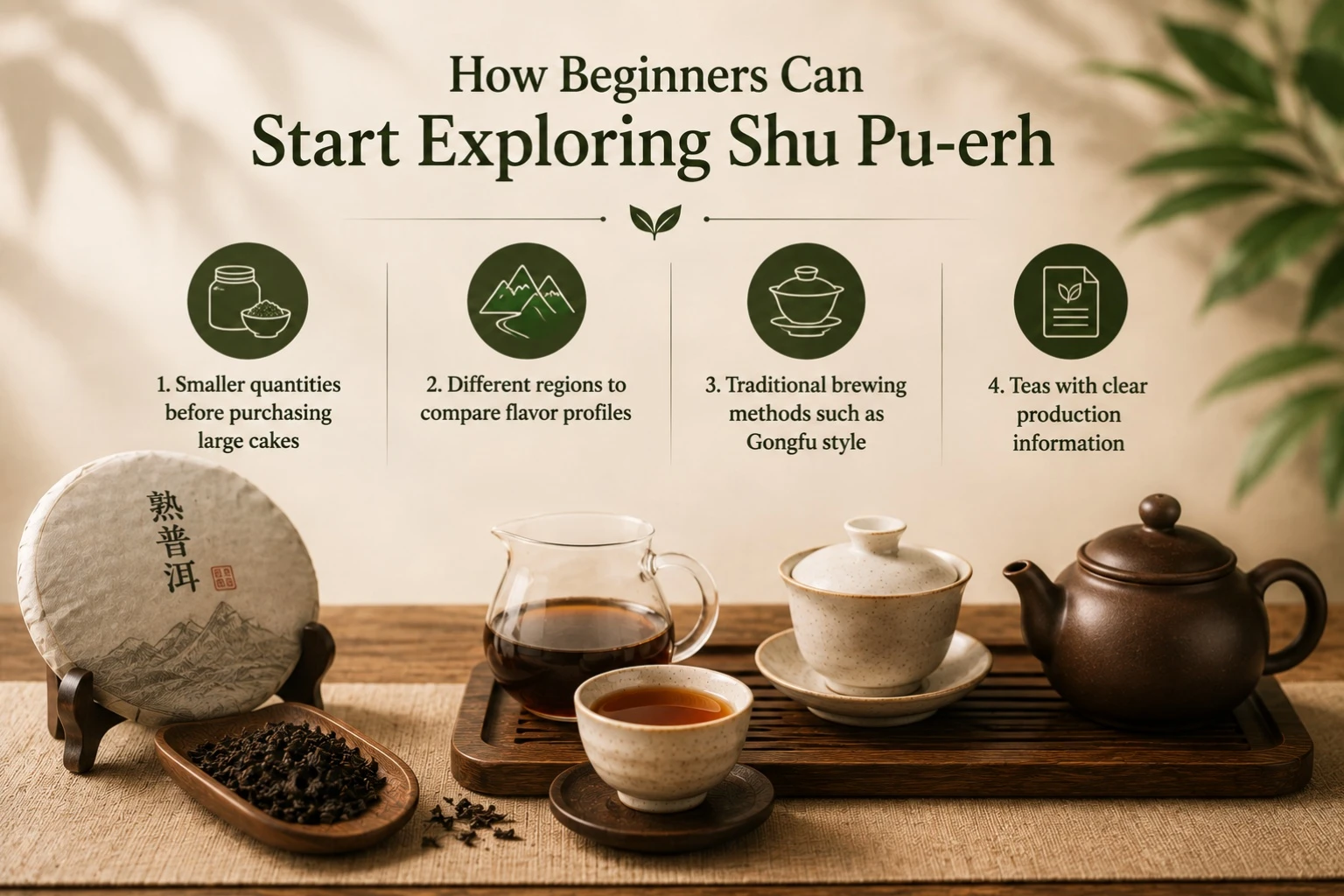
For those new to Shu Pu-erh, starting with approachable examples is often the best method.
Consider beginning with:
- Smaller quantities before purchasing large cakes
- Different regions to compare flavor profiles
- Traditional brewing methods such as Gongfu style
- Teas with clear production information
Keeping notes while tasting different Shu Pu-erh teas can help develop a personal understanding of aroma, texture, and flavor.
Tea appreciation develops gradually. The goal is not simply to identify the “most expensive” tea, but to recognize the qualities that make a tea enjoyable and well-crafted.
Conclusion
Choosing quality Shu Pu-erh requires understanding more than appearance or age. The most important factors include the quality of tea leaves, careful fermentation, regional characteristics, proper storage, and the overall balance of aroma, flavor, and texture.
A well-made Shu Pu-erh reflects the skill of the producer and the traditions of Yunnan tea craftsmanship. By learning how to evaluate these characteristics, tea drinkers can make more informed choices and develop a deeper appreciation for this unique fermented tea.
If you would like to experience authentic Shu Pu-erh prepared in the traditional Chinese style, explore Stepman’s Tea collection of carefully selected teas and discover the qualities that make this remarkable tea a valued part of Chinese tea culture.
FAQs
1. What is Shu Pu-erh tea?
Shu Pu-erh is a fermented Chinese tea from Yunnan Province made through a controlled microbial fermentation process known as wo dui.
2. How can you tell if Shu Pu-erh is high quality?
Quality Shu Pu-erh typically has a clean aroma, smooth texture, balanced flavor, clear liquor, and leaves with good structure after brewing.
3. Does older Shu Pu-erh always mean better quality?
No. Age alone does not determine quality. Production methods, storage conditions, and original tea material are equally important.
4. What should good Shu Pu-erh taste like?
Good Shu Pu-erh often has smooth earthy, woody, sweet, nutty, herbal, or cocoa-like flavors without harsh fermentation notes.
5. How should Shu Pu-erh be stored?
Shu Pu-erh should be stored in a clean environment away from moisture, sunlight, and strong odors with moderate airflow.