Common Shu Pu-erh Brewing Mistakes and How to Avoid Them?
Shu Pu-erh, also known as ripe or cooked Pu-erh, is one of China’s most distinctive teas. Known for its deep color, smooth texture, earthy aroma, and naturally mellow character, Shu Pu-erh has been enjoyed for generations, particularly in Yunnan Province, where Pu-erh tea originates.
Although Shu Pu-erh is often considered a forgiving tea, many brewing mistakes can prevent drinkers from experiencing its full character. Over-steeping, using incorrect water temperature, skipping the rinse, choosing unsuitable teaware, or misunderstanding how much tea to use can significantly affect flavor and aroma.
Understanding these common mistakes helps both beginners and experienced tea drinkers appreciate Shu Pu-erh more fully. Proper brewing is not about complicated rules or strict rituals, it is about creating the right conditions for the tea leaves to gradually release their flavors, aromas, and texture.
This guide explains the most common Shu Pu-erh brewing mistakes, why they happen, how they affect the final cup, and how to apply simple improvements for a more balanced and enjoyable tea experience.
What Is Shu Pu-erh Tea?
Shu Pu-erh is a post-fermented tea traditionally produced in Yunnan, China. Unlike green tea, oolong tea, or black tea, Shu Pu-erh undergoes a unique microbial fermentation process known as wo dui or wet piling.
During this process, harvested tea leaves are carefully controlled for moisture, temperature, and microbial activity. This accelerates the aging process and transforms the tea’s flavor profile.
Fresh Pu-erh leaves can be bright, bitter, and astringent. After fermentation, Shu Pu-erh develops a smoother and deeper character with notes often described as:
- Earth
- Wood
- Dark fruit
- Cocoa
- Nuts
- Herbs
- Sweet minerals
High-quality Shu Pu-erh typically produces a dark amber to reddish-brown liquor with a smooth mouthfeel and lingering sweetness.
Why Proper Brewing Matters
Many people assume that because Shu Pu-erh is a robust tea, it is difficult to brew incorrectly. While it is generally more forgiving than delicate green teas, brewing technique still plays an important role.
The brewing process determines how effectively the tea leaves release:
- Aroma compounds
- Natural sweetness
- Texture
- Flavor complexity
- Aftertaste
A well-brewed Shu Pu-erh can reveal multiple layers of flavor over several infusions. A poorly brewed cup may taste flat, overly bitter, muddy, or unpleasantly strong.
The goal of brewing Shu Pu-erh is not simply to extract more flavor, it is to achieve balance.
Common Shu Pu-erh Brewing Mistakes
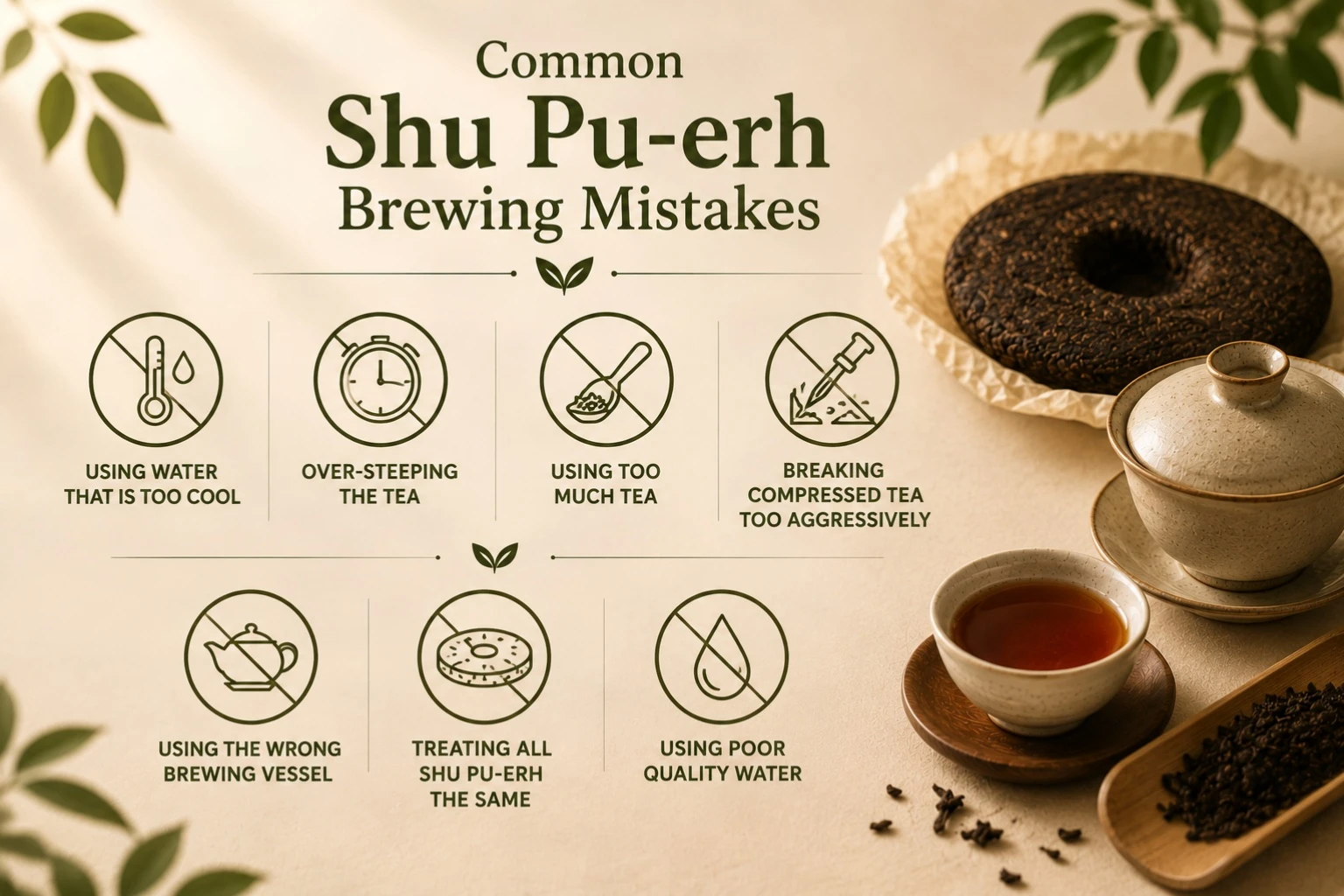
1. Using Water That Is Too Cool
One of the most common mistakes when brewing Shu Pu-erh is using water that is not hot enough.
Why It Matters
Shu Pu-erh leaves are tightly compressed and contain complex compounds developed through fermentation and aging. Hot water helps open the leaves and extract their deeper aromas and flavors.
Water that is too cool may result in:
- Weak aroma
- Thin body
- Flat flavor
- Poor extraction of the tea’s natural sweetness
How to Improve
For most Shu Pu-erh teas, water between 95°C–100°C (203°F–212°F) is recommended.
Freshly boiled water is generally suitable, especially for:
- Aged Shu Pu-erh
- Compressed cakes
- Brick teas
- Dense tea nuggets
Unlike green tea, Shu Pu-erh does not require lower temperatures to protect delicate leaves.
2. Brewing for Too Long
Another common mistake is allowing Shu Pu-erh leaves to steep for several minutes without adjusting the brewing time.
Why It Happens
Many beginners approach Shu Pu-erh like a typical Western-style tea, where tea leaves remain in water for a longer period.
However, traditional Chinese brewing methods often use shorter infusions with multiple rounds of steeping.
Effects of Over-Steeping
Long steeping can create:
- Heavy bitterness
- Excessive earthy flavors
- Dry mouthfeel
- Reduced sweetness
Even high-quality Shu Pu-erh can taste unbalanced when over-extracted.
How to Improve
For Gongfu-style brewing:
- Add tea leaves to a gaiwan or small teapot.
- Rinse the leaves briefly.
- Brew the first infusion for a short period.
- Gradually increase steeping time with later infusions.
A common starting point:
- First infusion: 10–15 seconds
- Later infusions: Slowly increase time as needed
The exact timing depends on the tea’s age, compression, and personal preference.
3. Skipping the Tea Rinse
Many beginners are unsure whether rinsing Shu Pu-erh is necessary.
The traditional rinse is a brief first wash of the leaves before drinking.
Why Rinse Shu Pu-erh?
Because Shu Pu-erh is often:
- Compressed into cakes or bricks
- Aged for extended periods
- Fermented under controlled conditions
A quick rinse helps:
- Remove surface dust from storage
- Loosen tightly compressed leaves
- Awaken the tea leaves
- Prepare the leaves for extraction
How to Rinse Properly
A simple rinse involves:
- Place tea leaves into the brewing vessel.
- Add hot water.
- Allow the leaves to sit briefly for about 5–10 seconds.
- Discard the water.
The rinse should not be considered a wasted step. It is part of preparing the tea for proper brewing.
4. Using Too Much Tea
A common misconception is that more tea always creates a better cup.
However, using excessive amounts of Shu Pu-erh can overpower the balance of the tea.
What Happens When Too Much Tea Is Used?
The result may be:
- Heavy bitterness
- Thick but unpleasant flavor
- Strong fermentation notes
- Difficulty controlling steeping time
Recommended Starting Ratio
For Gongfu-style brewing:
- Approximately 5–8 grams of tea
- 100–120 ml brewing vessel
For larger teapots or mugs, the amount should be adjusted based on volume.
Tea quantity should also consider:
- Leaf size
- Compression level
- Tea age
- Personal taste
5. Breaking Compressed Tea Incorrectly
Many Shu Pu-erh teas are sold as cakes, bricks, or tuocha.
Breaking compressed tea requires care.
Why It Matters
Aggressive breaking can damage leaves and create excessive small particles.
Broken leaves release flavor more quickly, which can lead to:
- Stronger bitterness
- Cloudy liquor
- Shorter brewing life
Better Approach
Use a proper tea pick or similar tool to gently separate layers of leaves.
Try to preserve the leaf structure as much as possible.
Whole or larger leaves generally provide:
- More balanced extraction
- More gradual flavor development
- Longer-lasting infusions
6. Using the Wrong Teaware
While Shu Pu-erh can be brewed in many vessels, certain materials highlight its qualities better.
Common Choices
Yixing Clay Teapots
Traditional Yixing clay teapots are popular among Pu-erh drinkers because the porous clay can interact with the tea over time and help create a rounded brewing experience.
Gaiwan
A porcelain gaiwan is also an excellent option because it:
- Does not influence flavor
- Allows easy control of steeping time
- Makes it easier to observe the leaves
Large Mugs or Western Teapots
These can work well for casual drinking but may make it harder to control extraction.
The best brewing vessel is one that allows the drinker to understand and adjust the tea.
7. Expecting Every Shu Pu-erh to Taste the Same
Shu Pu-erh is not a single flavor category.
Many factors influence its character:
- Tea plant variety
- Growing region
- Harvest season
- Fermentation technique
- Aging conditions
- Storage environment
Some Shu Pu-erh teas may be:
- Smooth and sweet
- Woody and earthy
- Rich and chocolate-like
- Light and aromatic
Assuming all Shu Pu-erh should taste identical can lead to misunderstanding the tea.
Learning to recognize differences is part of appreciating Pu-erh culture.
8. Ignoring Storage Before Brewing
Storage affects Shu Pu-erh even before the tea reaches the brewing vessel.
Poor storage can negatively influence aroma and flavor.
Common Storage Mistakes
Avoid keeping Shu Pu-erh:
- Near strong odors
- In humid environments without airflow
- In direct sunlight
- Near spices, coffee, or household chemicals
Tea naturally absorbs surrounding aromas.
Proper storage allows the tea to maintain its intended character and continue developing over time.
9. Brewing Without Adjusting to the Tea
One of the most important skills in brewing Shu Pu-erh is learning to adjust.
Different teas require different approaches.
A newer Shu Pu-erh may benefit from:
- Slightly shorter steeping times
- More attention to balance
An older Shu Pu-erh may require:
- Longer leaf awakening
- More gentle handling
Instead of following exact rules, observe the tea:
- Is the flavor too strong?
- Is the aroma too weak?
- Are later infusions improving?
Good brewing involves paying attention and making small adjustments.
A Simple Shu Pu-erh Brewing Method for Beginners
For those new to Shu Pu-erh, the following method provides a reliable starting point.
Step 1: Prepare the Tea
Use approximately:
- 5–7 grams of Shu Pu-erh
- 100–120 ml gaiwan or teapot
Break compressed tea gently.
Step 2: Heat the Water
Use freshly boiled water around:
- 95°C–100°C (203°F–212°F)
Step 3: Rinse the Leaves
Quickly rinse the tea for several seconds, then discard the water.
Step 4: Brew Multiple Short Infusions
Start with a short infusion and adjust based on flavor.
Pay attention to:
- Aroma
- Texture
- Sweetness
- Aftertaste
Step 5: Enjoy the Evolution
Quality Shu Pu-erh often changes throughout multiple infusions.
The first cup may highlight aroma, while later cups may reveal deeper sweetness and complexity.
Practical Tips for Better Shu Pu-erh Brewing

Start Simple
You do not need expensive equipment to enjoy good Shu Pu-erh.
A quality tea, clean water, and proper technique matter more than elaborate accessories.
Use Good Water
Water quality strongly affects tea flavor.
Filtered or spring water with balanced mineral content often produces better results than heavily treated tap water.
Keep Notes
Recording:
- Tea amount
- Water temperature
- Brewing time
- Flavor observations
can help develop a better understanding of different teas.
Taste Before Changing Everything
If a tea tastes different than expected, adjust one factor at a time:
- Reduce steeping time
- Change tea quantity
- Adjust water temperature
Small changes often create noticeable improvements.
How to Choose Quality Shu Pu-erh
Brewing technique matters, but the quality of the tea itself remains the foundation.
When selecting Shu Pu-erh, consider:
- Trusted sourcing
- Clear production information
- Proper storage history
- Clean aroma
- Balanced flavor
Quality Shu Pu-erh should not rely on overpowering flavors to make an impression. Instead, it should offer smoothness, depth, and a pleasant drinking experience.
Authentic Chinese teas from reputable sources allow drinkers to explore the regional traditions, craftsmanship, and history behind Pu-erh production.
Conclusion
Shu Pu-erh brewing mistakes are often caused by misunderstanding how this unique fermented tea behaves. While Shu Pu-erh is known for its forgiving nature, small adjustments in water temperature, steeping time, tea quantity, rinsing, and storage can significantly improve the experience.
The most important principles are simple:
- Use hot water
- Avoid over-steeping
- Rinse compressed tea when appropriate
- Adjust brewing based on the tea
- Respect proper storage
- Pay attention to flavor changes
Brewing Shu Pu-erh is a process of learning and observation. With practice, each tea can reveal its own character and complexity.
If you would like to experience authentic Shu Pu-erh prepared in the traditional Chinese style, explore Stepman's Tea to enjoy our carefully selected collection of Chinese teas and discover the variety of flavors, origins, and craftsmanship behind this remarkable tea tradition.
FAQs
1. What are the most common Shu Pu-erh brewing mistakes?
Common mistakes include using water that is too cool, over-steeping the tea, skipping the rinse, using too much tea, and storing tea improperly.
2. Should Shu Pu-erh tea be rinsed before brewing?
Yes. A brief rinse helps awaken compressed leaves, remove surface particles, and prepare the tea for better extraction.
3. What temperature water should be used for Shu Pu-erh?
Most Shu Pu-erh teas are best brewed with freshly boiled water between 95°C and 100°C (203°F–212°F).
4. How long should Shu Pu-erh tea steep?
For Gongfu-style brewing, start with short infusions of approximately 10–15 seconds and adjust based on the tea’s strength and flavor.
5. Why does my Shu Pu-erh taste bitter?
Bitterness can result from over-steeping, using too much tea, brewing with excessive heat for too long, or using a tea-to-water ratio that is too strong.
6. How many times can Shu Pu-erh tea be brewed?
High-quality Shu Pu-erh can often be infused multiple times, with each steep revealing different aromas, flavors, and textures.