Tea Ceremony Rituals
Explore the rhythm, preparation, and presence that give tea ceremony its quiet meaning.
Explore Tea ShopThe Meaning of Tea Ritual
Tea ritual is not defined by complexity. It is shaped by preparation, sequence, and attention. The arrangement of the tea set, the handling of the leaves, and the rhythm of each pour give structure to the experience.
What makes tea ceremony memorable is not only the tea itself, but the way the ritual allows each infusion, aroma, and movement of the session to unfold with intention.
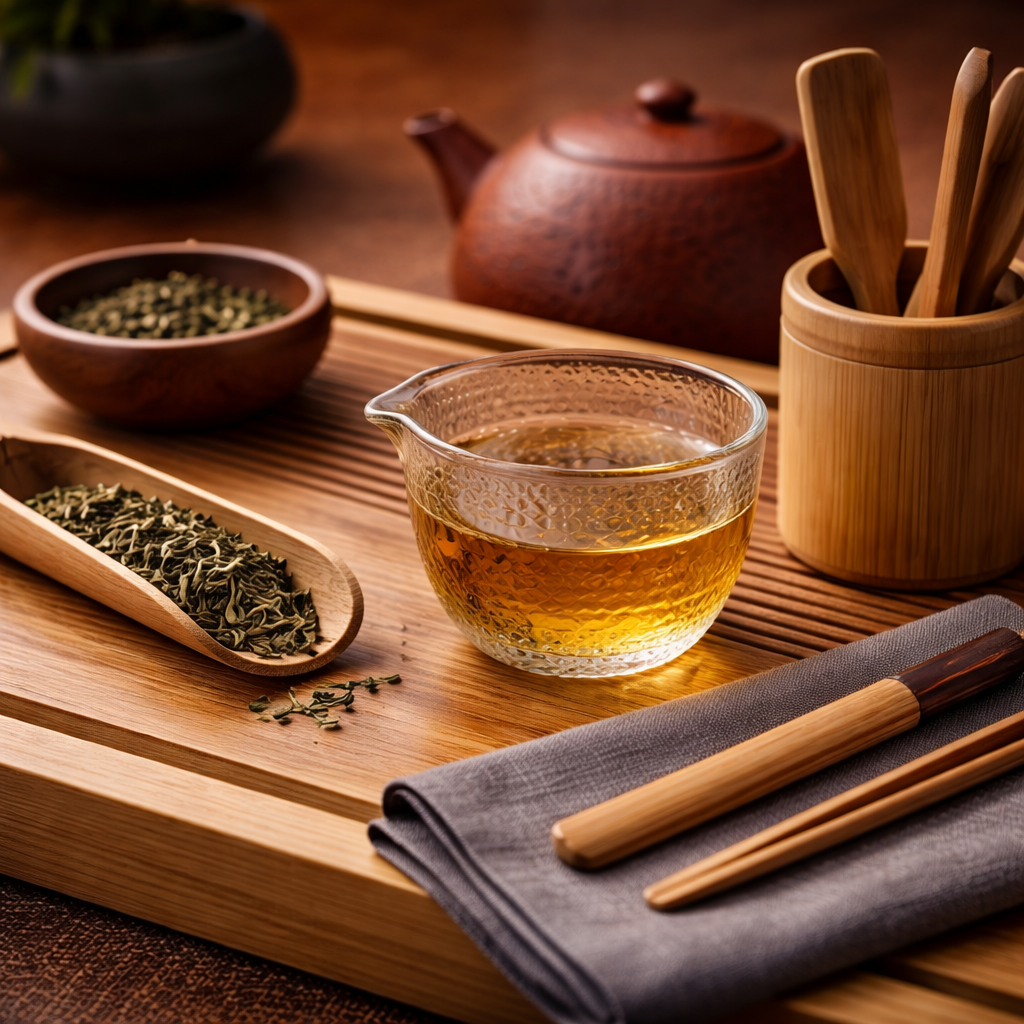
Why Tea Ceremony Ritual Matters
Ritual gives tea ceremony its rhythm, helping the experience feel deliberate, complete, and grounded.
In tea ceremony, the sequence matters. Heating water, preparing the tray, warming the brewing vessel, and pouring each infusion in order transforms tea from a simple drink into a more meaningful experience.
The Structure of a Tea Ritual
The ritual is shaped by preparation, repetition, and the relationship between the tools, the tea, and the pace of the session.
Preparation
The tea tray is arranged, the water is heated, and the vessels are made ready before the first infusion begins.
Rhythm
Each movement follows the next, giving the tea session a natural flow that shapes the feeling of the ritual.
Attention
The ritual asks for presence, allowing the tea, the tools, and the sequence itself to be experienced more fully.
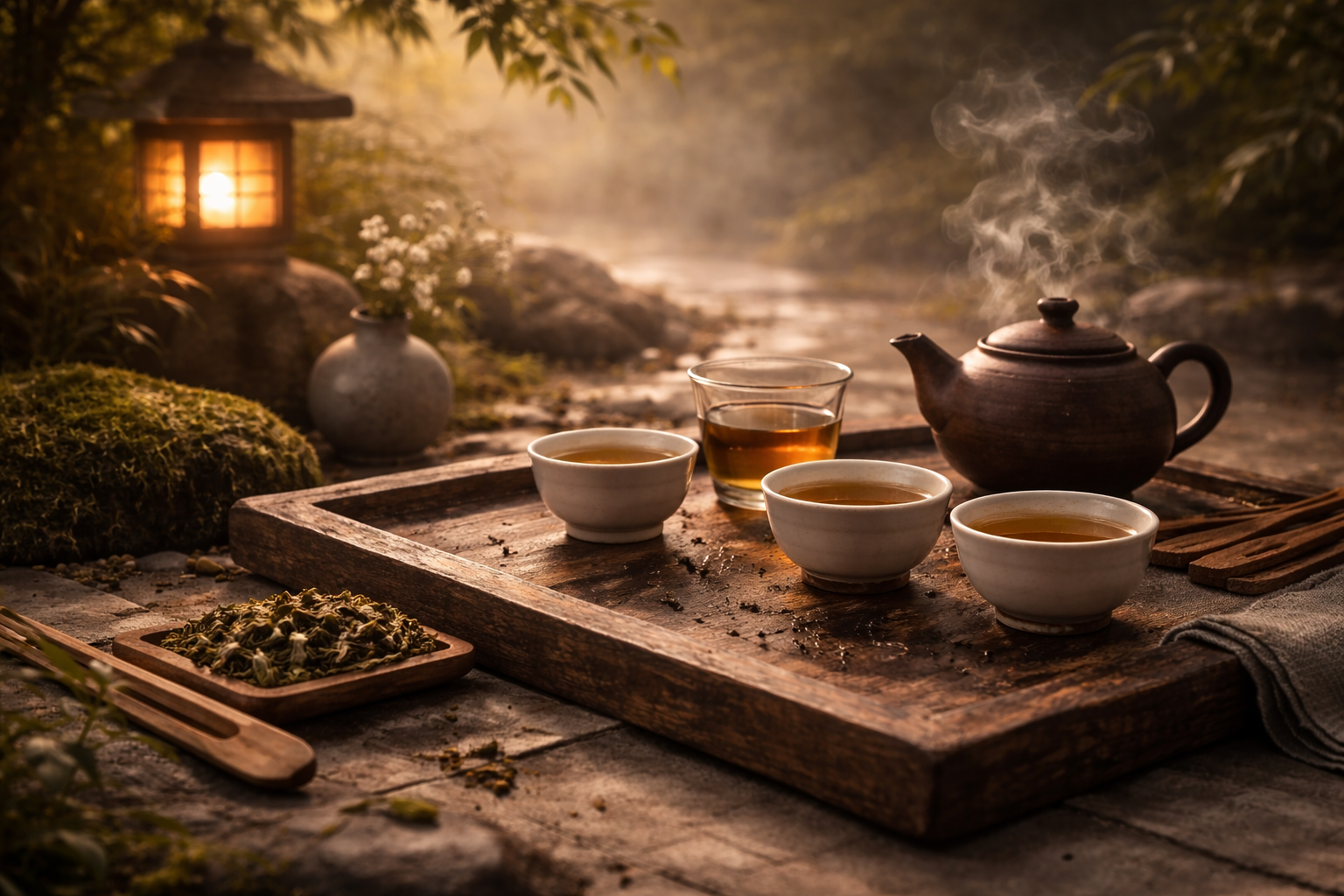
Solo Tea Ritual
A solo tea ritual gives space to follow the process at your own pace. The attention rests on the preparation, the pouring, and the way the tea changes from one infusion to the next.
Without distraction, the ritual becomes a way of observing the tea more closely and allowing the sequence itself to shape the experience.
Shared Tea Ritual
When tea is shared, the ritual also becomes an act of offering. The fairness cup, the order of serving, and the repeated pours create a rhythm that includes everyone at the tray.
The experience remains deliberate, but it also becomes social, with the ritual guiding the pace of conversation and the flow of the session.
Preparing the Tea Space
A tea ritual begins before the first pour, in the way the space is arranged and the tools are brought together.
Tea Tray
The tray gives the ritual a center, organizing the vessels, water, and movement of the session.
Brewing Vessel
The gaiwan or teapot becomes the working heart of the ritual, shaping how the tea is prepared and poured.
Tea Cups
Dedicated cups complete the serving ritual, giving each infusion its own place within the session.
Water
Heated at the right pace and used with care, water sets the foundation for every infusion that follows.
Tea Leaves
The leaves unfold gradually through repeated infusions, whether brewing pu-erh, oolong, white tea, red tea, or black tea, becoming central to the rhythm of the ritual.
Tea Tools
Essential instruments support preparation, handling, and the steady movement of the brewing process.
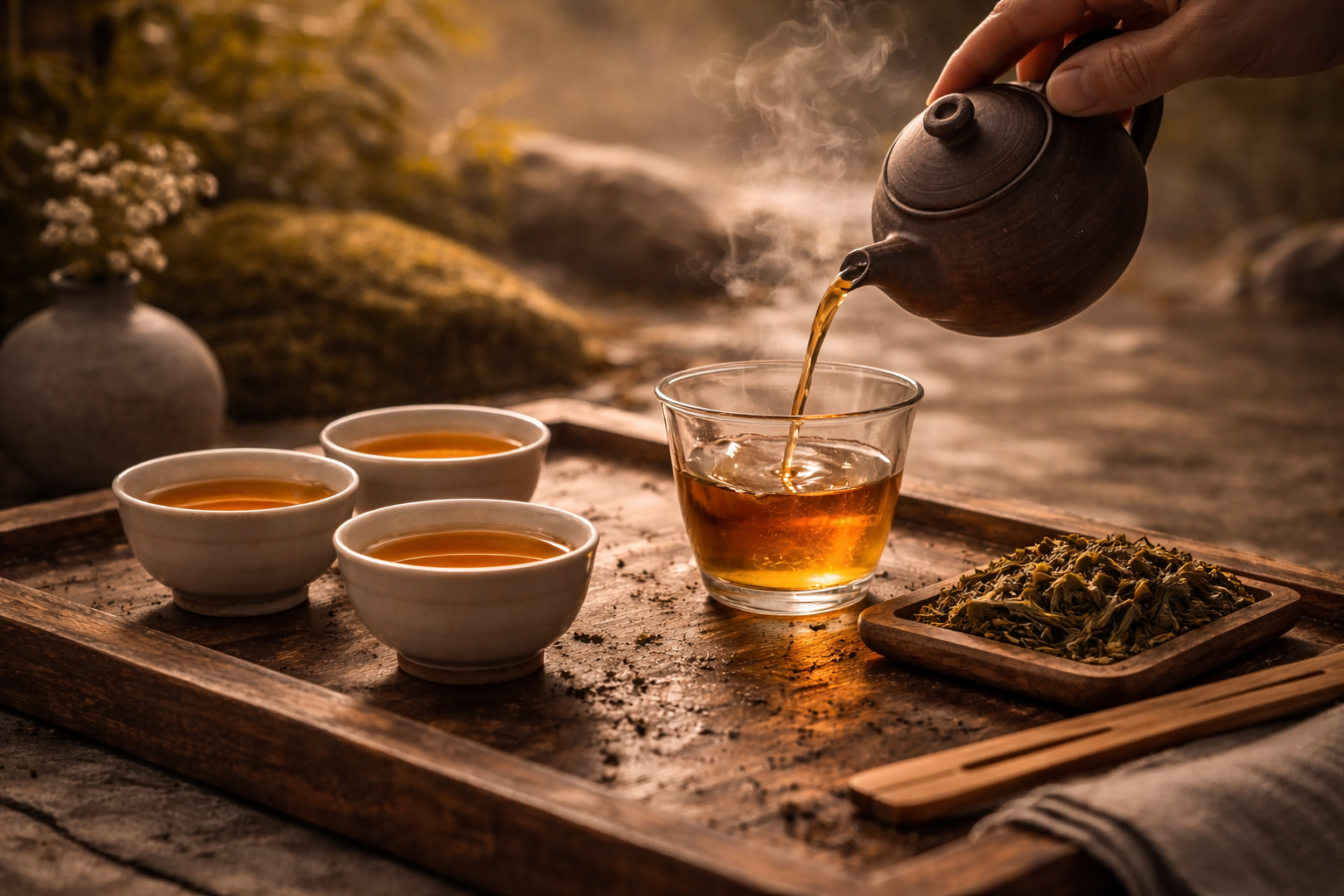
The Rhythm of Pouring Tea
The act of pouring is one of the defining movements of tea ritual. It carries the sequence forward, linking the brewing vessel, the fairness cup, and the tea cups in a continuous flow.
Repeated infusions create repetition without becoming mechanical. Each pour brings a slightly different expression of the tea, giving the ritual its movement and depth.
In this way, the rhythm of pouring becomes part of the meaning of the ceremony itself.
Creating a Tea Ceremony Environment
Tea ritual is shaped not only by the tools, but by the environment that surrounds the session.
Natural light, uncluttered surfaces, thoughtful arrangement, and carefully selected tea and brewing tools all contribute to the atmosphere of the ceremony.