Tea Trays
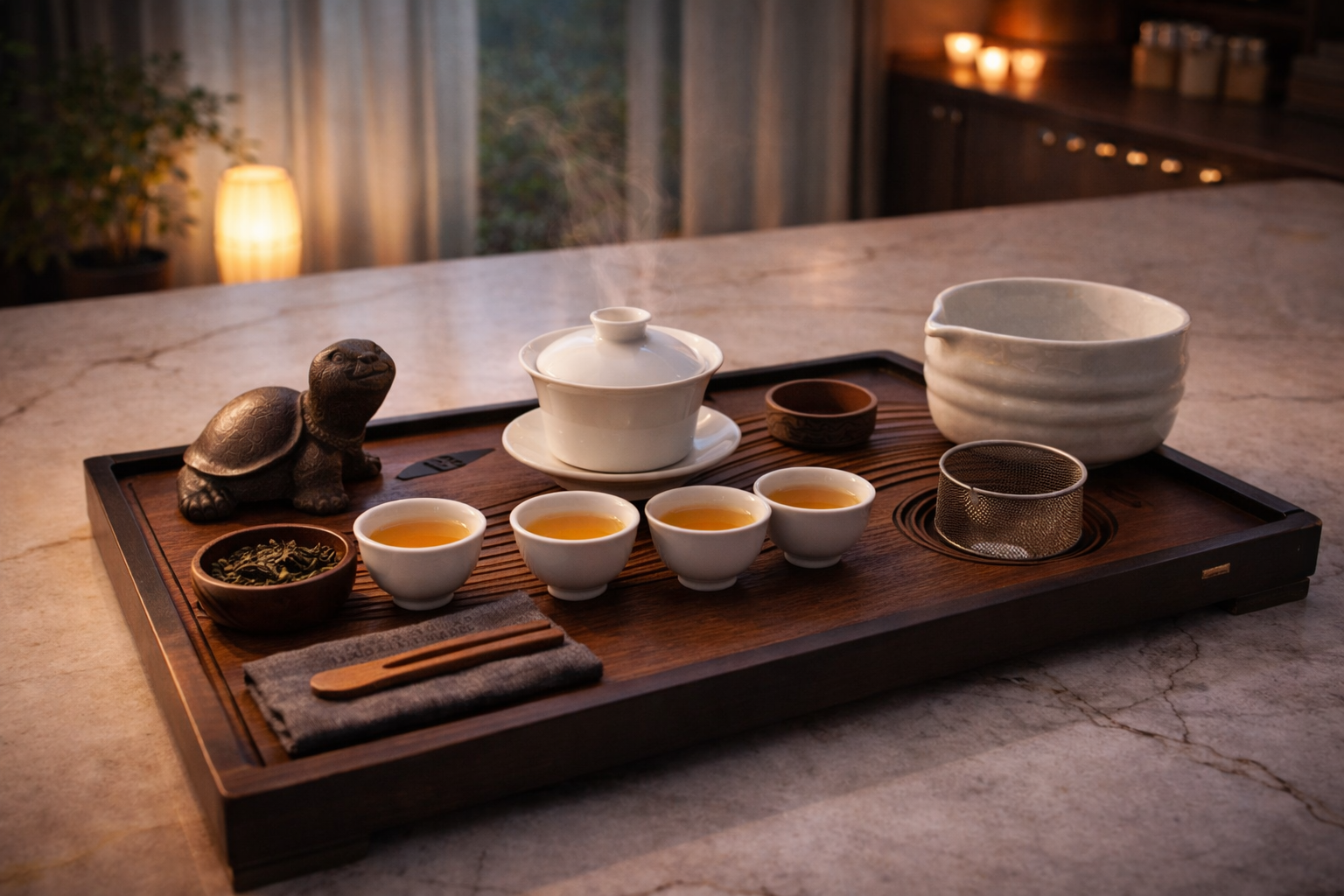
The tea tray creates the foundation of the ceremony, bringing structure, flow, and visual balance to the entire set.
Explore Ceremony SetsWhat a Tea Tray Brings to the Ceremony
In tea ceremony, the tray is not just a surface. It defines the space where the ritual takes place, organizing movement, guiding placement, and giving each piece of the set a clear position.
Within a complete ceremony set, the tray creates a sense of order and continuity. It allows water to be poured freely, supports repeated infusions, and gives the entire session a grounded and intentional environment.
The Role of the Tea Tray
The tea tray holds the ritual together, giving structure to movement and allowing the ceremony to unfold without interruption.
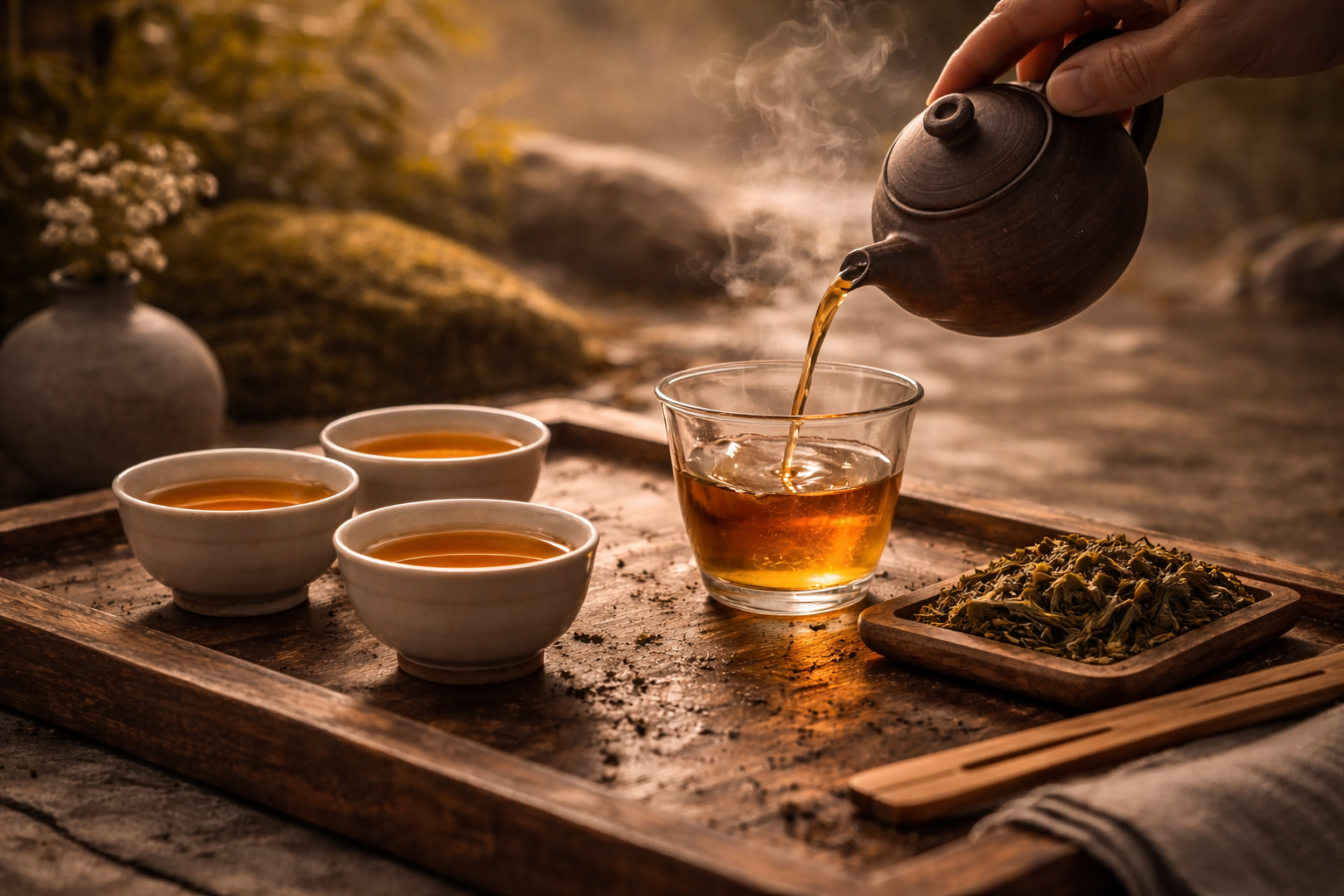
In gongfu tea, water is poured frequently—over vessels, across surfaces, and through repeated rinses. The tea tray makes this possible by managing water and creating a controlled environment where the ritual can remain fluid and uninterrupted.
What to Expect from a Tea Tray
A proper tea tray supports the ceremony by organizing the space, guiding movement, and allowing the brewing process to flow naturally.
Structured Layout
A tea tray provides a dedicated space for each element, helping the ceremony feel ordered and visually balanced.
Water Management
Tea trays are designed to handle excess water from rinsing, pouring, and brewing, keeping the process clean and uninterrupted.
Flow of Movement
The tray guides how each action takes place, helping the brewing and serving process feel smooth and consistent from start to finish.
Different Tea Tray Styles
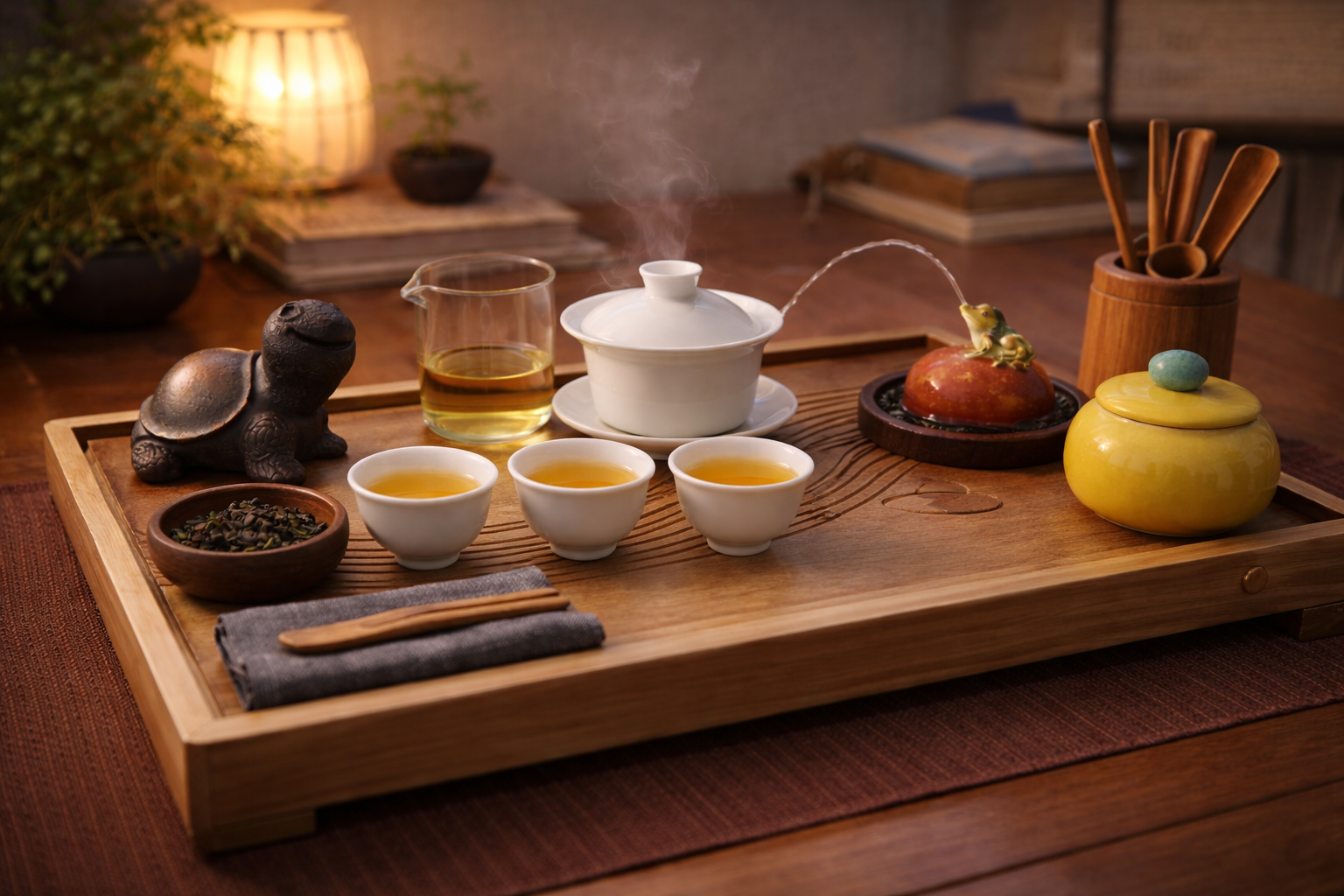
Tea trays come in different sizes and formats. Some are compact and minimal, while others are larger and designed to accommodate a more complete arrangement of tools and vessels.
The size and layout of the tray influence how the ceremony is arranged and how freely the movements of brewing and pouring can take place.
Different Tea Tray Materials
Tea trays are often made from wood, bamboo, stone, or composite materials. Each material brings its own visual character and tactile presence to the ceremony.
Some trays emphasize warmth and natural texture, while others offer a more refined or minimal appearance within the set.
Common Tea Tray Materials
The material of the tea tray shapes the visual foundation of the ceremony and influences how the entire set feels as a whole.
Bamboo
Bamboo trays are light, natural, and often associated with traditional tea settings, offering warmth and simplicity.
Wood
Wooden trays provide a more solid and grounded feel, often bringing richness and depth to the visual arrangement.
Stone / Composite
These trays offer a heavier, more modern presence, often emphasizing durability and a clean, structured appearance.
The Tea Tray as Part of a Complete Set
The tea tray is what brings the entire ceremony together. It connects the brewing vessel, the cups, and the tools into one organized space where the ritual can unfold naturally.
Without a tray, the process becomes fragmented. Within a complete set, the tray provides the structure that allows each part of the ceremony to feel connected and intentional.
This is why the tray is not just an accessory—it is the foundation of the tea ceremony environment.
The Tea Tray Within the Ritual
In tea ceremony, the tray creates the space where brewing, pouring, and serving become one continuous and balanced experience.
Stepman's Tea presents complete ceremony sets where the tray is not separate from the ritual, but forms the foundation of it—supporting every movement and bringing the entire experience into alignment.