Teacups
Teacups complete the ceremony by receiving each infusion with balance, presence, and quiet attention.
Explore Ceremony SetsWhat Teacups Bring to the Ceremony
In tea ceremony, teacups are not just a final step after brewing. They are part of the ritual itself, shaping how tea is served, received, observed, and appreciated from one infusion to the next.
Within a complete ceremony set, dedicated teacups create a sense of completion. They give each pour its own place and help turn brewing into an experience that is shared, paced, and fully felt.
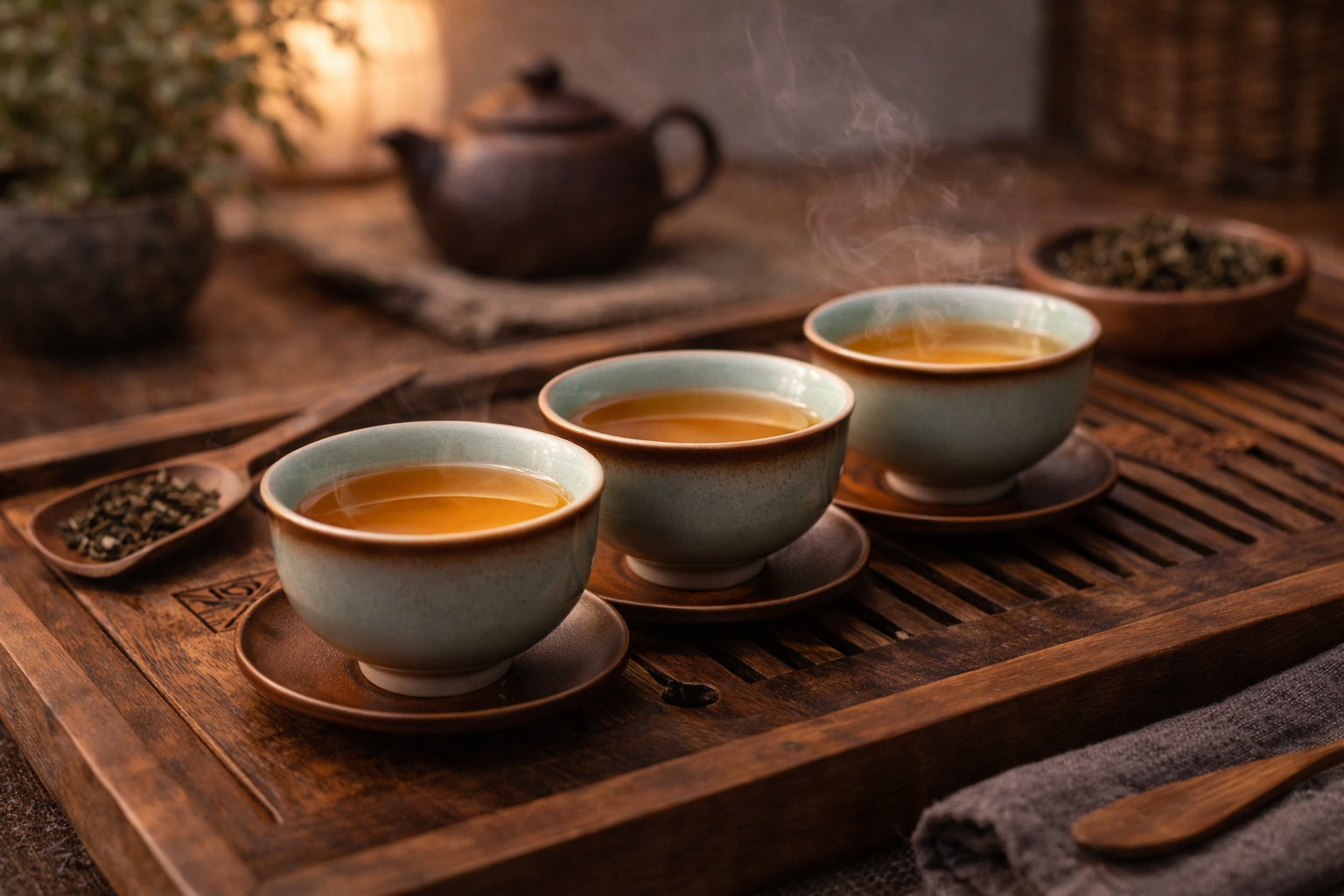
The Role of the Teacup
A teacup receives the work of the ceremony, carrying the aroma, warmth, and expression of each infusion into the hands of the person drinking it.
In gongfu-style tea, small dedicated cups allow tea to be served in measured pours. This keeps the session attentive and repeatable, making each infusion distinct rather than blending the whole experience into a single cup.
What to Expect from Teacups in Tea Ceremony
Dedicated teacups support the ceremony by helping each pour feel intentional, balanced, and complete within the full set.
Measured Serving
Tea ceremony cups are designed for smaller pours, allowing each infusion to be appreciated individually rather than all at once.
Attention to Aroma and Warmth
The size and shape of the cup help bring attention to the heat, aroma, and texture of the tea as it is received.
Consistency Across the Session
Dedicated cups keep the ceremony visually and practically balanced, helping each infusion feel like part of one continuous ritual.
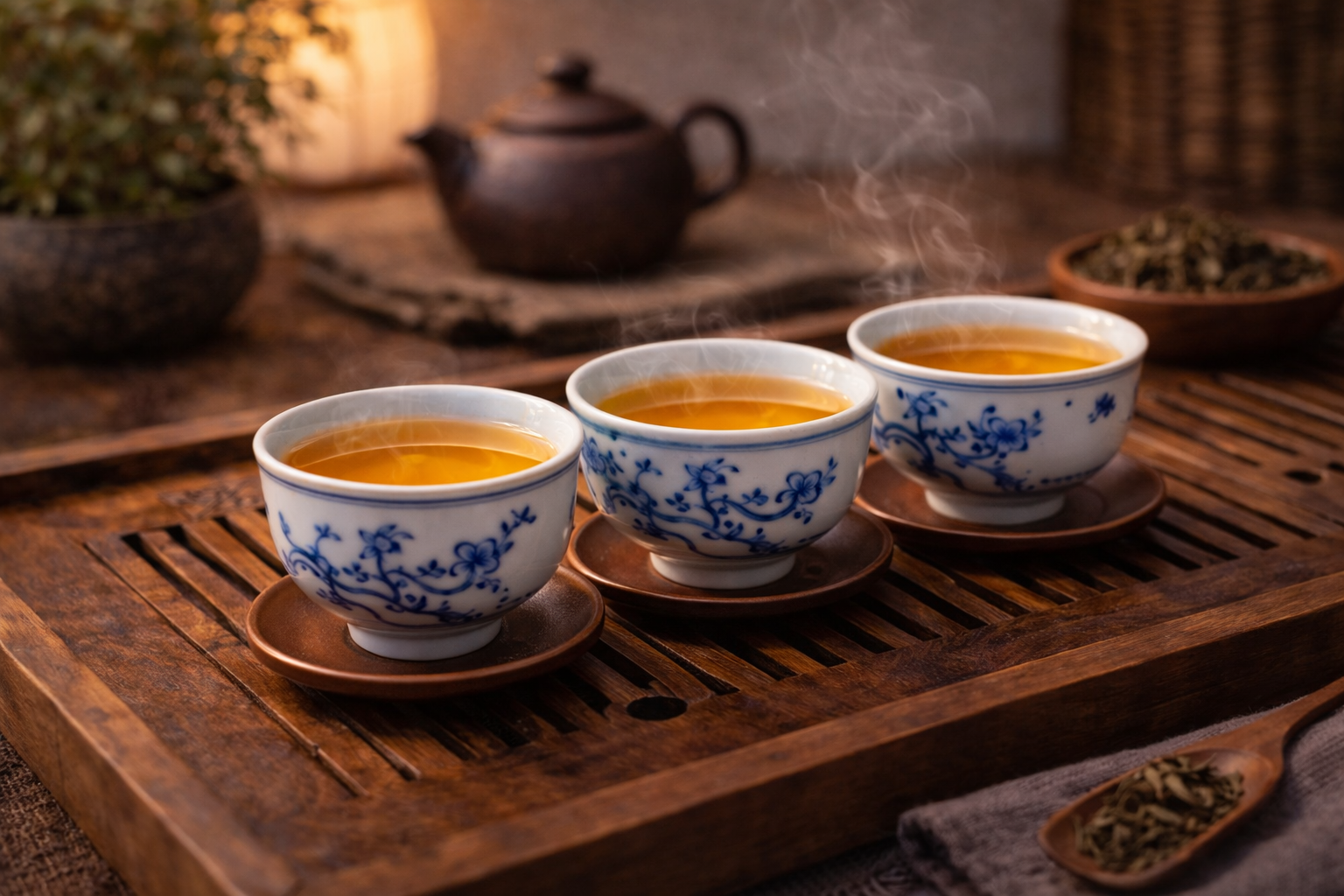
Different Teacup Styles
Tea ceremony cups come in different shapes, depths, and proportions. Some feel more open and rounded, while others are narrower or slightly taller in form.
These differences influence how the tea is experienced in the hand and on the palate, but the purpose remains the same: to receive each infusion with clarity and attention.
Different Teacup Materials
Teacups may be made from porcelain, ceramic, clay, glass, or other materials found in tea culture. Each material changes the visual presence of the cup and the feeling of the tea as it is held and sipped.
Some materials feel light and bright, while others feel warmer, softer, or more grounded within the arrangement of the set.
Common Teacup Materials in Tea Ceremony
The material of the teacup affects not only appearance, but also the way the final pour is experienced within the ceremony.
Porcelain
Porcelain teacups are often valued for clarity, delicacy, and a clean presentation that keeps attention on the tea itself.
Ceramic
Ceramic teacups can offer a balanced and grounded feel, bringing visual warmth and quiet presence to the set.
Clay
Clay teacups are often appreciated for their earthy character and the more tactile, intimate feeling they bring to the ritual.
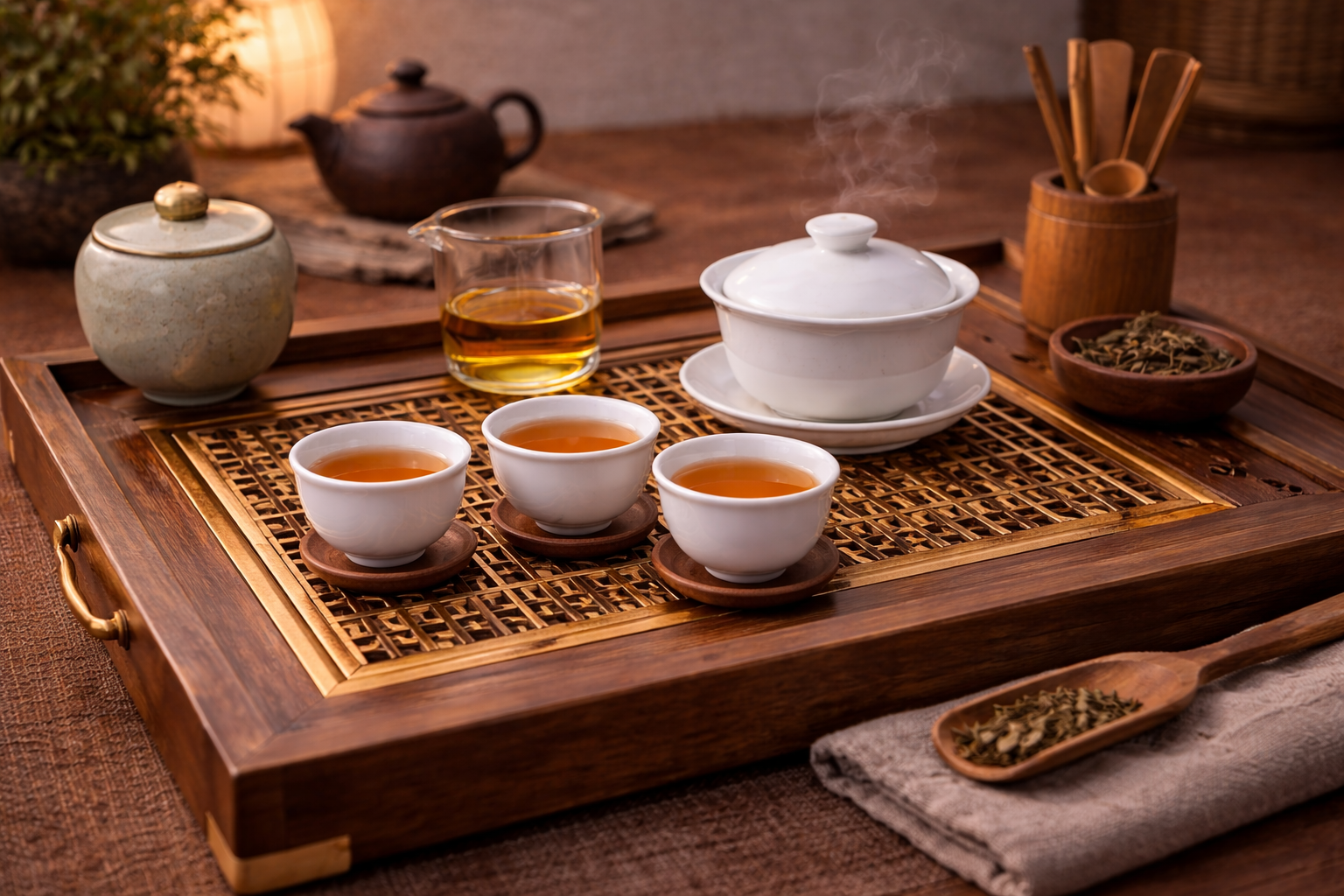
Teacups as Part of a Complete Set
Teacups become most meaningful when they work together with the rest of the tea ceremony set. The brewing vessel prepares the tea, the tray organizes the movement, and the cups receive the final pour as part of that larger rhythm.
On their own, teacups are only serving pieces. Within a complete ceremony set, they become part of a structured tea experience that connects brewing, pouring, and receiving into one continuous flow.
That is why complete sets matter. They give each part of the ceremony its proper place and make the experience feel whole rather than separate.
The Teacup Within the Ritual
In tea ceremony, the teacup is where brewing becomes reception, allowing each infusion to be experienced with focus, warmth, and attention.
Stepman's Tea presents complete ceremony sets where the teacups are not separate from the ritual, but placed within the full environment of the tray, the brewing vessel, and the sequence of serving. That is where their purpose becomes complete.