Teapots
The teapot shapes the rhythm of brewing, the character of the pour, and the quiet structure of a complete tea ceremony set.
Explore Ceremony SetsWhat a Teapot Brings to the Ceremony
In tea ceremony, a teapot is more than a container for brewing tea. It is a working part of the ritual, helping guide heat, infusion time, pouring rhythm, and the overall feeling of the session.
Within a complete ceremony set, the teapot gives brewing a sense of structure. It helps turn preparation into a steady sequence, allowing each infusion to be poured with attention and consistency.
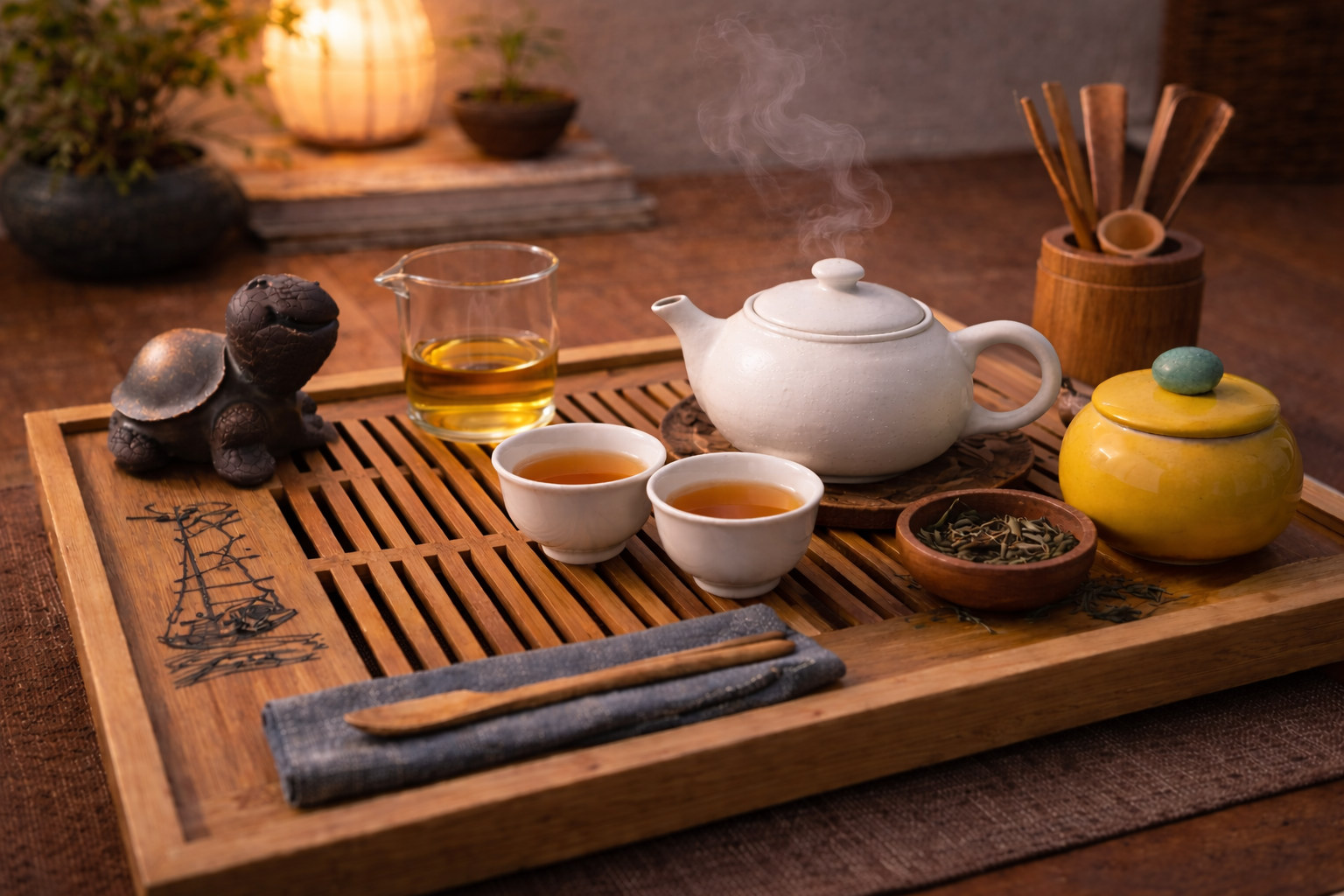
The Role of the Teapot
A teapot helps shape how tea unfolds from one infusion to the next, bringing rhythm, control, and balance to the ceremony.
In gongfu-style brewing, the brewing vessel matters. The size, form, and material of the teapot can influence heat retention, pouring speed, and how the leaves open during repeated infusions. Its role is not only practical, but central to the experience itself.
What to Expect from a Tea Ceremony Teapot
A dedicated teapot supports the ceremony by making brewing feel measured, repeatable, and natural within the full set.
Controlled Brewing
A proper tea ceremony teapot is made for deliberate infusions, allowing the tea to be brewed and poured with more precision.
Comfort in the Hand
The handle, lid, and pour should feel balanced and intuitive, supporting the natural movement of the tea session.
Consistency Across Infusions
In repeated brewing, the teapot helps keep each infusion steady so the tea can reveal itself gradually and clearly.
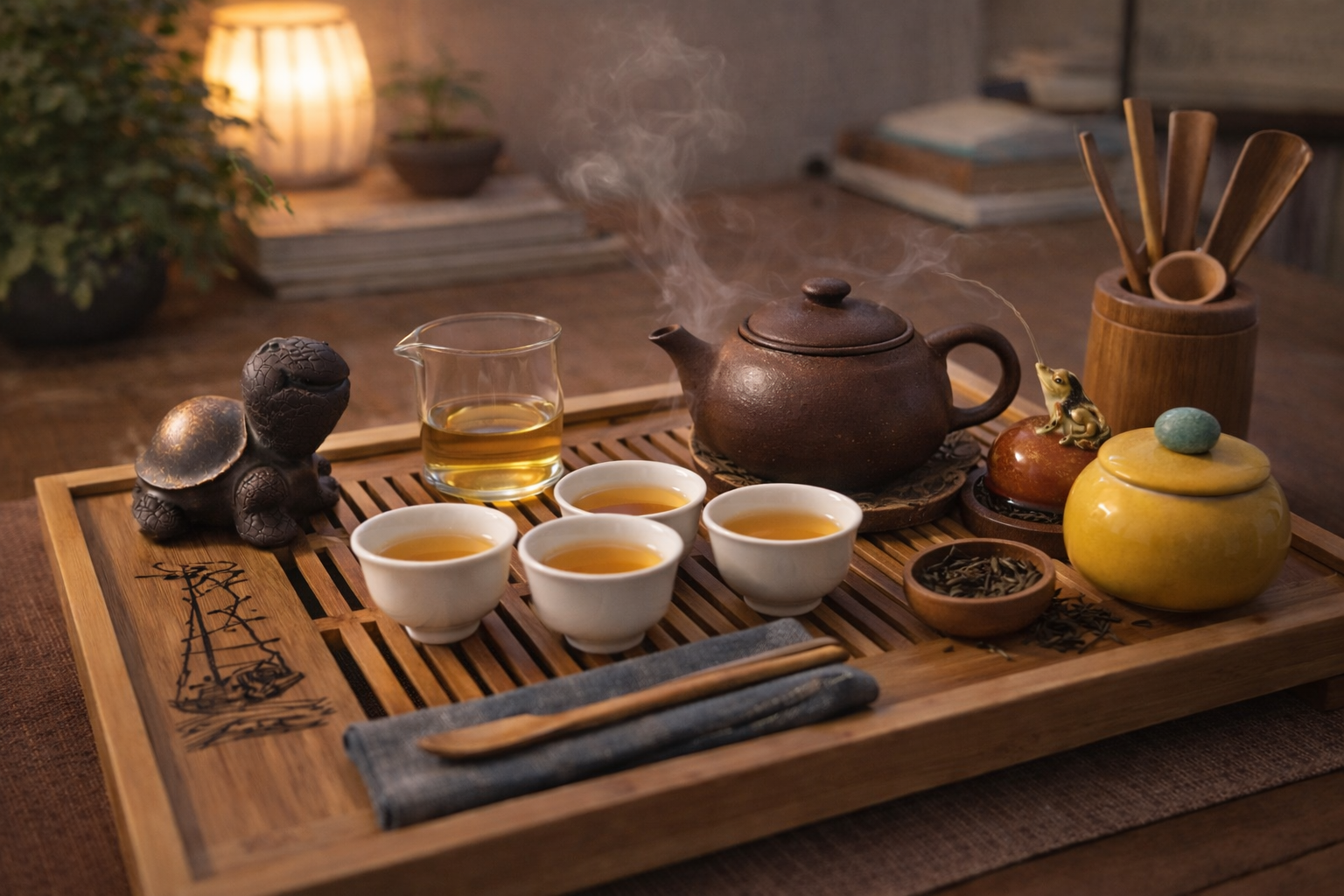
Different Teapot Styles
Tea ceremony teapots come in different shapes and proportions. Some are compact and rounded for closer heat retention, while others are slightly taller or more open in form.
These differences affect how the tea brews and pours, but the purpose remains the same: to prepare tea in a way that feels intentional and well paced within the ritual.
Different Teapot Materials
Teapots may be made from clay, porcelain, ceramic, or other materials used in traditional tea culture. Each material interacts with heat in its own way and can slightly shape the feel of the brew.
Some materials are valued for warmth and softness, while others are chosen for clarity, neutrality, or visual elegance within the set.
Common Teapot Materials in Tea Ceremony
The material of the teapot affects not only appearance, but also the way the brewing vessel feels within the overall ceremony.
Clay
Clay teapots are often appreciated for warmth, depth, and the grounded character they bring to repeated tea sessions.
Porcelain
Porcelain offers a cleaner, lighter presentation and is often valued for clarity, brightness, and visual refinement.
Ceramic
Ceramic teapots can offer a balanced middle ground, combining practical brewing function with a calm, cohesive presence on the tray.
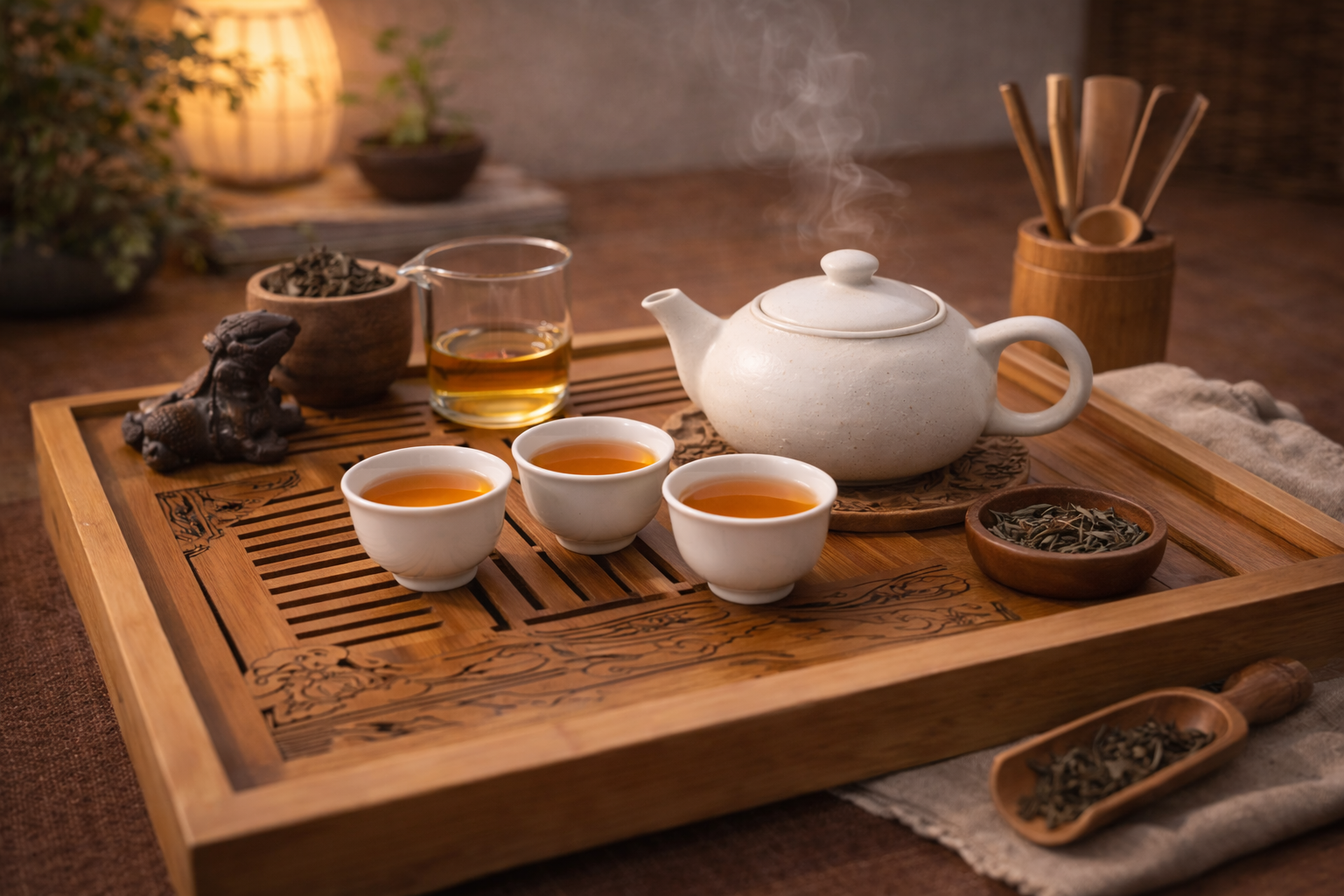
The Teapot as Part of a Complete Set
A teapot is most meaningful when it works together with the rest of the tea ceremony set. The tray organizes the space, the tea cups receive the pour, and the full arrangement gives the brewing process its rhythm.
On its own, a teapot is only one part of the experience. Within a complete ceremony set, it becomes part of a balanced environment where the ritual can unfold naturally from preparation to serving.
This is why complete sets matter. They create continuity between each piece and make the tea ceremony feel whole.
The Teapot Within the Ritual
In tea ceremony, the teapot helps transform brewing into a deliberate and repeatable experience shaped by rhythm, heat, and attention.
Stepman's Tea presents complete ceremony sets where the teapot is not isolated from the ritual, but placed within the full environment of the tray, the cups, and the sequence of serving. That is where its purpose becomes complete.